


Data backup and recovery refer to the process of creating copies of important information and restoring it when needed. Artificial Intelligence (AI) is revolutionizing how you approach data backup and recovery by making these processes faster, more reliable, and increasingly automated. AI technologies can predict potential failures, optimize storage resources, and recover data with minimal human intervention, transforming how organizations and individuals protect their valuable information.
When you integrate AI into your data protection systems, you address many traditional challenges such as human error, storage inefficiency, and slow recovery times. AI-powered backup solutions can analyze data patterns, identify critical information, and determine the optimal backup frequency and method for different types of data. This comprehensive guide explores how AI is making data backup and recovery easier and safer, the technologies involved, benefits, challenges, and best practices for implementation.
What Is Data Backup and Recovery?
Data backup and recovery are essential processes for protecting valuable information from loss, corruption, or unauthorized access. When you create data backups, you’re making copies of files, databases, or entire systems that can be restored in case of data loss events. Data recovery is the process of retrieving and restoring these backups when the original data becomes inaccessible due to hardware failure, human error, cyberattacks, or natural disasters.
Why Is Data Backup Important?
Data backup is crucial because it ensures business continuity, protects against data loss, and maintains compliance with regulatory requirements. Your organization relies on digital information for daily operations, and losing this data can result in financial losses, reputational damage, and legal consequences. Regular backups create safety nets that allow recovery from various data loss scenarios.
Traditional Data Backup Methods
Traditional data backup methods include:
- Full backups: Complete copies of all selected data
- Incremental backups: Copies of only the data that has changed since the last backup
- Differential backups: Copies of all data that has changed since the last full backup
- Tape backups: Storing data on magnetic tape cartridges
- External hard drives: Using portable storage devices for backup copies
- Cloud storage: Uploading data to remote servers maintained by service providers
These traditional methods often require significant manual intervention, storage space, and time to complete, making them less efficient for today’s data-intensive environments. Many businesses find themselves struggling to keep up with the demands of traditional backup approaches.
How AI Is Transforming Data Backup
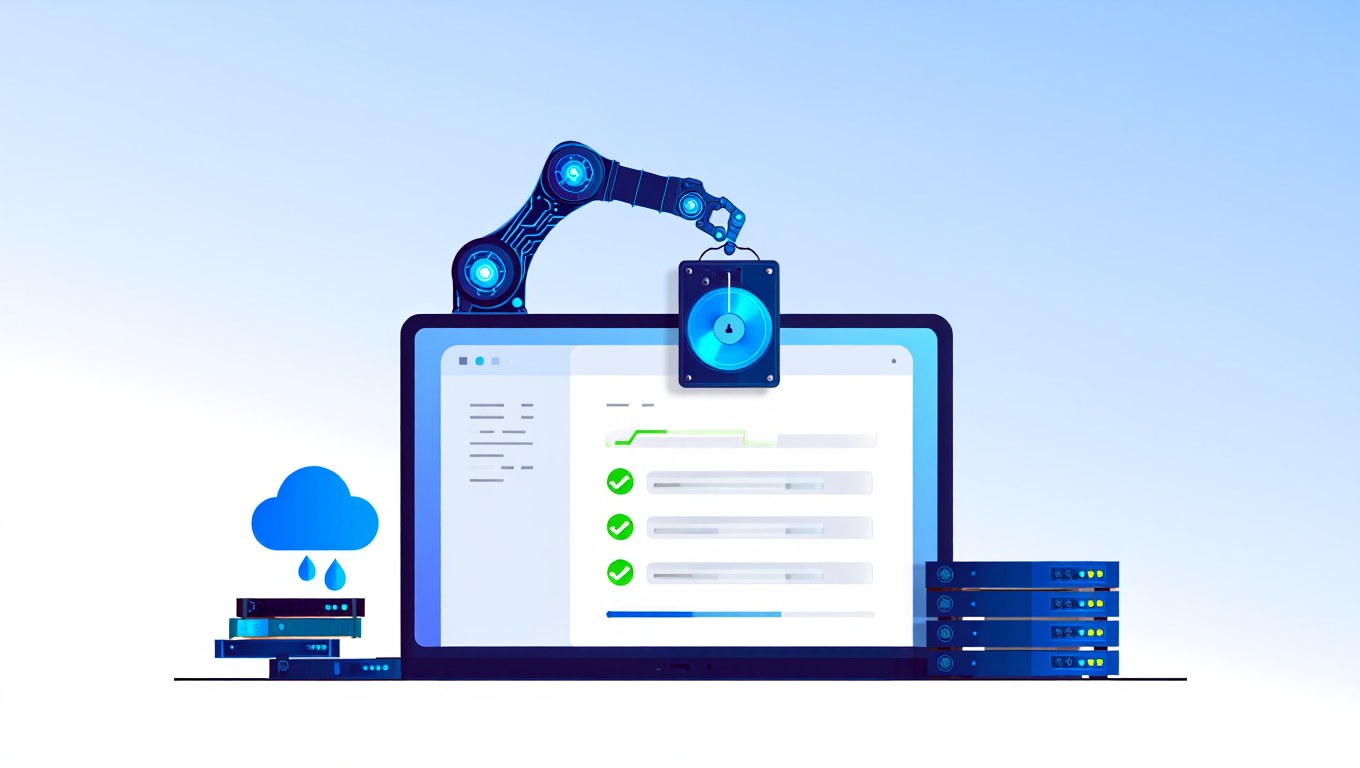
Artificial Intelligence is transforming data backup by introducing automation, predictive analytics, and intelligent decision-making capabilities. AI algorithms can analyze data patterns, user behaviors, and system performance to optimize backup processes without human intervention. This transformation addresses many limitations of traditional backup approaches that you might have experienced in your organization.
AI-Powered Backup Automation
AI-powered backup automation eliminates the need for manual scheduling and intervention by learning data usage patterns and determining optimal backup times. These systems can automatically adjust backup schedules based on data importance, change frequency, and available network resources. For example, AI might prioritize backing up critical financial data during off-peak hours while delaying less important files until network usage is lower. Your hosting company might offer such AI-enhanced services to improve your backup efficiency.
Predictive Analytics for Backup Optimization
Predictive analytics in AI backup systems analyze historical data to forecast future storage needs and potential failure points. These systems can identify patterns that indicate impending hardware failures or data corruption risks, allowing administrators to take preventive action before data loss occurs. By analyzing factors such as file access patterns, system performance metrics, and error rates, AI can predict when and where backup failures might happen. They give you a heads-up before problems become critical.
Intelligent Data Deduplication
Intelligent data deduplication uses AI algorithms to identify and eliminate redundant data copies across backup systems. This process significantly reduces storage requirements and bandwidth usage by storing only unique data blocks. AI-powered deduplication can recognize similar files or data patterns even when they’re not identical, achieving higher compression ratios than traditional methods. Your organization can save substantial storage costs through this intelligent approach.
Smart Resource Allocation
AI systems can dynamically allocate storage resources based on data importance, access patterns, and recovery requirements. This intelligent resource allocation ensures that critical data receives higher priority for backup and faster recovery when needed. For example, AI might assign more storage space and faster backup cycles to customer databases while allocating fewer resources to archived project files. Businesses benefit from this optimized approach without manual intervention.
AI-Powered Data Recovery Solutions
AI-powered data recovery solutions leverage machine learning algorithms to restore lost or corrupted data more quickly and accurately than traditional methods. These systems can analyze data patterns, file structures, and corruption indicators to reconstruct damaged files or recover information from partially destroyed storage media. When disaster strikes, you’ll appreciate having these advanced recovery capabilities at your disposal.
Automated Failure Detection
Automated failure detection systems use AI to continuously monitor backup systems and identify potential issues before they cause data loss. These systems can recognize patterns that indicate hardware degradation, software conflicts, or security breaches that might compromise backup integrity. By detecting these issues early, AI systems can alert administrators and initiate preventive measures to protect data. They act as your vigilant guardians, watching over your backup infrastructure 24/7.
Intelligent Data Reconstruction
Intelligent data reconstruction employs AI algorithms to rebuild corrupted files by analyzing intact portions and predicting missing information. This process is particularly valuable when dealing with partially damaged storage media or files with corrupted sections. AI can examine file structures, data patterns, and contextual information to recreate missing or damaged content with remarkable accuracy. Your organization can recover data that might have been considered permanently lost with traditional methods.
Prioritized Recovery Processes
AI-powered recovery systems can prioritize data restoration based on business importance, user needs, and operational requirements. Instead of recovering data in chronological order or by file size, these systems can identify which information is most critical for business continuity and restore it first. This approach minimizes downtime and ensures that essential operations can resume as quickly as possible. They help you get back to business faster after a data loss incident.
Self-Healing Backup Systems
Self-healing backup systems use AI to automatically detect and repair corrupted backup files without human intervention. These systems continuously verify backup integrity and can identify inconsistencies or corruption in stored data. When issues are detected, AI algorithms can often repair the damage by referencing redundant copies or reconstructing missing information from available data fragments. Your hosting company might implement such systems to ensure your backups remain reliable without constant manual oversight.

Benefits of Using AI for Data Backup and Recovery
The integration of AI into data backup and recovery processes offers numerous benefits that enhance data protection while reducing operational costs and complexity. These advantages make AI-powered solutions increasingly attractive for organizations of all sizes. When you adopt AI for your data protection needs, you position your organization for greater resilience and efficiency.
Improved Efficiency and Speed
AI-powered backup systems can complete backup processes up to 70% faster than traditional methods by optimizing resource allocation and eliminating redundant operations. Machine learning algorithms analyze data patterns to determine the most efficient backup strategies, reducing the time required to protect information. Similarly, AI-driven recovery processes can restore critical data in minutes rather than hours or days, minimizing downtime and productivity losses. Your team can focus on strategic initiatives rather than managing backup processes.
Enhanced Data Protection
AI enhances data protection by continuously monitoring for potential threats and automatically implementing security measures to safeguard backup files. These systems can identify unusual access patterns, encryption anomalies, or other indicators of potential security breaches. By detecting these threats early, AI can prevent unauthorized access to backup data and ensure that recovery processes remain secure. They provide an additional layer of defense for your valuable information assets.
Reduced Human Error
AI minimizes human error in backup and recovery processes by automating routine tasks and decision-making. Traditional backup systems often rely on manual configuration, scheduling, and verification, which can lead to mistakes such as missed backups, incorrect settings, or overlooked corruption. AI systems handle these tasks automatically, following best practices and adapting to changing conditions without human intervention. Your organization can reduce the risk of data loss due to human mistakes.
Cost Optimization
AI-powered backup solutions can reduce storage costs by up to 50% through intelligent data deduplication, compression, and tiered storage strategies. These systems analyze data importance, access patterns, and retention requirements to determine the most cost-effective storage approach for different types of information. Frequently accessed critical data might be stored on high-performance media, while archival data could be moved to more economical storage options. Businesses can achieve significant cost savings while maintaining or improving protection levels.
Predictive Maintenance
Predictive maintenance capabilities in AI backup systems can identify potential hardware failures before they occur, allowing for proactive replacement and preventing data loss. By analyzing performance metrics, error rates, and historical failure patterns, these systems can forecast when storage devices, network components, or other infrastructure elements are likely to fail. This foresight enables organizations to address issues before they result in data unavailability or loss. They help you avoid costly emergency repairs and downtime.
Common Challenges in Data Backup and Recovery
Despite technological advancements, data backup and recovery still face several challenges that can compromise data protection and business continuity. Understanding these challenges is essential for implementing effective solutions. When you recognize these obstacles, you can better prepare to overcome them with AI-powered approaches.
Data Volume Growth
Data volume growth presents a significant challenge as organizations generate and collect information at unprecedented rates. The exponential increase in data creation makes it difficult to complete backups within available time windows, especially for organizations with limited network bandwidth or storage capacity. Traditional backup systems often struggle to keep pace with this growth, leading to incomplete backups or extended backup windows that impact business operations. Your business might be experiencing this challenge right now.
Complex IT Environments
Complex IT environments with diverse systems, applications, and platforms complicate backup and recovery processes. Organizations typically use a mix of physical servers, virtual machines, cloud services, and edge devices, each with different backup requirements and capabilities. Coordinating backups across this heterogeneous landscape while ensuring consistency and recoverability is a significant challenge for IT teams. They must navigate this complexity while maintaining comprehensive protection.
Security Threats
Security threats such as ransomware, malware, and unauthorized access pose serious risks to backup systems and data integrity. Cybercriminals increasingly target backup infrastructure specifically, knowing that successful attacks can prevent organizations from recovering from primary system compromises. Protecting backup systems from these threats requires robust security measures that don’t impede backup and recovery operations. Your hosting company should implement advanced security measures to protect your backup data.
Compliance Requirements
Compliance requirements from regulations like GDPR, HIPAA, and PCI-DSS impose strict rules on data protection, retention, and recovery. Organizations must ensure that their backup and recovery processes meet these regulatory requirements while maintaining operational efficiency. Failure to comply can result in significant financial penalties and reputational damage. They need solutions that can adapt to changing regulatory landscapes.
Recovery Time Objectives
Recovery Time Objectives (RTOs) are becoming increasingly stringent as organizations depend more heavily on digital systems for critical operations. Many businesses require recovery times measured in minutes rather than hours or days, challenging traditional recovery approaches. Meeting these demanding RTOs requires sophisticated recovery technologies and well-planned processes that can quickly restore systems and data. Your organization might be under pressure to meet these aggressive recovery targets.

How AI Overcomes These Challenges
Artificial Intelligence addresses the challenges in data backup and recovery by introducing intelligent automation, predictive capabilities, and adaptive processes. These AI-powered solutions provide more effective and efficient approaches to protecting and restoring critical information. When you implement AI in your backup strategy, you gain powerful tools to overcome traditional obstacles.
Managing Data Volume Growth
AI manages data volume growth by implementing intelligent data classification and tiered storage strategies that optimize resource usage. Machine learning algorithms analyze data importance, access patterns, and business value to determine appropriate backup frequencies and storage locations. Less critical data might be backed up less frequently or stored on more economical media, while vital information receives priority treatment. This approach allows organizations to manage growing data volumes without proportionally increasing backup infrastructure costs.
Simplifying Complex IT Environments
AI simplifies complex IT environments by providing unified management interfaces and automated policy enforcement across diverse systems. These systems can discover and inventory all data sources across an organization, regardless of platform or location, and apply consistent backup policies based on data classification and business requirements. AI can automatically adapt backup processes to accommodate new systems or changing configurations, reducing the administrative burden on IT teams. They bring order to complexity.
Enhancing Security Posture
AI enhances security posture by continuously monitoring backup systems for anomalous activities and implementing adaptive security measures. Machine learning algorithms can identify unusual access patterns, encryption changes, or other indicators of potential security threats. When suspicious activity is detected, AI systems can automatically isolate affected components, alert administrators, and initiate protective measures to prevent data compromise or loss. Your hosting company can leverage these capabilities to provide more secure backup services.
Ensuring Compliance
AI ensures compliance by automatically enforcing retention policies, access controls, and audit requirements across all backup and recovery processes. These systems can track data lineage, maintain detailed audit logs, and generate compliance reports without manual intervention. AI can also adapt to changing regulatory requirements by updating policies and procedures automatically, reducing the risk of non-compliance. They help you navigate the complex regulatory landscape with confidence.
Meeting Recovery Time Objectives
AI meets stringent Recovery Time Objectives by implementing predictive recovery processes and prioritizing critical data restoration. Machine learning algorithms analyze data dependencies and business processes to determine the optimal recovery sequence, ensuring that the most critical systems and data are restored first. AI can also pre-stage recovery resources and validate restore processes in advance, reducing the time required to complete recovery operations. Your organization can meet even the most demanding recovery requirements.
Best Practices for AI-Enhanced Data Backup
Implementing AI-enhanced data backup requires following best practices to maximize effectiveness and ensure reliable data protection. These practices help organizations leverage AI capabilities while maintaining control over their backup environments. When you adopt these practices, you set your organization up for success with AI-powered data protection.
Conduct a Data Assessment
Conducting a comprehensive data assessment is the first step in implementing AI-enhanced backup solutions. Organizations should inventory all data sources, classify information by importance and sensitivity, and identify critical business processes that depend on specific data. This assessment provides the foundation for developing backup policies and AI training data that reflect actual business requirements and priorities. Your team needs to understand what data you have and how it’s used.
Define Clear Recovery Objectives
Defining clear Recovery Point Objectives (RPOs) and Recovery Time Objectives (RTOs) ensures that AI backup systems align with business needs. RPOs specify the maximum acceptable data loss measured in time, while RTOs define the maximum tolerable downtime for systems and applications. These objectives guide AI algorithms in determining backup frequencies, retention periods, and recovery priorities. They help you set realistic expectations for your backup and recovery processes.
Implement Phased Deployment
Implementing AI-enhanced backup solutions through phased deployment allows organizations to minimize risks and learn from initial experiences. Starting with less critical systems or specific data types enables IT teams to evaluate AI performance, refine configurations, and address any issues before expanding to more critical environments. This approach reduces the potential for disruption during implementation. Your organization can build confidence in the technology gradually.
Maintain Human Oversight
Maintaining human oversight ensures that AI backup systems operate within established parameters and align with organizational requirements. While AI can automate many aspects of backup and recovery, human administrators should review critical decisions, monitor system performance, and intervene when necessary. This oversight provides a safety net for AI operations and ensures alignment with business objectives. They should work in partnership with the AI systems.
Regular Testing and Validation
Regular testing and validation of backup and recovery processes are essential to ensure that AI systems function as expected. Organizations should conduct periodic recovery tests, verify backup integrity, and validate that AI algorithms are making appropriate decisions. These tests help identify potential issues before they impact actual recovery operations and provide opportunities to refine AI configurations. Your team should make testing a regular part of their routine.
Continuous Training and Improvement
Continuous training and improvement of AI algorithms ensure that backup systems adapt to changing data patterns and business requirements. Machine learning models should be regularly updated with new data, and their performance should be evaluated against established metrics. This ongoing refinement helps maintain AI effectiveness as the organization’s data environment evolves. They need to learn and grow along with your business.

Future Trends in AI for Data Protection
The future of AI in data protection promises even more advanced capabilities that will further transform backup and recovery processes. These emerging trends will continue to enhance data protection while reducing complexity and cost. When you understand these trends, you can better prepare your organization for the next generation of data protection technologies.
Autonomous Data Management
Autonomous data management systems will use advanced AI to handle all aspects of data protection with minimal human intervention. These systems will automatically discover data, classify it based on content and context, determine appropriate protection levels, and execute backup and recovery processes without manual configuration. They will continuously adapt to changing data patterns and business requirements, optimizing protection strategies in real-time. Your organization will benefit from truly self-managing data protection.
Cognitive Security
Cognitive security will enable AI systems to understand data content and context, allowing for more sophisticated protection against evolving threats. These systems will analyze data semantics to identify sensitive information, intellectual property, or regulated data, applying appropriate security measures based on content rather than just file types or locations. Cognitive security will also enhance threat detection by understanding the meaning and relationships within data, identifying subtle indicators of compromise that traditional security tools might miss. They provide deeper insight into your data’s security needs.
Predictive Resource Scaling
Predictive resource scaling will allow AI backup systems to anticipate capacity needs and automatically adjust infrastructure resources accordingly. By analyzing data growth trends, business cycles, and upcoming projects, these systems will predict future storage and processing requirements. They will then automatically provision additional resources or optimize existing ones to ensure that backup and recovery operations can meet business needs without manual intervention. Your hosting company might offer such scalable solutions to accommodate your changing needs.
Blockchain-Enhanced Verification
Blockchain-enhanced verification will provide immutable records of backup integrity and chain of custody, ensuring data authenticity throughout the backup lifecycle. AI systems will work with blockchain technology to create tamper-proof records of all backup operations, including when data was backed up, who accessed it, and any modifications made. This combination will provide unprecedented assurance of backup integrity and compliance with regulatory requirements. They offer a new level of trust and transparency in backup processes.
Self-Evolving Backup Strategies
Self-evolving backup strategies will enable AI systems to continuously refine and optimize protection approaches based on changing conditions and requirements. These systems will analyze the effectiveness of current backup strategies, identify areas for improvement, and automatically implement changes to enhance protection, efficiency, or cost-effectiveness. This continuous evolution will ensure that backup processes remain optimal as data environments and business needs change. Your organization will benefit from backup strategies that improve over time.
FAQ
Can AI completely eliminate the need for human involvement in backup and recovery?
No. While AI can automate many aspects of backup and recovery, human oversight remains essential for strategic decision-making, handling exceptional situations, and ensuring alignment with business objectives. AI systems operate within parameters set by humans and require periodic review and adjustment to maintain effectiveness.
Is AI-powered backup more expensive than traditional backup solutions?
No. Although AI-powered backup solutions may have higher initial costs, they typically reduce overall expenses through improved efficiency, optimized resource usage, and reduced labor requirements. The long-term total cost of ownership is often lower than traditional approaches, especially for organizations with large or complex data environments.
Can AI backup systems protect against all types of data loss?
No. While AI backup systems significantly improve data protection, they cannot prevent all types of data loss. Physical destruction of primary and backup systems, sophisticated cyberattacks, and extreme events may still result in data loss. However, AI can reduce the likelihood and impact of such events through predictive analytics and enhanced security measures.
Do small businesses benefit from AI-powered backup solutions?
Yes. Small businesses can benefit significantly from AI-powered backup solutions, which provide enterprise-grade protection without requiring dedicated IT staff. These solutions automate complex backup processes, reduce the risk of human error, and ensure reliable data protection even with limited technical resources.
Will AI make backup and recovery processes completely invisible to users?
Yes. AI is increasingly making backup and recovery processes transparent to end users. Advanced AI systems can perform backups in the background without impacting system performance, and recovery operations can be initiated automatically when issues are detected. This invisibility improves user experience while maintaining robust data protection.
Can AI backup systems adapt to new types of data and applications?
Yes. AI backup systems can adapt to new data types and applications through machine learning algorithms that recognize patterns and characteristics of unfamiliar information. These systems can automatically develop appropriate backup strategies for new data sources without manual configuration, making them particularly valuable in dynamic IT environments.
Conclusion
Artificial Intelligence is fundamentally transforming data backup and recovery by introducing automation, intelligence, and adaptability to these critical processes. AI-powered solutions address many limitations of traditional approaches, offering improved efficiency, enhanced protection, reduced costs, and faster recovery times. These systems can predict potential failures, optimize resource usage, and automatically adapt to changing conditions, providing more reliable and effective data protection for your organization.
The integration of AI into backup and recovery processes represents a significant advancement in data protection technology. As AI capabilities continue to evolve, we can expect even more sophisticated solutions that further automate data management, enhance security, and improve recovery outcomes. Organizations that embrace AI-powered backup solutions will be better positioned to protect their valuable information assets while reducing the complexity and cost of data protection. Your business can gain a competitive advantage through more resilient and efficient data protection strategies.
Implementing AI-enhanced backup requires careful planning, clear objectives, and ongoing management to ensure success. By following best practices and maintaining appropriate human oversight, you can leverage AI to create more resilient and efficient data protection strategies. As data volumes continue to grow and threats become more sophisticated, AI will play an increasingly vital role in safeguarding the information that drives modern business operations. They represent the future of data protection, and that future is available to your organization today.
You May Also Like
 SaaS
SaaSWhat Is No-Code Automation? How It Works, Benefits, and Risks
 Web Scraping
TinyFish.ai Review: Is It the Best AI Agent for Web Scraping
 AI Technology
ChatGPT API Alternatives: 13 AI APIs and Platforms for Developers
 Web Development
Building Apps with Lovable and Supabase: A Step-by-Step Guide
 AI Tools
10 Best PDF Extraction APIs for Text, Tables, OCR, and Structured Data
 Web Scraping
What Is AI Web Scraping? A Complete Guide to AI-Powered Data Extraction
 Web Scraping
Scrapy in Python: A Practical Guide to Web Scraping
 AI Tools
15 Best Free AI APIs for Developers: Free Tiers, Credits, and Limits Explained
 AI Technology