

Data encryption serves as the foundation of modern information security. Every day, sensitive data moves across networks and resides on devices, creating countless opportunities for unauthorized access. Encryption functions as a mathematical lock that keeps this information secure, even when it falls into the wrong hands. Understanding encryption isn’t just for IT professionals anymore—it’s become essential knowledge for anyone who handles digital information, whether you’re protecting personal photos or corporate financial records.
Encryption transforms readable information into coded text that only authorized parties can decipher. This straightforward concept powers the security behind online banking, secure messaging, and confidential business communications. As cyber threats continue to multiply, encryption remains one of the few security measures that reliably protects data, regardless of where it’s stored or how it’s transmitted.
What is Data Encryption?
Data encryption converts readable information into scrambled text that requires a specific key to decode. This mathematical process transforms plain text into ciphertext, rendering it useless to anyone without the proper decryption key. The result is a secure system where data remains protected even if security measures fail elsewhere.
Think of encryption as a high-tech safe for your digital information. When you encrypt data, you place it inside this safe and lock it with a unique key. Anyone who tries to access the data without the key sees nothing but random characters. This ensures that intercepted or stolen data remains confidential and unusable.
The practice of encryption dates back thousands of years. Ancient military leaders used simple codes to protect their communications from enemies. Today’s digital encryption has evolved into a sophisticated field combining mathematics and computer science, providing security levels that would have been impossible just a few decades ago.
How Data Encryption Works
Data encryption relies on mathematical algorithms to scramble information in a predictable way. The process involves several components that work together to secure your data effectively.
The Encryption Process
When data undergoes encryption, it follows a specific sequence:
- Plain text input – The original, readable data needing protection
- Encryption algorithm – A mathematical formula that performs the transformation
- Encryption key – A string of data that guides the encryption process
- Ciphertext output – The resulting scrambled, unreadable data
The algorithm uses the key to systematically alter each piece of the original data. Even a minor change in the key produces a completely different encrypted result. This relationship between the key and the output makes encryption both secure and reversible for authorized users.
Keys and Their Function
Keys serve as the secret codes that make encryption operational. These are essentially long strings of bits that act as inputs to the encryption algorithm. The strength of encryption depends largely on the length and complexity of these keys.
- Symmetric keys – Use the same key for both encryption and decryption
- Asymmetric keys – Use a pair of mathematically related keys (public and private)
Longer keys provide stronger encryption because they create more possible combinations. A 256-bit key has 2^256 possible combinations—making brute force attacks practically impossible with current technology.
The Decryption Process
Decryption reverses encryption to restore the original data. When someone needs to read encrypted information, they use the correct key with a decryption algorithm. The algorithm applies mathematical operations that essentially undo the encryption, converting ciphertext back into readable plain text.
This process only works with the right key. Using the wrong key or no key at all results in either an error or more meaningless data. This one-way nature of proper encryption makes it such an effective security tool.

Types of Data Encryption
Data encryption comes in different forms, each designed for specific security needs. Understanding these types helps organizations and individuals select the right encryption methods for their requirements.
Symmetric Encryption
Symmetric encryption uses the same key for both encrypting and decrypting data. This approach works quickly and efficiently, making it ideal for encrypting large amounts of data. However, it creates a challenge: how to securely share the key between parties who need to access the encrypted information.
Common symmetric encryption algorithms include:
- AES (Advanced Encryption Standard) – The current industry standard for symmetric encryption
- DES (Data Encryption Standard) – Older standard now considered vulnerable
- 3DES (Triple DES) – An improvement on DES that applies the algorithm three times
- Blowfish – Known for its speed and effectiveness
- Twofish – A successor to Blowfish with enhanced security features
Symmetric encryption works well when the same person or system both encrypts and decrypts data, or when the key can be securely shared in advance.
Asymmetric Encryption
Asymmetric encryption uses a pair of mathematically linked keys: a public key and a private key. The public key can be shared openly and encrypts data, while the private key remains secret and decrypts it. This approach solves the key distribution problem inherent in symmetric encryption.
Popular asymmetric encryption algorithms include:
- RSA (Rivest-Shamir-Adleman) – One of the first and most widely used asymmetric algorithms
- ECC (Elliptic Curve Cryptography) – Provides similar security to RSA with shorter key lengths
- Diffie-Hellman – Used for securely exchanging cryptographic keys over public channels
- DSA (Digital Signature Algorithm) – Primarily used for digital signatures rather than encryption
Asymmetric encryption commonly secures communications, digital signatures, and establishes secure connections before switching to symmetric encryption for bulk data transfer.
Hash Functions
Hash functions create a unique fixed-size string of characters from input data. Unlike traditional encryption, hash functions work in one direction—you cannot reverse the process to retrieve the original data. This makes them ideal for verifying data integrity and storing passwords securely.
Common hash functions include:
- SHA-256 (Secure Hash Algorithm 256-bit) – Part of the SHA-2 family, widely used and considered secure
- SHA-3 – The latest member of the Secure Hash Algorithm family
- MD5 (Message Digest Algorithm 5) – Older hash function now considered vulnerable
- bcrypt – Designed specifically for password hashing
- Argon2 – Modern password hashing algorithm designed to resist brute-force attacks
Hash functions play a crucial role in password storage, digital signatures, and blockchain technology. When websites store passwords, they should store only the hash of the password, not the password itself.

Benefits of Data Encryption
Data encryption provides multiple advantages that make it essential for modern information security. These benefits extend across personal privacy, business operations, and regulatory compliance.
Data Protection
Encryption safeguards sensitive information from unauthorized access. This primary benefit explains why encryption is so widely used. When data is encrypted, it remains secure even if:
- Devices are lost or stolen
- Networks are compromised
- Cloud storage is breached
- Backup media is accessed by unauthorized parties
For example, if a laptop containing encrypted customer data is stolen, the thief cannot read the information without the decryption key. This protection applies to data at rest (stored on devices), data in transit (moving across networks), and data in use (being processed by applications).
Regulatory Compliance
Encryption helps organizations meet various regulatory requirements. Many data protection laws and industry standards either require or strongly recommend encryption as a security measure. These include:
- GDPR (General Data Protection Regulation) – Requires appropriate security measures, including encryption
- HIPAA (Health Insurance Portability and Accountability Act) – Mandates protection of electronic protected health information
- PCI DSS (Payment Card Industry Data Security Standard) – Requires encryption of cardholder data
- CCPA (California Consumer Privacy Act) – Encourages encryption as a reasonable security measure
Organizations that implement encryption can demonstrate due diligence in protecting sensitive data, which can help reduce penalties in the event of a breach and may even provide safe harbor provisions in some regulations.
Trust and Reputation
Encryption builds trust with customers and business partners. When organizations encrypt sensitive data, they demonstrate their commitment to data protection. This commitment can:
- Increase customer confidence
- Improve brand reputation
- Provide a competitive advantage
- Facilitate business partnerships
- Support customer retention
Customers increasingly worry about how their personal information is protected. Organizations that can demonstrate robust encryption practices are more likely to earn and maintain customer trust in an era of frequent data breaches.
Secure Communication
Encryption enables secure communication over untrusted networks. The internet wasn’t originally designed with security in mind, making encryption essential for:
- Online banking and financial transactions
- Email communication
- Messaging applications
- Video conferencing
- E-commerce websites
Without encryption, sensitive information sent over the internet could be intercepted and read by anyone with the right tools and knowledge. Encryption ensures that even if data is intercepted, it remains unreadable to unauthorized parties. For more details on the technical aspects of this process, you can explore how encryption works in depth.

Common Encryption Algorithms
Various encryption algorithms have been developed over the years, each with different strengths and applications. Understanding these algorithms helps in selecting the right one for specific security needs.
AES (Advanced Encryption Standard)
AES stands as the most widely used symmetric encryption algorithm today. Adopted by the U.S. government in 2001, AES has become the global standard for symmetric encryption. It offers three key lengths:
- AES-128 – Uses 128-bit keys, provides good security for most applications
- AES-256 – Uses 256-bit keys, offers stronger security for highly sensitive data
- AES-192 – Uses 192-bit keys, provides a middle ground between 128 and 256
AES works by dividing data into blocks and applying multiple rounds of substitution, permutation, and mixing operations. Its efficiency and strong security have made it the go-to choice for encrypting data at rest and securing communications.
RSA (Rivest-Shamir-Adleman)
RSA remains one of the most widely used asymmetric encryption algorithms. Developed in 1977, RSA continues to be fundamental to modern cryptography. It’s commonly used for:
- Secure data transmission
- Digital signatures
- Key exchange for symmetric encryption
- SSL/TLS certificates
RSA security relies on the mathematical difficulty of factoring large prime numbers. The algorithm generates a public key and a private key that are mathematically related but computationally infeasible to derive from one another. While secure, RSA operates slower than symmetric algorithms like AES, so it’s often used to encrypt symmetric keys rather than large amounts of data directly.
ECC (Elliptic Curve Cryptography)
ECC offers a modern approach to asymmetric encryption that provides strong security with shorter key lengths. Instead of relying on prime factorization like RSA, ECC uses the mathematics of elliptic curves. This approach provides equivalent security to RSA with much smaller key sizes:
- 256-bit ECC key ≈ 3072-bit RSA key in security
- 384-bit ECC key ≈ 7680-bit RSA key in security
This efficiency makes ECC particularly valuable for:
- Mobile devices with limited processing power
- Internet of Things (IoT) devices
- Blockchain and cryptocurrency applications
- Secure communications in constrained environments
As mobile and IoT devices continue to proliferate, ECC’s efficiency advantages become increasingly important for maintaining strong security without draining device resources.
Blowfish and Twofish
Blowfish and Twofish are symmetric encryption algorithms known for their speed and security. Blowfish, designed by Bruce Schneier in 1993, was created as a fast, free alternative to existing encryption algorithms. It features:
- Variable key lengths from 32 to 448 bits
- Fast encryption and decryption
- No known successful cryptanalysis
- Public domain status (no licensing fees)
Twofish, designed by Schneier and others in 1998, was a finalist in the AES competition. It offers:
- 128-bit block size
- Key lengths up to 256 bits
- Strong security with efficient implementation
- Flexibility across different hardware platforms
While not as widely adopted as AES, both Blowfish and Twofish remain respected encryption options, particularly in open-source applications and situations where AES patent concerns might exist.
Encryption in Different Contexts
Data encryption serves different purposes depending on where and how it’s applied. Understanding these contexts helps organizations implement comprehensive encryption strategies that protect data throughout its lifecycle.
Data at Rest Encryption
Data at rest encryption protects information stored on physical or digital media. This type of encryption secures data that isn’t actively moving between locations or being processed. Common applications include:
- Full disk encryption – Encrypts entire hard drives or SSDs
- File/folder encryption – Encrypts specific files or directories
- Database encryption – Protects data stored in database systems
- Cloud storage encryption – Secures data stored in cloud services
- Backup encryption – Protects backup media and files
Full disk encryption tools like BitLocker (Windows), FileVault (Mac), and LUKS (Linux) automatically encrypt all data written to storage devices. This protection ensures that if a device is lost or stolen, the data remains inaccessible without proper authentication.
For databases, encryption can be applied at different levels:
- Transparent Data Encryption (TDE) – Encrypts the entire database at the file level
- Column-level encryption – Encrypts specific columns containing sensitive data
- Cell-level encryption – Encrypts individual data cells for granular protection
Data in Transit Encryption
Data in transit encryption protects information as it moves across networks. This type of encryption prevents interception and eavesdropping during data transmission. Common implementations include:
- SSL/TLS – Secures web traffic, email, and other internet communications
- VPN encryption – Protects data traveling between remote users and corporate networks
- Wireless encryption – Secures Wi-Fi networks (WPA2, WPA3)
- Email encryption – Protects email content and attachments
- Messaging app encryption – Secures instant messaging communications
SSL (Secure Sockets Layer) and its successor TLS (Transport Layer Security) form the foundation of secure web browsing. When you see “https://” in your browser’s address bar, it indicates that TLS is encrypting the communication between your device and the website. This encryption protects sensitive information like passwords, credit card numbers, and personal details from being intercepted.
VPNs create encrypted tunnels for data traveling between remote locations. This encryption ensures that even if data packets are intercepted, they cannot be read without the decryption keys. VPNs are essential for secure remote work and protecting communications on untrusted networks like public Wi-Fi.
Data in Use Encryption
Data in use encryption protects information while it’s being processed by applications. This presents the most challenging type of encryption because data must be decrypted for processing. However, new technologies are making this possible:
- Confidential computing – Uses hardware-based trusted execution environments
- Homomorphic encryption – Allows computations on encrypted data without decryption
- Secure enclaves – Creates isolated processing areas within processors
- Memory encryption – Protects data stored in RAM during processing
Homomorphic encryption allows calculations to be performed on encrypted data, producing encrypted results that, when decrypted, match the results of operations performed on the original unencrypted data. While still relatively new and computationally intensive, this technology has the potential to transform how we process sensitive information.
Confidential computing uses hardware features from processors like Intel SGX and AMD SEV to create secure enclaves where data can be processed in an encrypted state. These enclaves protect data even from the operating system and hypervisor, providing a new level of security for data in use.
Challenges and Limitations of Encryption
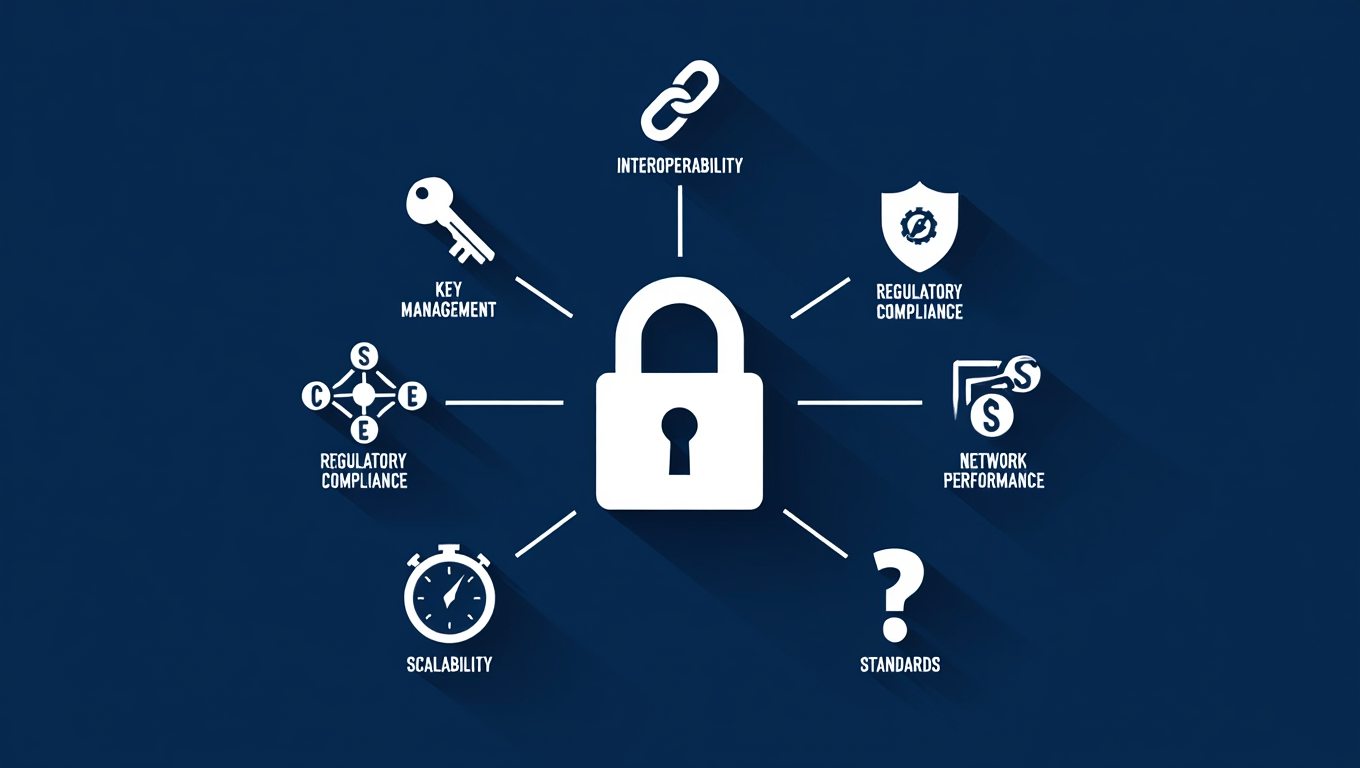
While encryption serves as a powerful security tool, it comes with certain challenges and limitations that organizations must consider. Understanding these issues helps in implementing encryption effectively and managing its impact on systems and users.
Performance Impact
Encryption can affect system performance due to the computational resources required. The mathematical operations involved in encryption and decryption consume processing power, memory, and battery life. This impact varies depending on:
- Encryption algorithm – Some algorithms require more resources than others
- Key length – Longer keys generally need more computation
- Data volume – Encrypting large amounts of data takes more time and resources
- Hardware capabilities – Modern processors often include encryption acceleration features
For example, encrypting an entire hard drive might slightly slow down file access times, particularly during read/write operations. Similarly, encrypting all network traffic can add latency to communications. However, with modern hardware and optimized algorithms, these performance impacts are often minimal and barely noticeable to users.
Organizations should test encryption solutions in their specific environments to understand and mitigate performance impacts. Hardware acceleration features, available in many modern processors, can significantly reduce the performance cost of encryption operations.
Key Management Complexity
Managing encryption keys presents significant operational challenges. Keys must be generated, stored, distributed, rotated, and revoked securely throughout their lifecycle. Poor key management can undermine even the strongest encryption algorithms. Key management challenges include:
- Key generation – Creating truly random, secure keys
- Key storage – Protecting keys from unauthorized access
- Key distribution – Securely sharing keys with authorized parties
- Key rotation – Regularly updating keys to maintain security
- Key recovery – Regaining access to data if keys are lost
- Key revocation – Invalidating compromised or expired keys
Lost encryption keys can be catastrophic, potentially resulting in permanent data loss. Organizations must balance key security with accessibility, ensuring that keys are protected from unauthorized access while remaining available to authorized users when needed.
Many organizations use specialized key management systems (KMS) or hardware security modules (HSM) to address these challenges. These solutions provide centralized control, automated key lifecycle management, and secure storage for encryption keys.
Usability Issues
Encryption can create usability challenges for end users. Security measures that are too complex or intrusive may lead users to find workarounds that compromise security. Common usability issues include:
- Complex password requirements – May lead to password reuse or insecure storage
- Multiple authentication steps – Can frustrate users and reduce productivity
- Inaccessible data – Users may be unable to access encrypted information without proper credentials
- Compatibility problems – Encrypted data may not work across all systems and devices
For example, if employees find email encryption too cumbersome, they might resort to sending sensitive information through unencrypted channels. Similarly, if mobile device encryption makes accessing data too difficult, users might disable security features.
The key to addressing these challenges is finding the right balance between security and usability. Solutions like single sign-on, biometric authentication, and transparent encryption can help maintain strong security while minimizing user friction.
Legal and Regulatory Considerations
Encryption is subject to various legal and regulatory requirements that vary by jurisdiction. These considerations can create compliance challenges for organizations operating across different regions. Key legal and regulatory issues include:
- Export controls – Some countries restrict the export of strong encryption technology
- Mandatory decryption – Certain jurisdictions may require organizations to provide decrypted data to law enforcement
- Data residency requirements – Some countries require data to be stored and processed within their borders
- Industry-specific regulations – Different sectors have specific encryption requirements
For example, some countries have laws that require companies to provide access to encrypted data when requested by government authorities. Others restrict the use of foreign encryption products or require registration of encryption systems.
Organizations must stay informed about the legal landscape in all jurisdictions where they operate and ensure their encryption practices comply with relevant laws and regulations. This often requires working with legal experts who specialize in cybersecurity and data protection law.
Best Practices for Data Encryption
Implementing encryption effectively requires following established best practices that balance security, usability, and compliance. These guidelines help organizations maximize the benefits of encryption while minimizing potential challenges.
Implement a Layered Encryption Strategy
Use multiple layers of encryption to protect data at different stages. A defense-in-depth approach ensures that if one encryption layer fails, others continue to protect sensitive information. This strategy should include:
- Application-level encryption – Encrypt sensitive data within applications
- Database encryption – Implement database-specific encryption controls
- File system encryption – Protect files and directories at the operating system level
- Full disk encryption – Secure entire storage devices
- Network encryption – Protect data as it moves across networks
For example, customer credit card information might be encrypted within the payment application, encrypted again in the database, stored on an encrypted file system, protected by full disk encryption on the server, and encrypted in transit during processing. This multi-layered approach provides comprehensive protection throughout the data lifecycle.
Use Strong, Standardized Algorithms
Choose well-vetted, standardized encryption algorithms rather than proprietary or obscure ones. Standardized algorithms have undergone extensive review by the cryptographic community and are more likely to be secure. Recommended algorithms include:
- AES-256 for symmetric encryption
- RSA-2048 or higher for asymmetric encryption
- SHA-256 or higher for hashing
- ECC with appropriate key lengths for asymmetric encryption in constrained environments
Avoid creating custom encryption algorithms or using obscure, unproven methods. The strength of encryption comes from the secrecy of the key, not the secrecy of the algorithm. Standardized algorithms benefit from years of scrutiny and testing by cryptography experts worldwide.
Implement Proper Key Management
Establish robust key management practices to protect encryption keys throughout their lifecycle. Effective key management includes:
- Secure key generation – Use cryptographically secure random number generators
- Key separation – Use different keys for different purposes and systems
- Key storage – Store keys in secure, dedicated systems like HSMs or KMS
- Key rotation – Regularly update encryption keys according to policy
- Key backup – Maintain secure, redundant backups of encryption keys
- Key destruction – Securely delete keys when they’re no longer needed
Consider implementing a key hierarchy where master keys encrypt other keys, reducing the number of keys that need to be directly protected. This approach can simplify key management while maintaining strong security.
Encrypt Data Early and Often
Apply encryption as early as possible in the data lifecycle and maintain it throughout. The principle of “encrypt early, decrypt late” minimizes the time data spends in an unencrypted state. This approach includes:
- Encrypting data at the point of creation – Apply encryption when data is first generated or collected
- Maintaining encryption during processing – Use technologies like confidential computing when possible
- Keeping backups encrypted – Ensure backup media remains encrypted at all times
- Encrypting data before transmission – Apply encryption before sending data across networks
For example, a web application should encrypt sensitive user data immediately upon submission, keep it encrypted in the database, and only decrypt it when absolutely necessary for processing. This minimizes the exposure of sensitive information to potential compromise.
Regularly Update and Patch Encryption Systems
Keep encryption software and systems updated to address newly discovered vulnerabilities. Like all software, encryption implementations may contain security flaws that are discovered over time. Maintaining security requires:
- Regular updates – Apply patches and updates to encryption software promptly
- Algorithm reviews – Periodically assess whether encryption algorithms remain secure
- Protocol upgrades – Migrate to newer, more secure protocols when available
- Configuration audits – Regularly review encryption configurations for proper implementation
For example, SSL and early versions of TLS have known vulnerabilities that make them unsuitable for securing sensitive communications. Organizations should use current versions of TLS and disable older, insecure protocols to maintain strong encryption security.
FAQ About Data Encryption
Is data encryption completely unbreakable?
No. While modern encryption algorithms are extremely secure, no encryption is theoretically unbreakable given unlimited time and computational resources. However, strong encryption like AES-256 would take billions of years to break with current technology, making it practically unbreakable for all practical purposes.
Can encrypted data be hacked?
Yes, but it’s extremely difficult with proper implementation. Encrypted data can potentially be compromised through weak keys, implementation flaws, or vulnerabilities in the encryption system. However, properly implemented encryption using strong algorithms and keys remains one of the most effective security measures available.
Does encryption slow down my computer?
Sometimes, but the impact is usually minimal with modern hardware. Encryption requires computational resources, which can affect performance. However, most modern processors include hardware acceleration for encryption operations, and the performance impact is often negligible for typical user activities.
Is it legal to use strong encryption?
Yes, in most countries, but regulations vary. Most jurisdictions permit the use of strong encryption for legitimate purposes. However, some countries have restrictions on encryption strength, export controls, or requirements for government access to encrypted data. Organizations should understand the legal requirements in their operating jurisdictions.
Do I need encryption if I use a password?
Yes. Passwords and encryption serve different purposes. Passwords authenticate users, while encryption protects data. Even with strong passwords, data can be compromised through other means like network interception, device theft, or system breaches. Encryption provides an additional layer of security.
Can encrypted files be recovered if I forget the password?
No. One of the fundamental principles of encryption is that without the correct key or password, the data cannot be recovered. This is why proper key management and backup procedures are essential. Some systems offer recovery options, but these can potentially weaken security.
Is cloud data automatically encrypted?
Not always, but most reputable cloud providers offer encryption options. Many cloud services encrypt data by default, but the level and type of encryption vary. Organizations should understand their cloud provider’s encryption practices and may want to implement additional client-side encryption for sensitive data.
Does encryption protect against all types of cyber attacks?
No. Encryption specifically protects the confidentiality of data, but it doesn’t prevent all types of attacks. Cyber threats like denial-of-service attacks, malware infections, and phishing attempts require different security measures. Encryption is one important part of a comprehensive security strategy.
Can encryption be applied to all types of data?
Yes, but it may not be necessary or practical for all data. While technically possible to encrypt any digital information, organizations should focus on encrypting sensitive data that requires protection. Encrypting non-sensitive data may create unnecessary overhead without providing meaningful security benefits.
Is it expensive to implement encryption?
Not necessarily. Many encryption tools are available at no cost, and modern operating systems include built-in encryption features. However, enterprise-grade encryption solutions with advanced key management and centralized control may require investment. The cost of not encrypting sensitive data often far exceeds the cost of implementation.
Conclusion
Data encryption continues to serve as one of the most fundamental and effective tools for protecting information in our digital world. By transforming readable data into unreadable ciphertext, encryption provides a reliable defense against unauthorized access, data breaches, and information theft. From personal communications and financial transactions to corporate secrets and government operations, encryption plays a vital role in maintaining privacy and security across all aspects of digital life.
Implementing encryption effectively requires understanding its principles, selecting appropriate algorithms and methods, and following best practices for key management and system configuration. While encryption doesn’t solve all security challenges, it forms an essential component of any comprehensive data protection strategy. As cyber threats continue to evolve and the volume of sensitive data grows, the importance of encryption will only increase, making it a critical knowledge area for organizations and individuals alike.
By treating encryption as a standard security measure rather than an optional add-on, we can create a more secure digital environment where sensitive information remains protected from unauthorized access while staying available to those who legitimately need it. The balance between security and accessibility that encryption provides makes it an indispensable tool for addressing the complex data protection and privacy requirements of our time. For organizations looking to enhance their overall data protection strategy, understanding what is data loss prevention and how it complements encryption is essential for comprehensive security.
You May Also Like
 Cybersecurity
Is Fanatical Legit and Safe? My Honest Take on Buying Game Keys
 Data Security & Privacy
Is Gameflip Legit and Safe for Gift Cards? What Buyers Should Know
 Data Security & Privacy
Is Eldorado.gg Legit and Safe in 2026? My Investigation and What Buyers Should Know
 Web Development
Supabase vs Firebase: Which Backend Platform is Right for Your Project?
 Web Development
REST API vs SOAP API: Differences, Pros & Cons, and Use Cases
 Web Development
What Is API Rate Limiting? (A Practical, Simple Guide for Safer, Faster APIs)
 Cybersecurity
Is Groupon Legit? An Honest Review In 2026
 Cloud Computing
What Is Hybrid Cloud Computing? A Complete Guide
 Cybersecurity