


Vulnerability Management and Attack Surface Management are essential cybersecurity practices that protect digital systems from attackers. Vulnerability Management finds and fixes known weaknesses in existing software and systems. Attack Surface Management discovers all digital assets — including unknown or forgotten ones — to understand and reduce every possible way an attacker could get in. Organizations need both because managing only known weaknesses leaves them exposed to threats hiding in unseen parts of their digital environment.
Think of digital security like protecting a physical facility. Vulnerability Management is like checking all doors and windows to ensure the locks work. Attack Surface Management is like walking the entire perimeter, finding every possible entrance — even the old cellar door no one remembers or the ladder leaning against the side — and deciding whether it should be removed or secured.
Relying only on fixing known locks means missing hidden entrances that attackers could exploit. Over 80% of security breaches could have been prevented by properly managing known vulnerabilities. Imagine how many more could be stopped by also securing those hidden access points. Cyber threats evolve constantly, making these practices more critical every year.
This guide explains exactly what Vulnerability Management and Attack Surface Management are, why they matter, how they work together, and the practical steps organizations can take. Complex ideas are broken into simple steps, with real examples and direct answers. Whether they run a small business or manage enterprise IT, understanding these concepts is key to keeping data safe and operations running.
For those formalizing their approach, reviewing a well-structured Vulnerability Management Policy Example can provide a solid foundation. Similarly, an Asset Management Policy Example is crucial for defining how discovered assets should be handled. Vulnerability Management is the backbone of cyber resilience. Attack Surface Management gives the complete picture needed to make smart security decisions. Together, they form a powerful defense against the constantly evolving world of cybercrime.
What Exactly is Vulnerability Management and Why Do Organizations Absolutely Need It?
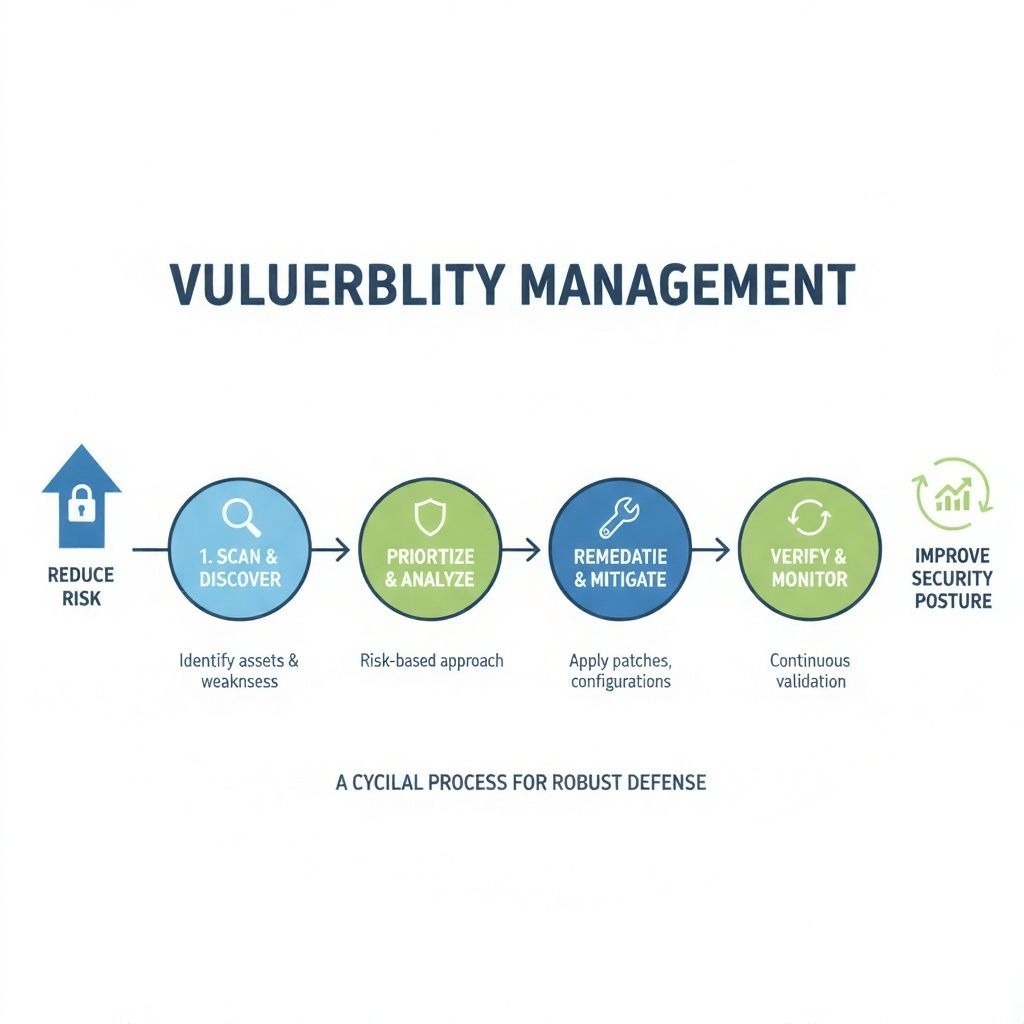
Vulnerability Management is the continuous process of finding, evaluating, prioritizing, and fixing security weaknesses in known systems and software. Organizations need it because it directly stops most cyberattacks before they can happen. Think of it as regular health check-ups for computers and networks. Just like a doctor finds a small health issue before it becomes serious, Vulnerability Management finds a small software flaw before an attacker can exploit it.
The process is straightforward but vital. First, security tools scan systems — servers, computers, applications, and network devices — looking for known problems. These problems could be outdated software, misconfigured settings, or bugs in the code. Next, experts analyze the findings.
Not every weakness is equally dangerous. They prioritize them based on how easy they are to exploit and how much damage they could cause. Then, the team fixes the problems. This usually means applying a software update, called a patch, or changing a setting to close the security hole.
Finally, they verify the fix worked and keep scanning regularly because new vulnerabilities are discovered every day. Effective vulnerability management is essential for safeguarding an organization’s systems and data against potential cyber threats. To ensure this process is systematic and auditable, many organizations start by establishing a formal Vulnerability Management Policy Example.
The consequences of skipping this process are severe. Attackers constantly search for systems with known, unpatched vulnerabilities. It’s like leaving the front door unlocked in a busy neighborhood. Studies show that over 80% of successful data breaches exploited vulnerabilities for which a patch was already available. This means most attacks could have been stopped simply by keeping software up to date.
Common problems include simple setup errors, called misconfigurations, which can accidentally expose sensitive data or create hidden entry points for attackers. At its core, vulnerability management is about understanding security posture while minimizing the attack surface as much as possible. It turns the chaos of countless potential weaknesses into a controlled, manageable process.
Faster patching for known threats is a direct benefit, leading to better overall security awareness. For a deeper dive into related practices, understanding the Difference Between Vulnerability Scanning and Penetration Testing can clarify how automated scans fit into a broader security strategy.
What is Attack Surface Management and How Does It Protect Assets Organizations Don’t Even Know About?

Attack Surface Management is the practice of continuously discovering, inventorying, classifying, and monitoring all internet-facing assets and potential entry points that an attacker could target. Organizations need it because they can’t protect what they don’t know exists. Many have “shadow IT” — forgotten servers, old test websites, unused cloud storage, or third-party services connected to their network. These unknown assets are prime targets for attackers.
The process starts with discovery. Specialized tools scan the entire internet, looking for anything connected to the organization’s name, domain, or IP addresses. This finds not just the official website and servers, but also employee devices, marketing pages, development tools, and even assets managed by partners. Next, these assets are inventoried and classified. Is this a critical server holding customer data? Or an old, unused marketing page? Then, the system monitors these assets for changes and new risks, like open ports, weak passwords, or known vulnerabilities. Finally, the goal is reduction.
Security teams decide which assets are necessary and secure them properly, and which ones can be shut down or removed to shrink the overall attack surface. Attack surface management finds what organizations have, even if they didn’t know they had it. A foundational step in this process is having a clear Asset Management Policy Example to govern how these discovered assets are tracked, assessed, and managed.
This is crucial because traditional security, including basic Vulnerability Management, often only looks at known, internal assets. It lacks visibility into unknown, unmanaged, or third-party systems. An attacker doesn’t care if an organization forgot about a server; they will find it and use it. Real-world examples show the severe consequences of inadequate external attack surface management. For instance, a Fortune 500 insurance company used ASM to find hidden risks and significantly reduce its attack surface, leading to faster incident response times.
Attack Surface Management helps unmask and mitigate unknown risks. It focuses on discovering every asset and potential exposure, including both hardware and software, giving organizations a complete map of their digital territory so they can defend it effectively. This visibility is often the first step in a comprehensive security strategy, which might also include practices like Penetration Testing: Your Digital Security Health Check to validate the security of critical assets.
How Are Vulnerability Management and Attack Surface Management Different? Understanding Their Unique Roles
Vulnerability Management and Attack Surface Management are different but complementary cybersecurity approaches. Understanding their differences helps organizations use them together effectively. The main difference is in their scope and starting point. Vulnerability Management checks a list of known assets for weaknesses. Attack Surface Management discovers all assets first, known and unknown, to understand the full range of potential exposures.
Vulnerability Management is like a detailed inspection of known property. Organizations have a list of their buildings (servers, computers, software). They send inspectors (scanners) to each one to check for broken windows, faulty locks, or structural weaknesses (vulnerabilities). Its focus is internal and specific: finding and fixing flaws within the assets they already manage.
The tools used are often more focused on software weaknesses within a defined network. It manages what organizations know. For clarity on its scope, it’s important to understand the Difference Between Vulnerability Scanning and Vulnerability Management, as scanning is just one component of the larger, ongoing management process.
Attack Surface Management is like surveying the entire land, including areas they might have forgotten. Surveyors (discovery tools) map everything — the main house, the guest cottage, the old shed, the fence line, even the neighbor’s tree branch hanging over the wall. Its focus is external and broad: finding every possible point where someone could try to get in, regardless of whether it’s officially managed. This includes hardware and software exposed to the internet. It finds what organizations have. While vulnerability management software might focus on a separate part of a network as a singular asset, ASM looks at the big picture.
Vulnerability Management zeroes in on known weaknesses, while Attack Surface Management discovers the assets and exposures where those weaknesses might exist. Organizations need both: ASM to find everything, and VM to fix the problems found within those assets. This layered approach is a key principle within frameworks like the NIST Cybersecurity Framework, which emphasizes identifying and protecting assets.
Why Combining Both Practices Creates an Unbeatable Cybersecurity Strategy
Combining Vulnerability Management and Attack Surface Management creates a powerful, layered defense that is far stronger than using either one alone. Organizations need this combination because attackers use multiple methods; defending against just one type of threat leaves them vulnerable. Attack Surface Management provides the complete map, and Vulnerability Management provides the tools to fix the specific problems marked on that map.
First, Attack Surface Management eliminates blind spots. It finds forgotten servers, misconfigured cloud storage, or risky third-party connections that internal Vulnerability Management scans would never see. Once these unknown assets are discovered and added to the inventory, the Vulnerability Management process can then scan them for weaknesses and prioritize fixes. This closes a major security gap. Without ASM, organizations might be diligently patching their main servers while an attacker is breaking in through an unsecured, forgotten test server no one remembered.
Second, the combination allows for smarter resource allocation. Knowing the full attack surface helps organizations understand where their biggest risks lie. They can then focus Vulnerability Management efforts — time and money for patching and fixing — on the most critical assets and the most dangerous vulnerabilities. This means faster patching for the threats that matter most. For example, ASM might reveal that an old marketing website has a critical vulnerability. Even though it’s not a core system, its exposure makes it a high-priority target for attackers, so VM resources are directed to fix it quickly.
Third, together they support a proactive security posture. Instead of just reacting to known threats, organizations actively hunt for hidden risks. Attack Surface Management helps implement best practices for configurations to prevent issues. Vulnerability Management ensures known software flaws are addressed. This continuous cycle of discovery and remediation builds true cyber resilience.
Real-world examples show organizations using ASM to accelerate incident response and reduce their overall risk exposure. Leveraging ASM for ransomware prevention and asset protection, combined with VM for patching, creates a comprehensive shield against modern cyber threats. This proactive stance is increasingly important, especially as threats like ransomware evolve. Learning about specific defenses, such as Ransomware Prevention Tools for Dental Offices, illustrates how these principles are applied in specific sectors.
Step-by-Step Guide: Implementing Vulnerability Management in Your Organization
Implementing Vulnerability Management involves a clear, repeatable process. Follow these steps to build a strong foundation for finding and fixing security weaknesses in known systems.
- Inventory Known Assets: Start by making a complete list of all hardware and software. This includes servers, desktop computers, laptops, network devices (routers, switches), operating systems, applications, and databases. Organizations can’t manage vulnerabilities if they don’t know what they have. Use automated discovery tools to help build and maintain this list. This inventory is the bedrock of your security, and its management should be guided by a clear policy, much like an Asset Management Policy Example.
- Scan for Vulnerabilities: Use specialized scanning tools to examine inventoried assets. These tools compare systems against databases of known vulnerabilities (like the CVE list). Schedule regular scans — weekly or even daily for critical systems — because new vulnerabilities are announced constantly. Scans can be automated to run without manual intervention.
- Prioritize the Findings: Not all vulnerabilities are equal. A critical flaw in a customer database is more urgent than a low-risk issue on an internal printer. Prioritize based on:
- Severity: How bad is the vulnerability? (Critical, High, Medium, Low)
- Exploitability: Is there a known, easy way for attackers to use it?
- Asset Value: How important is the system that’s affected?
- Potential Impact: What damage could occur if it’s exploited? (Data theft, system crash, financial loss) Use a risk scoring system to help make these decisions objectively. Effective prioritization is a core component of a mature Vulnerability Management Policy Example.
- Remediate and Patch: Fix the vulnerabilities, starting with the highest priority. The most common fix is applying a software patch or update provided by the vendor. Sometimes, it involves changing a system configuration, updating a firewall rule, or temporarily taking a system offline until a fix is available. Assign clear ownership for each fix.
- Verify and Report: After applying a fix, rescan the system to confirm the vulnerability is truly gone. Keep detailed records of what was found, what was fixed, when it was fixed, and who did it. Regular reports help track progress, demonstrate compliance, and inform management about the security posture.
- Repeat Continuously: Vulnerability Management is not a one-time project. It’s an ongoing cycle. New assets are added, new software is installed, and new vulnerabilities are discovered every day. Make scanning, prioritizing, and patching a regular, scheduled part of operations. For organizations looking to automate this process, exploring Automated Patch Management can significantly improve efficiency and coverage.
Step-by-Step Guide: Setting Up Effective Attack Surface Management
Setting up Attack Surface Management requires a focus on discovery and continuous monitoring. Follow these steps to gain visibility into the entire digital footprint and reduce hidden risks.
- Define the Scope: Decide what to discover. This usually includes anything connected to the organization’s name, domain names (like yourcompany.com), IP address ranges, and cloud environments (like AWS or Azure accounts). Consider including subsidiaries and key third-party vendors.
- Choose Discovery Tools: Select specialized ASM tools or services. These tools actively scan the internet, searching for digital assets associated with the defined scope. They can find websites, servers, cloud instances, open ports, SSL certificates, and even code repositories linked to the organization. Many tools offer automated, continuous discovery.
- Discover and Inventory Assets: Run the discovery process. The tool will generate a list of found assets. Review this list carefully. Classify each asset: Is it officially managed? Is it critical, important, or non-essential? Who owns it? Is it supposed to be exposed to the internet? This creates the external asset inventory, revealing known and unknown systems. Managing this inventory effectively requires a structured approach, often outlined in an Asset Management Policy Example.
- Assess and Prioritize Risks: Analyze the discovered assets for potential risks. Look for:
- Unmanaged or Orphaned Assets: Systems no one claims or maintains.
- Misconfigurations: Open ports that shouldn’t be open, weak security settings, and exposed sensitive data.
- Known Vulnerabilities: Use the asset list to feed Vulnerability Management scans.
- Third-Party Risks: Assets managed by partners that might have weak security. Prioritize based on the potential impact and likelihood of exploitation.
- Reduce and Remediate: Take action to shrink the attack surface.
- Remove: Shut down and decommission unnecessary or risky assets.
- Secure: Harden the configuration of essential assets (apply least privilege, close unused ports, update software).
- Monitor: Continuously watch critical assets for changes or new vulnerabilities.
- Integrate: Feed discovered assets into Vulnerability Management and other security tools for ongoing protection.
- Monitor and Refine Continuously: Attack Surface Management is never finished. New assets appear (new marketing campaigns, cloud projects), and old ones change. Set up continuous monitoring to get alerts about new discoveries or changes to existing assets. Regularly review the inventory and risk assessments, refining processes as needed. Establish strong security practices around asset management. This continuous process is a key part of maintaining a strong security posture, which can be further validated through activities like Penetration Testing: Your Digital Security Health Check.
Real-World Examples: How Companies Use These Practices to Stop Attacks
Seeing how others use Vulnerability Management and Attack Surface Management makes the concepts clearer. Here are real-world examples demonstrating their power.
- Stopping Ransomware Before It Starts: A manufacturing company used Attack Surface Management and found an old, forgotten file server exposed to the internet. This server wasn’t on their official inventory and wasn’t being scanned for vulnerabilities. ASM flagged it. Their Vulnerability Management team then scanned it and found a critical, unpatched flaw commonly exploited by ransomware gangs. They patched the server and removed its internet access before any attack occurred. This directly leveraged ASM for ransomware prevention and asset protection. Proactive measures like this are far more effective than reactive responses after an attack, as detailed in guides like What to Do If You’re Infected by Ransomware.
- Fixing the Forgotten Website: A university’s marketing department launched a temporary website for an event years ago and forgot about it. Attack Surface Management discovered this website, which was still live. A subsequent Vulnerability Management scan found it was running severely outdated software with multiple known exploits. Attackers could have used this website as a backdoor into the university’s main network. The website was promptly updated and secured, closing a major security gap.
- Securing the Cloud: A financial services firm rapidly adopted cloud services. Attack Surface Management tools continuously monitor their cloud environments (AWS, Azure). They discovered a misconfigured storage bucket that was accidentally set to “public,” exposing sensitive customer data. The ASM alert allowed the security team to immediately correct the configuration, preventing a potential data breach. ASM supports implementing best practices for cloud configurations. Specific best practices include isolating sensitive resources and applying least privilege by default. Understanding these risks is part of a broader approach to security, including Data Loss Prevention Best Practices.
- Large-Scale Success: A Fortune 500 insurance giant implemented a comprehensive Attack Surface Management program. This allowed them to systematically find and catalog thousands of previously unknown internet-facing assets. By integrating this with their Vulnerability Management, they prioritized and fixed critical issues across their entire digital estate. The result was a significantly reduced attack surface and a much faster ability to respond to security incidents when they did occur. These real-world examples demonstrate the severe consequences of inadequate management and the tangible benefits of doing it right.
Common Mistakes to Avoid When Managing Vulnerabilities and Your Attack Surface
Even with good intentions, organizations often make mistakes that weaken their security. Avoiding these common pitfalls is crucial for effective protection.
- Ignoring the Unknown: Relying solely on Vulnerability Management and assuming all assets are known is a critical error. This leaves “shadow IT” and forgotten systems completely unprotected, creating easy targets for attackers. Attack Surface Management is specifically designed to find these unknowns.
- Scanning Infrequently: Running vulnerability scans only once a quarter or annually is insufficient. New threats emerge daily. Infrequent scanning means organizations are vulnerable for long periods. Schedule scans weekly or even continuously for critical systems.
- Poor Prioritization: Trying to fix every vulnerability at once is impossible and wastes resources. Failing to prioritize based on risk means spending weeks fixing low-risk issues while a critical flaw remains unpatched. Always focus on the vulnerabilities that pose the greatest danger first.
- Lack of Ownership: If no one is clearly responsible for fixing a specific vulnerability or managing a discovered asset, it will likely remain unfixed. Assign clear ownership for remediation tasks and track them to completion.
- Neglecting Configuration Management: Many breaches happen due to simple misconfigurations, not complex software bugs. Failing to establish and enforce strong security configurations for systems, networks, and cloud services leaves doors wide open. ASM and VM should both check for and help fix misconfigurations.
- Not Integrating the Two Practices: Treating Vulnerability Management and Attack Surface Management as separate, siloed activities reduces their effectiveness. Discovered assets from ASM must feed into the VM process for scanning and patching. Risk data from VM should inform ASM priorities. They work best as an integrated system. This integration is a hallmark of mature security programs, often guided by standards like the NIST Cybersecurity Framework.
- Focusing Only on External Threats: While ASM often focuses externally, don’t ignore internal threats. Malicious insiders or compromised employee accounts can cause significant damage. Ensure Vulnerability Management covers internal networks and systems thoroughly. A holistic approach also includes policies like an Acceptable Use Policy (AUP) for Your Organization to govern employee behavior and reduce insider risk.
Frequently Asked Questions (FAQ) About Vulnerability and Attack Surface Management
Is Vulnerability Management only for large companies?
No. Any organization using computers, networks, or the internet needs Vulnerability Management. Small businesses are often targeted precisely because they are perceived as having weaker security. The process can be scaled to fit any size. Even small teams can start with basic scanning and patching, perhaps using free or low-cost tools, and gradually build a more formal process, potentially guided by a Vulnerability Management Policy Example.
Do organizations need Attack Surface Management if they already do Vulnerability Management?
Yes. Vulnerability Management only covers known assets. Attack Surface Management finds unknown assets and exposures that VM misses. Organizations need both for complete protection. Think of VM as maintaining your known property, while ASM is surveying the entire neighborhood to find any hidden access points to your land.
Is this too expensive for a small business?
No. While enterprise tools can be costly, many affordable or even free vulnerability scanners exist for smaller environments. Basic Attack Surface Management can start with simple techniques like searching for the company name online or using free reconnaissance tools. The cost of a data breach is almost always far higher than the cost of prevention. For small businesses, a focused approach, perhaps starting with a Small Business Network Security Checklist, can be a practical first step.
Can’t a firewall handle all this?
No. Firewalls are essential but are just one layer. They primarily control traffic flow. They don’t find software vulnerabilities within allowed traffic or discover forgotten assets outside the firewall’s view. Vulnerability and Attack Surface Management address different, deeper risks. A firewall is like a gatekeeper; VM and ASM are the inspectors and surveyors who ensure the entire property is secure.
How often should organizations scan for vulnerabilities?
Regularly. For critical systems, scanning weekly or even daily is recommended. For less critical systems, monthly might suffice. The key is consistency and scanning after any significant change (like installing new software). Automated tools can make this process manageable without constant manual effort.
What’s the biggest benefit of combining both practices?
Eliminating blind spots. Attack Surface Management finds everything, and Vulnerability Management fixes the problems within those things. This combination provides the most complete defense against cyber threats. It transforms security from a reactive chore into a proactive, strategic function.
Does this guarantee organizations won’t get hacked?
No. No security measure offers a 100% guarantee. Cybersecurity is about managing and reducing risk, not eliminating it entirely. However, implementing both practices significantly lowers risk and makes organizations much harder targets. It’s about building resilience, not achieving impossible perfection.
Is this only an IT department’s job?
No. While IT implements the technical processes, security is everyone’s responsibility. Employees need training to avoid phishing (which can bypass technical controls) and to report suspicious activity. Management must provide resources and support. A strong security culture is often reinforced by policies like an Acceptable Use Policy (AUP) for Your Organization, which sets clear expectations for all users.
Conclusion: Building a Stronger, Smarter Defense for Your Digital Future
Vulnerability Management and Attack Surface Management are not optional extras; they are fundamental requirements for any organization operating in today’s digital world. Vulnerability Management provides the essential function of finding and fixing known weaknesses in systems, stopping the majority of common attacks. Attack Surface Management provides the critical visibility needed to discover hidden risks and unknown assets that traditional security overlooks. Together, they create a comprehensive, proactive defense strategy.
Relying on just one leaves dangerous gaps. Focusing only on known vulnerabilities means being blind to threats lurking in forgotten corners of the digital landscape. Ignoring vulnerabilities means known systems are easy targets. Cyber threats evolve constantly, making these practices more critical every year. Implementing them involves clear, repeatable steps: continuously discover assets, scan for weaknesses, prioritize risks, apply fixes, and verify results.
Start small if needed, but start now. Use available tools, establish clear processes, and foster a culture of security awareness. The goal is not perfection but continuous improvement and significant risk reduction. By understanding the full attack surface and diligently managing vulnerabilities within it, organizations build resilience, protect valuable data, maintain customer trust, and ensure long-term success. This layered approach is the most effective way to turn chaos into control and safeguard the digital future. For those beginning their journey, resources like a Small Business Network Security Checklist or a Vulnerability Management Policy Example can provide a clear, actionable starting point.
You May Also Like
 Web Development
What Is API Rate Limiting? (A Practical, Simple Guide for Safer, Faster APIs)
 Web Development
REST API vs SOAP API: Differences, Pros & Cons, and Use Cases
 Cybersecurity
What Is Zero Trust Network Access (ZTNA)? How It Works, How It Differs From a VPN, and When to Use It
 Cybersecurity
What Is Netskope? Cloud Security, SASE, and Zero Trust Explained
 Cybersecurity
Is Fanatical Legit and Safe? My Honest Take on Buying Game Keys
 Data Security & Privacy
Is Gameflip Legit and Safe for Gift Cards? What Buyers Should Know
 Data Security & Privacy
Is Eldorado.gg Legit and Safe in 2026? My Investigation and What Buyers Should Know
 Web Development
Supabase vs Firebase: Which Backend Platform is Right for Your Project?
 Cloud Computing