


Protecting sensitive data is critical for businesses and individuals today. Two common methods to secure data are tokenization and encryption. Both aim to safeguard information, but they work in very different ways. Understanding the differences between tokenization vs encryption will help you choose the right approach for your data security needs.
In simple terms, encryption scrambles data into an unreadable format using a secret key, which can later be decrypted to recover the original information. Tokenization, on the other hand, replaces sensitive data with a non-sensitive placeholder (token) that has no meaning on its own. Unlike encrypted data, tokens cannot be “decrypted” back to the original value – they must be looked up in a secure database (token vault) to retrieve the real data. These fundamental differences lead to distinct strengths and weaknesses for each method.
For example, consider a credit card number. Encrypting the card number would turn it into a ciphertext that only someone with the correct decryption key can read. Tokenizing the card number would replace it with a random string (token) that has no mathematical relationship to the original number. If a hacker steals the encrypted number, they might still crack it if they obtain the key; if they steal the token, it is useless without access to the token vault. This illustrates why tokenization often provides stronger protection for certain types of sensitive data, while encryption is better suited for other scenarios.
In this comprehensive guide, we’ll explain how tokenization and encryption work, compare their features side by side, and outline when to use each. We’ll also cover their impact on compliance with privacy regulations, performance considerations, and emerging trends like zero-knowledge encryption and blockchain-based tokenization. By the end, you’ll clearly understand tokenization vs encryption differences and best practices for securing sensitive information.
What is Tokenization and How Does It Work?
Tokenization is a process that replaces sensitive data with a non-sensitive substitute called a token. The token is typically a random string or number that has no meaning or value outside of the system that created it. Crucially, the token cannot be reversed to get the original data through any mathematical process – it acts as a stand-in that only makes sense when mapped back using a secure lookup.
Here’s how tokenization generally works:
- Identify sensitive data: A piece of sensitive information is selected for tokenization (for example, a credit card number, Social Security number, or email address).
- Generate a token:A tokenization system creates a unique token that will represent the sensitive data. The token is usually the same length or format as the original data to maintain compatibility (for instance, a token for a credit card might also be 16 digits). The mapping between the original data and the token is stored securely in a token vault or database.
- Store/use the token : The original sensitive data is either discarded or stored only in the secure vault, and the token is used in all other systems and transactions. Any system that receives the token can use it as if it were the original data, but it cannot derive the original value from the token itself.
- Detokenization (when needed): If the original data is required (say, to process a payment or verify identity), the token is sent to the tokenization system, which looks up the original value in the vault and returns it to an authorized system. This detokenization typically happens in a secure environment and only when necessary.
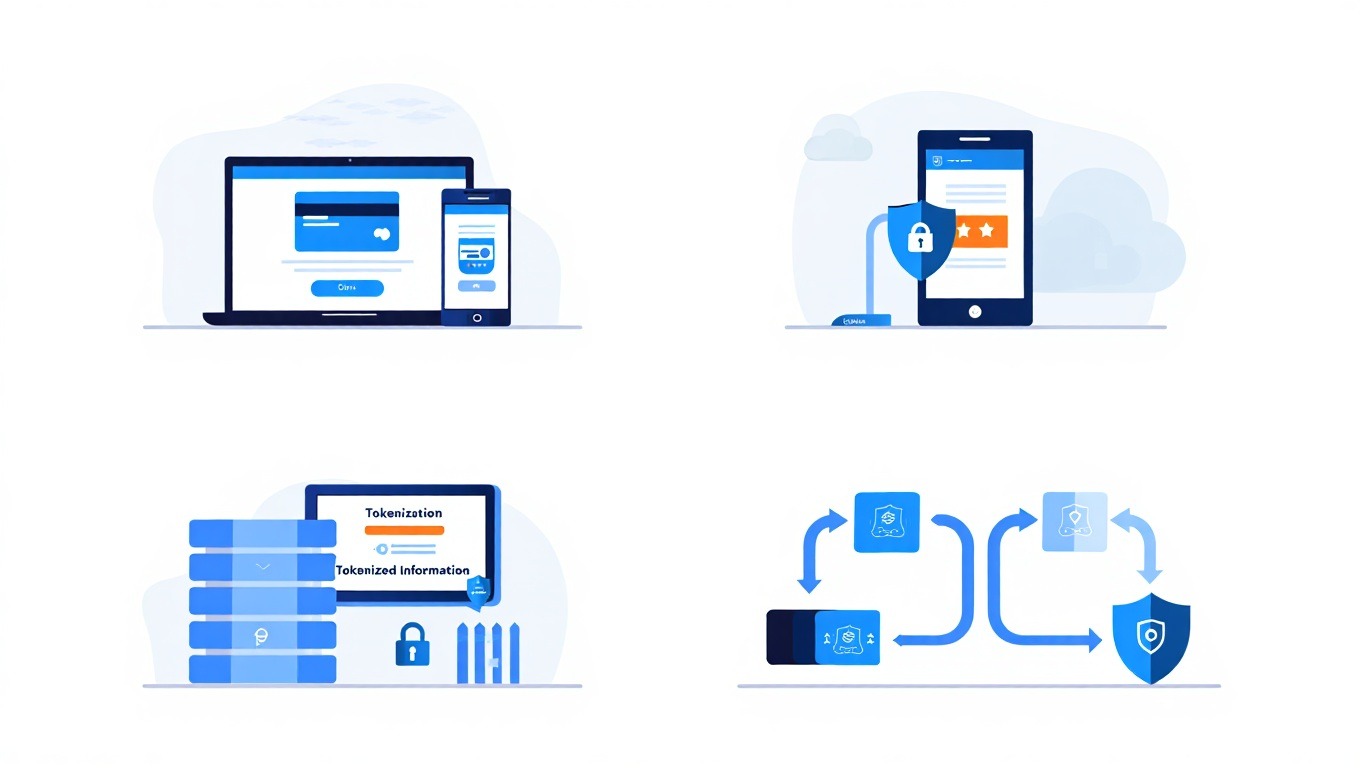
For example, when you make an online purchase, the website might tokenize your credit card number. The actual card number is sent to a payment processor’s secure system, which returns a token. The website then stores the token instead of the real card number. Later, when processing the payment, the website sends the token to the processor, which looks up the card number to complete the transaction. At no point does the website itself handle the raw credit card data after the initial tokenization.
Tokens are designed to be useless to anyone who doesn’t have access to the token vault. Even if a token is intercepted or stolen, it reveals no information about the original data. The security of tokenization thus relies on protecting the vault and the process of mapping tokens to real data. Unlike encryption keys, if a token vault is secured properly, there is no key that can be compromised to decode all tokens at once.
It’s important to note that tokenization does not inherently make data unreadable to authorized parties – rather, it ensures that only authorized parties who need the real data can get it. In many cases, the rest of the system operates on tokens and never sees the actual sensitive information. This can greatly reduce the “attack surface” and the risk of data breaches, since the sensitive data is isolated in one secure location.

What is Encryption and How Does It Work?
Encryption is the process of transforming readable data (plaintext) into an encoded, unreadable format (ciphertext) using an algorithm and a key. The original data can be recovered only by decrypting the ciphertext with the corresponding decryption key. Encryption is a cornerstone of cryptography and is used to protect data at rest (stored data) and data in transit (data moving across networks).
Here’s a simplified overview of how encryption works:
- Choose an algorithm and key: A secure encryption algorithm (such as AES, RSA, or ChaCha20) is selected, along with a secret key. The key is a piece of information (a number) that determines how the algorithm transforms the data. For strong encryption, keys are typically long (e.g, 128-bit or 256-bit for symmetric algorithms) and kept secret.
- Encrypt the data:The plaintext data is input into the encryption algorithm along with the key, producing ciphertext. This ciphertext appears as random, garbled data to anyone without the key. For example, the text “Hello” encrypted with AES-256 might become something like “U2FsdGVkX1+9…” which is unintelligible on its own.
- Store or transmit the ciphertext:The encrypted data can be safely stored in databases or files, or sent over the internet, without exposing the original information. Even if an attacker intercepts the ciphertext, it is useless without the decryption key.
- Decrypt when needed: To read the data, an authorized party uses the matching decryption key with the encryption algorithm to reverse the process. The ciphertext is transformed back into the original plaintext, which can then be used by the application or user.
There are two main types of encryption: symmetric encryption and asymmetric encryption. In symmetric encryption (e.g., AES), the same secret key is used for both encryption and decryption. In asymmetric encryption (e.g,. RSA), a pair of mathematically related keys is used – a public key for encryption and a private key for decryption. Asymmetric encryption is often used to securely share symmetric keys or for digital signatures, whereas symmetric encryption is generally faster and used for bulk data encryption.
Encryption provides confidentiality– it ensures that data can only be read by those possessing the correct key. It’s widely used for protecting sensitive information such as passwords (though hashing is often used for passwords instead, for irreversibility), personal data, financial information, and communications. For instance, when you visit a secure website (HTTPS), your browser and the server use encryption (SSL/TLS) to scramble the data being exchanged so that eavesdroppers cannot read your messages or personal details.
One important aspect of encryption is key management. The security of encrypted data depends entirely on keeping the encryption keys secure. If an attacker obtains the key, they can decrypt the data easily. Therefore, organizations must carefully manage keys – storing them in secure hardware (HSMs), limiting access, and rotating keys periodically as a best practice. Without proper key management, even strong encryption can be rendered ineffective.
Encryption scrambles data so that it is unreadable without a key, and it can be unscrambled when needed. It is a fundamental tool for data security, but it requires careful handling of keys and does not prevent someone with the key from reading the data (it only prevents those without the key from reading it).

How Do Tokenization and Encryption Differ in Purpose?
Tokenization and encryption have different primary purposes, although both aim to protect sensitive data. Encryption’s main purpose is confidentiality– ensuring data cannot be understood by unauthorized parties. Tokenization’s main purpose is data substitution– removing sensitive data from where it’s not needed and replacing it with a token, thereby limiting exposure and often simplifying compliance.
Let’s break down their purposes:
- Encryption is used to keep data secret. For example, if you encrypt a file or database, anyone without the decryption key should not be able to read the contents. Encryption ensures that even if data is intercepted or stolen, the attacker cannot make sense of it without the key. This is crucial for protecting data in transit (like credit card info sent over the internet) and data at rest (like stored personal records). Encryption can be used on any data that needs confidentiality, and the data can be decrypted when legitimate access is required.
- Tokenization is used to isolate and protect sensitive data by replacing it. The goal is often to reduce risk and scope– by using a token in place of the real data, the real data can be stored in a secure central location and only accessed when absolutely necessary. Tokenization is commonly used so that systems that don’t need the actual sensitive data (for example, a web server or a mobile app) never handle or store it. This minimizes the chance that the sensitive data could be leaked or breached from those systems. In other words, tokenization helps limit who has access to the original data, and often helps organizations comply with regulations by reducing the amount of sensitive data they hold in vulnerable places.
To illustrate, consider patient medical records. If you encrypt the records, a hacker who steals the database still gets the encrypted records – which is good, because they can’t read them without the key. But the organization still had to store the sensitive data (albeit encrypted) and manage the keys. If you tokenize the records (for example, replace patient names and SSNs with tokens), the organization might not need to store the actual names or SSNs in the main database at all – only tokens. Those tokens mean nothing to an attacker, and the real data might be kept in a separate secure system. This can reduce the impact of a breach and simplify compliance (since encrypted data is still considered “personal data” under many laws, whereas properly tokenized data might be considered de-identified).
Another difference in purpose is reversibility: Encryption is meant to be reversible – you encrypt data so you can decrypt it later and use it normally. Tokenization can be reversible (through a lookup), but often in practice, once data is tokenized, the original is removed from most systems. Tokenization might not be used if you need to regularly view or use the original data in many places; encryption would be more suitable in that case because you can decrypt on demand wherever needed. Tokenization is great when you only need the original data in limited scenarios (like processing a payment or verifying identity through a central service).
Encryption protects data confidentiality by making it unreadable without a key, while tokenization protects data by removing it from circulation and replacing it with a non-sensitive token. Encryption is about keeping data secret, and tokenization is about keeping data away from where it shouldn’t be. Both are important, but their purposes lead to different use cases and benefits.
What Are the Main Differences Between Tokenization and Encryption?
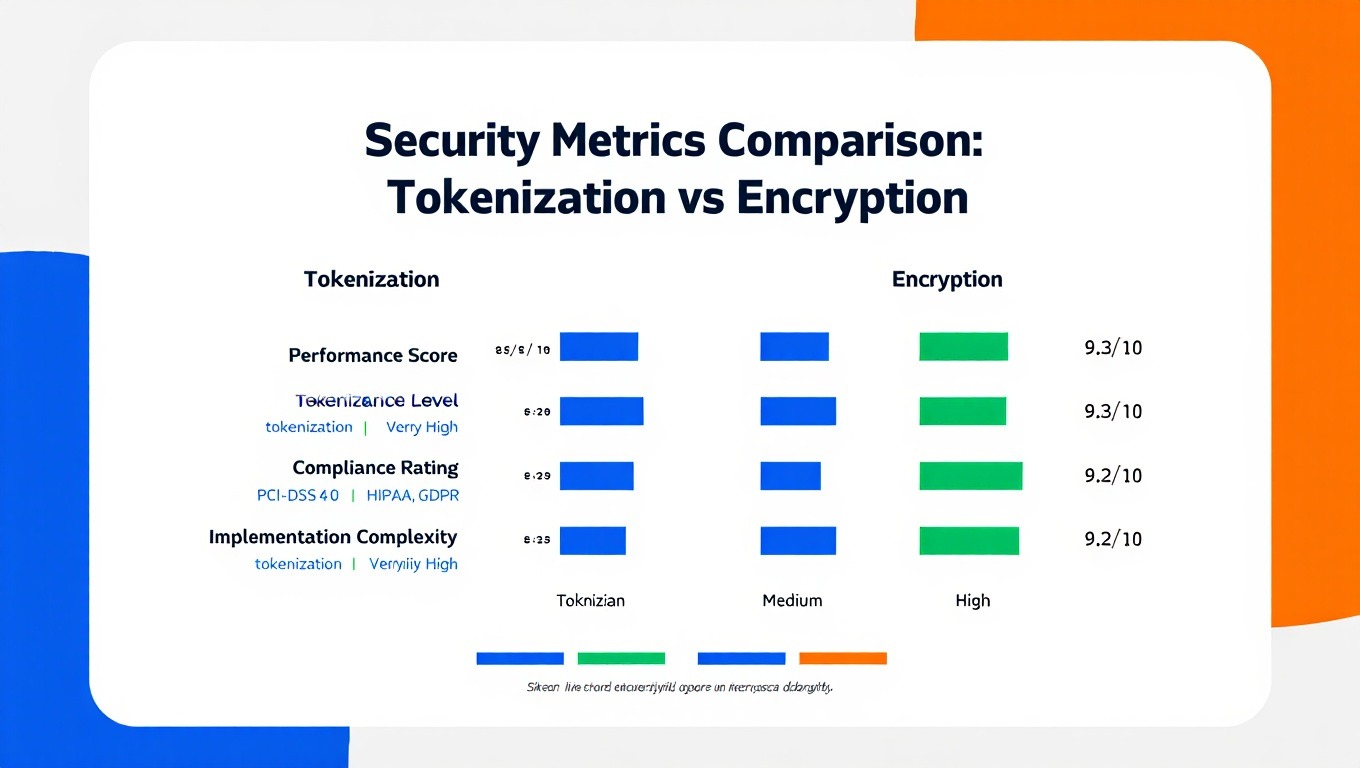
Tokenization and encryption differ in how they secure data, their reversibility, key management requirements, and use cases. Below is a side-by-side comparison of the key differences:
| Aspect | Tokenization | Encryption |
|---|---|---|
| Process | Replaces sensitive data with a random token (placeholder). | Scrambles data using an algorithm and secret key. |
| Reversibility | Tokens have no mathematical relation to the original data. Cannot be decrypted – requires a secure lookup in a token vault to get the original value. | It can be decrypted back to the original data using the correct key. The ciphertext is mathematically derived from the plaintext. |
| Security Model | Security through isolation: only the tokenization system (vault) knows the mapping. Even if tokens leak, they reveal nothing. No “key” to steal – compromising the vault is the only way to get data (which is typically hardened). | Security through secrecy of keys: if an attacker obtains the key, they can decrypt the data. Relies on cryptography strength and key protection. Data might be exposed if keys are stolen or weak. |
| Key Management | Generally simpler in some respects – there are no encryption keys to manage for the tokens themselves. However, the vault must be secured (often using encryption and access controls internally). | Requires robust key management. Keys must be stored securely, distributed to authorized parties, and rotated periodically. Mismanagement of keys (e.g. loss or leakage) can undermine encryption. |
| Data Use | Tokens can be used in place of original data for certain operations (e.g. as a reference), but any operation requiring the actual value must go through the tokenization system. Tokens allow referential integrity without exposing real data. | Encrypted data is typically not usable until decrypted. For example, you cannot search or perform calculations on encrypted text unless using special techniques (like searchable encryption). In most cases, data is decrypted to be used, which means the plaintext is exposed temporarily in memory. |
| Performance | Tokenization and detokenization involve database lookups, which can be fast but introduce network or system calls. Once data is tokenized, systems using tokens avoid handling large sensitive data, which can improve performance and reduce data size in logs, etc. | Encryption/decryption are CPU operations that can be very fast for modern algorithms (especially symmetric encryption), but can add overhead if done on very large datasets or for every transaction. However, hardware acceleration and efficient libraries mitigate this in most cases. |
| Use Case Fit | Best for permanent removal of sensitive data from most systems (e.g. payment card tokens, patient ID tokens). Excellent for compliance when you want to de-identify data. Also useful for scenarios where you need to maintain data format but not the actual value (like test data generation). | Best for temporary protection of data that needs to be accessed regularly in its original form (e.g. encrypted disk for a laptop, encrypted communication). Ideal when you need to ensure confidentiality but still use the data directly (after decrypting) in various parts of a system. |
| Example | A credit card number “4111-1111-1111-1111” is replaced with token “9876-5432-1098-7654”. The token is stored in an e-commerce database. To process a payment, the token is sent to a payment processor, which looks up the real card number from its vault. | A file containing a credit card number is encrypted with AES-256. The encrypted file is stored on a server. An authorized user with the AES key can decrypt the file to read the card number, but an attacker without the key sees only random bytes. |
As shown above,tokenization is not a form of encryption– it is a different technique. A token is not simply an encrypted version of the data; it is a meaningless substitute. Encrypted data, by contrast, contains the original data encoded secretly. This is a crucial distinction: encrypted data can be turned back into plaintext with the key, but a token cannot be turned back without a separate database.
Another way to look at it is in terms of security scope: Encryption protects data confidentiality– it ensures that if someone gets the data, they can’t read it (unless they have the key). Tokenization, on the other hand, often reduces the need to protect data in many places because the data isn’t there in the first place. By using tokens, you shrink the “attack surface” for the sensitive information. However, encryption can protect data even if it’s present in multiple places, as long as the key is safe.
It’s also worth noting that tokenization does not inherently provide encryption. The tokens themselves are not secret (they can be logged or stored openly because they’re harmless), but the mapping in the vault often is encrypted for storage. Likewise, if you encrypt data, you might still want to protect the encryption keys via additional means (like keeping them in a secure enclave or HSM). In practice, organizations sometimes use both techniques together – for example, encrypting the data in the token vault for extra security, or tokenizing data and then also encrypting the tokens or the communications involving tokens.
The main differences are Tokenization swaps data for a token (no key needed for security, but a vault is required), while encryption scrambles data with a key (which must be protected). Each has unique implications for security, usability, and compliance, which we’ll explore further in the following sections.

What Are the Advantages of Tokenization Over Encryption?
Tokenization offers several advantages over encryption, especially in scenarios where eliminating sensitive data exposure is a priority. Here are some key benefits of tokenization:
- Stronger Data Protection in Breaches: If a database containing tokens is breached, the attacker gains tokens that are useless without the token vault. In contrast, a breach of an encrypted database could expose encrypted data, which, if the attacker obtains the key, can be decrypted. Tokens carry no recoverable information on their own, so even with unlimited computing power, an attacker cannot derive the original data from a token. This makes tokenization extremely valuable for high-risk data like payment card numbers – in fact, tokenization is often recommended to reduce PCI DSS scope because tokenized card data is not considered sensitive in the same way as encrypted data.
- Reduced Compliance and Audit Scope: By tokenizing sensitive data, organizations can often remove themselves from certain regulatory obligations for that data. For example, under PCI DSS, if you tokenize cardholder data, the systems holding tokens might not need to comply with as many requirements as systems holding actual card numbers. Similarly, tokenization can help meet data anonymization requirements under privacy laws (like GDPR) because tokens can render data non-personal if done correctly. Encryption, on the other hand, usually doesn’t reduce compliance scope– encrypted personal data is still considered personal data that requires protection. Thus, tokenization can simplify compliance and reduce the cost of audits by shrinking the amount of sensitive data that needs monitoring.
- Simplified Key Management:Tokenization avoids the complex problem of managing encryption keys for every piece of data or every system. There are no secret keys distributed to various servers or applications that could be lost or stolen. Instead, the security is concentrated in the token vault. While the vault itself must be secured (often using encryption internally), organizations might find it easier to manage one highly secured vault than many encryption keys across different systems. This centralization can reduce the risk of key mismanagement, which is a common problem with encryption.
- Data Format Preservation: Tokens can be generated to look like the original data (same length, format, checksum compatible, etc.). This means applications often don’t need major changes to handle tokens – a token for a credit card still looks like a credit card number to the system, even though it isn’t one. Encryption typically produces ciphertext that has no particular format(it might be a different length or include non-printable characters), which can require more changes to systems to handle properly. Tokenization’s format-preserving nature makes it easier to integrate into existing processes (for example, using tokens in database foreign keys or APIs without altering data schemas).
- Ability to Irreversibly De-identify Data:If you want to permanently mask data (for instance, to create a safe dataset for testing or analytics), tokenization can be used to irreversibly replace data such that the original is not needed anymore. You could even discard the original data after tokenization, leaving only the tokens (and perhaps an archive of the mapping). Encryption doesn’t allow true de-identification because the data can always be recovered with the key; thus, encrypted data might still be considered sensitive. Tokenization can create a usable yet non-sensitive dataset– for example, a hospital could tokenize patient records to share with researchers, giving them data that can be analyzed without exposing real patient identities.
- Use in Uncontrolled Environments: Because tokens are safe to use in places where you wouldn’t want to use real data, tokenization allows more flexibility. For instance, a mobile app could use tokens in its logs or error messages instead of real personal data, preventing accidental leaks. Or a developer could work with a database full of tokens in a testing environment, never handling real sensitive information. Encryption doesn’t prevent use of data in logs– a developer might accidentally log an encrypted value, which, while not immediately readable, still poses a risk if the key ever leaks. Tokens eliminate that risk because logging them is harmless.
It’s important to emphasize that these advantages make tokenization ideal for certain situations, but not necessarily a replacement for encryption in all cases. For example, tokenization shines when dealing with specific sensitive fields (like card numbers, SSNs, etc.) that can be substituted. It might not be practical to tokenize every piece of data in a system – you still need a way to actually use the real data when required, which means the vault has to be involved. Encryption, by contrast, can protect entire drives or databases transparently, without needing a lookup every time data is accessed.
Tokenization’s main advantages are the near-complete removal of sensitive data from harm’s way and the simplification of security and compliance. It provides a strong layer of protection that even advanced cryptanalysis cannot crack, because there’s nothing to crack – just a meaningless token. This makes it a powerful tool for safeguarding critical data and meeting strict security standards.
What Are the Advantages of Encryption Over Tokenization?
Encryption also has unique advantages over tokenization, particularly in flexibility and universal applicability. Here are some key benefits that make encryption a preferred choice in many scenarios:
- Ubiquitous and Standardized:Encryption is a well-established technology with many standardized algorithms (AES, RSA, etc.) and widespread support. Virtually any platform or programming language can encrypt or decrypt data with minimal effort. This means encryption can be applied to any type of data– files, databases, messages, fields in an application – with relative ease. Tokenization, by contrast, often requires specialized systems or services to generate and manage tokens, and it’s typically applied to specific data elements rather than whole volumes of data.
- Transparent Use of Data:Once data is encrypted, authorized users or systems can decrypt it and use it just like plain data. Encryption does not require changing how data is processed(aside from the encryption/decryption steps). For example, if you encrypt a database, an application can query and work with the data normally after decrypting it, or even use in-place decryption with tools like Transparent Data Encryption. With tokenization, any operation that needs the actual value must involve a detokenization step, which can introduce latency and complexity. Encryption is therefore more suitable when you need to work with the data freely in its original form after access is granted.
- Works for Any Data Size or Type: Encryption scales well for large datasets and can protect entire disk drives or backups transparently. You might encrypt a 1-terabyte hard drive so that everything on it is safe if the drive is lost or stolen. Tokenizing a whole drive isn’t feasible because you would need tokens for every file and the structure of the file system, which is impractical. Encryption is great for bulk data protection– for instance, encrypting an entire database or an archive of sensitive records so that the entire collection is secured at once. Tokenization is usually targeted at specific fields or records (like replacing each credit card number with a token in a database).
- Maintains Data Utility Without a Vault:With encryption, as long as the key is available, the data can be used anywhere. You don’t need a central service to translate the data. This is useful in distributed systems or offline scenarios. For example, consider a laptop encrypted with BitLocker – the user can decrypt their files locally and use them even if they’re not connected to a network. If those files were tokenized instead, the user would need to connect to a tokenization service to get real data, which isn’t practical. Encryption allows data to be portable and usable securely on any device that has the key, whereas tokenization ties data usage to the availability of the tokenization system.
- Strong Mathematical Backing:Modern encryption algorithms are backed by decades of cryptographic research. Algorithms like AES-256 are considered unbreakable by brute force and have withstood extensive analysis. This gives a high degree of confidence that encrypted data remains confidential if the key is kept secret. While tokenization is secure by design (no key to crack), its security relies on operational security (keeping the vault safe, access controls, etc.). Encryption’s security is more of a mathematical guarantee– even if an attacker has unlimited time and computing power, they cannot decrypt the data without the key (assuming a strong algorithm and key length). This makes encryption the gold standard for ensuring data confidentiality in transit and at rest.
- Supports Authentication and Integrity (with Proper Use) :Encryption techniques (especially asymmetric encryption) can be used not just for confidentiality but also for authentication (e.g., digital signatures) and ensuring data integrity. While tokenization is purely about substitution, encryption (as part of cryptography) provides a broader toolkit. For example, using encryption with an HMAC or an authenticated encryption mode ensures that data hasn’t been tampered with. In some cases, encryption keys can be managed such that they also verify that the party decrypting is authorized (public key infrastructure, etc.).Tokenization by itself doesn’t provide these additional security services– it focuses solely on replacing data.
- Ease of Implementation for Confidentiality: In many cases, enabling encryption is straightforward. Cloud providers offer encryption for databases and storage with a click of a button. Files can be encrypted with tools like GPG or built-in OS features. Developers can encrypt sensitive fields in an application using well-tested libraries. Tokenization often requires more planning: setting up a tokenization service or using a third-party vault, ensuring every system that needs real data can connect to the vault, handling token generation and mapping, etc. Encryption can often be turned on as a “layer” over existing data with minimal changes, whereas tokenization might require a redesign of how data flows through systems.
To illustrate these points, consider an organization that wants to secure all customer records in a database. They could encrypt the database (or specific sensitive fields) – this approach secures the data and allows authorized queries to decrypt on the fly. Alternatively, they could tokenize all the sensitive fields. Tokenization might reduce their compliance burden, but it would also require that any application querying the database either works with tokens or communicates with a tokenization service to get real values when needed. For an internal analytics system, using encrypted data (with proper access controls on keys) might be simpler than using tokens, because the analysts can decrypt the fields they need to work with the actual data. On the other hand, for a web application storing payment info, tokenization might be preferable to avoid ever storing real card numbers.
Encryption’s advantages lie in its flexibility, broad applicability, and the fact that it allows data to remain usable (after decryption) without a central intermediary. It is a fundamental security measure that can be applied everywhere, from protecting a single message to securing an entire network of devices. While tokenization is a powerful complement, encryption remains the go-to solution for ensuring data confidentiality in a wide range of situations.
What Are the Disadvantages of Tokenization vs Encryption?
While both tokenization and encryption are valuable, each has its drawbacks. Understanding the disadvantages of tokenization and encryption will help you avoid pitfalls and choose the right method (or combination) for your needs.
Disadvantages of Tokenization:
- Requires a Tokenization System/Vault: Tokenization is not as “self-contained” as encryption. You must have a secure token vault or service that manages the mapping of tokens to original data. This adds complexity and a potential single point of failure (though the vault is typically hardened). If the vault is compromised or unavailable, the data might be inaccessible or exposed. In contrast, encryption keys can be distributed in various ways and data can be decrypted as long as the key is available – you don’t rely on a central service for every access.
- Limited to Specific Data Types: Tokenization works best for discrete pieces of data that can be replaced (like IDs, numbers, short strings). It’s not practical to tokenize large binary files or entire databases row by row in a way that preserves usability. Encryption, however, can handle any data type. If you have a large file or a stream of data, you’d encrypt it; tokenizing it would be meaningless. So, tokenization has a narrower scope of application compared to encryption.
- May Impact Performance for Frequent Lookups: Every time the original data is needed, a lookup or detokenization request must be made. If an application frequently needs to retrieve real data from tokens (for example, a web service that does this on each request), it could introduce latency and increase load on the tokenization system. Encrypted data, on the other hand, can often be decrypted in-place with minimal overhead (especially if using hardware acceleration). High-volume systems need to carefully design tokenization usage to avoid bottlenecks.
- Irreversibility if Not Planned:While tokenization can be reversible via the vault, if the original data is discarded and the vault is lost or damaged, the data is gone forever. There is no “backdoor” or mathematical way to recover it. With encryption, even if you lose one key, sometimes you can have backup keys or use key recovery agents. Tokenization lacks that flexibility unless you explicitly keep the original data stored securely (which defeats part of the purpose). Sodata loss risk is a consideration – organizations must ensure they have backups of the token vault mappings and/or the original data in a secure location if they cannot afford to lose it.
- Complex Integration: Implementing tokenization often requires changes to applications and data flows. Systems that used to directly read a customer’s credit card number from a database now have to get a token, possibly send it to a service to get the real number, and then use it. This can complicate software architecture. There may also be challenges in maintaining referential integrity across systems – for example, if one system tokenizes a customer ID but another system does not, you have to reconcile those differences. Encryption can often be applied transparently (e.g., transparent data encryption on a database) without changing how the application retrieves data (it just gets decrypted data). Thus, tokenization might involve more development effort and coordination across systems.
- Cost:Setting up and maintaining a tokenization solution can be costly. It might involve purchasing specialized hardware or software, or subscribing to a third-party tokenization service. For small organizations, this could be a barrier. Encryption, in contrast, can sometimes be done with free or built-in tools (most databases and cloud services offer encryption at no extra charge beyond operational overhead). While cost shouldn’t drive security decisions in critical cases, it is a practical disadvantage to consider for tokenization.
Disadvantages of Encryption:
- Key Management Complexity:As mentioned, encryption is only as secure as the keys allow. Managing encryption keys – generating them, storing them, distributing them to the right systems, revoking them if needed – can be very complex. If keys are lost, data can be irrecoverably lost (unlike tokenization, where you might still have the data in the vault). If keys are stolen or misused, encrypted data offers no protection. Many data breaches have resulted not from breaking encryption algorithms, but from poor key management (e.g., keys hard-coded in software, or stored in the same database as encrypted data). This makes encryption’s security dependent on processes and controls, which can be a disadvantage if an organization isn’t well-equipped to handle it.
- Does Not Prevent Access by Authorized Parties: Encryption protects data from unauthorized readers, but anyone who is authorized and has the key can read the data. This means encryption by itself doesn’t limit who can see the data among those who are supposed to have access – it just ensures that outsiders cannot. For example, if a database is encrypted and an employee with the key decides to export all customer records, encryption won’t stop them. Tokenization, by centralizing data, might limit that employee’s ability to see all real data (they might only see tokens unless they go through the vault). So encryption is less effective at controlling internal misuse or overexposure of data within an organization.
- Performance Overhead in Some Cases:While modern encryption is fast, there can be performance impacts when encrypting and decrypting very large amounts of data or on resource-constrained devices. For instance, encrypting every field in a database might slow down queries slightly, or decrypting a huge file on the fly could consume CPU. There are ways to mitigate this (like hardware encryption accelerators or offloading encryption to a dedicated appliance), but it’s a factor to consider. Tokenization, once implemented, might actually reduce data size (since you’re not storing extra sensitive data bytes) and avoid some processing (no need to encrypt logs, etc.), which could be a performance benefit in those areas.
- Encrypted Data Still Needs Protection: Even though encrypted data is unreadable without a key, it’s not “safe” in an absolute sense. Encrypted data should still be protected because if an attacker obtains it along with the key, they get the plaintext. Also, certain attacks can target encrypted data (for example, padding oracle attacks or side-channel attacks on the encryption process). While strong encryption mitigates most of these, it means you can’t just “set and forget” – you have to keep the encrypted data secure (backups, etc., should also be secured) and ensure you’re using proper encryption modes. Tokenization, conversely, makes the data essentially worthless to attackers even if they get it, so you might have more leeway with how you handle tokens (though you still protect them, it’s less critical).
- False Sense of Security: Sometimes organizations think that just because data is encrypted, they don’t need other security measures. This is a mistake. Encryption is one layer of defense. If the rest of your security is weak (e.g., poor access controls, vulnerabilities that let attackers get the key), encryption alone won’t save you. In some cases, encryption can lull people into a false sense that data is “safe” when, in fact, the keys or systems could be compromised. Good security practice is to use encryption as part of a defense-in-depth strategy, not as a standalone solution. Tokenization, because it’s less common, might not provide that false sense – people tend to know it requires a vault and thus focus on securing that vault.
- Regulatory and Compliance Considerations:Ironically, encryption can sometimes complicate compliance. While it’s often required (many laws mandate encryption of sensitive data in certain cases), encrypted data might still fall under data protection regulations (for example, encrypted personal data under GDPR still requires a legal basis to process and must be secured). Some regulations might not consider encrypted data as “adequately anonymized” for certain purposes. Also, in highly regulated industries, using encryption might require reporting or approval (especially if exporting encryption technology across borders due to encryption export controls). Tokenization, if done to truly anonymize data, might allow data to be outside the scope of some regulations, which is an advantage in those cases.
Tokenization’s disadvantages stem from its complexity and the need for a central system, whereas encryption’s disadvantages stem from key management and the fact that it doesn’t remove the data – it just hides it. Neither is a silver bullet. In practice, organizations often use both: for example, encrypting the data in the token vault, or tokenizing data that doesn’t need to be processed in plaintext, and encrypting everything else. Understanding these drawbacks will help you implement each method more effectively and choose the right tool for each scenario.

What Are the Best Use Cases for Tokenization?
Tokenization is a powerful technique, but it’s not necessary for every sensitive data scenario. It’s most beneficial in specific use cases where its strengths shine. Here are some of the best use cases for tokenization:
- Payment Card Processing:Tokenization is widely used in the payments industry to handle credit and debit card numbers. When a customer makes a purchase, their card number can be replaced with a token that the merchant stores for future transactions. This way, the merchant never actually stores the real card number on their servers, greatly reducing their PCI DSS compliance scope. For example, if you save your card in an app for one-click purchases, the app likely stores a token, not your actual card number. The token is sent to the payment processor, which retrieves the card number from its secure vault when needed. Tokenization in payments ensures that even if a breach occurs at the merchant, no real card data is leaked.
- Storing Sensitive Personal Information (PII): Organizations that handle large amounts of personal data (like healthcare records, financial account info, or government ID numbers) can use tokenization to protect this information. For instance, a hospital might tokenize patients’ Social Security numbers or insurance IDs in its databases. Only a few authorized systems (like billing or identity verification services) would be able to detokenize and see the real IDs. This reduces the risk of insider misuse or breaches exposing these sensitive identifiers. Tokenization of PII can also help in meeting privacy regulations by de-identifying data – for example, under GDPR, properly tokenized data might not be considered “personal data” if there’s no reasonable means to re-identify the individual (the means being the secure vault, which is tightly controlled).
- Test Data and Development Environments: Companies often need copies of production data for testing new software or training employees. This data frequently contains real personal or financial information, which is a risk if not handled correctly. Tokenization is an excellent solution to create realistic but safe test data. By tokenizing names, addresses, card numbers, etc., the test database looks and behaves like the real one (same formats and relationships), but contains no actual sensitive data. Developers and testers can work with the data without exposing real customer information. This practice is common in industries like finance and healthcare to comply with data privacy laws while still allowing effective testing. It’s far better than simply masking data or using random fake data, because tokens preserve data integrity (e.g., a tokenized email might still look like an email and pass format checks).
- API and Inter-System Communication:When different systems or external partners need to share data, tokenization can be used to avoid sending raw sensitive information over the wire or storing it in logs. For example, an e-commerce platform might send a token instead of a credit card number to its inventory or analytics system. Those systems don’t need the real card number – they just need a reference to link transactions. If a third-party service is involved, tokens can be provided instead of actual data, limiting exposure. Tokenization in APIs ensures that even if an API call is intercepted or logged, only a token is visible. The real data remains protected in the originating system’s vault.
- Reducing PCI DSS Scope: We touched on payments generally, but it’s worth highlighting PCI DSS specifically because it’s a major driver for tokenization. PCI DSS has strict requirements for any system that handles actual cardholder data. By using tokenization, a merchant can classify their systems as handling “tokenized data” instead of “cardholder data,” which often reduces the compliance burden. The tokenization vault (usually managed by a payment processor or token service provider) then takes on the responsibility for protecting the real card numbers. This is a best practice for many online businesses –tokenize card data at the point of entry so that it never hits your regular databases. Even if your systems are breached, you haven’t exposed cardholder data, which can save you from huge fines and reputational damage.
- Data Sharing and Analytics:Organizations might want to share data with partners or analyze it in aggregate without revealing individual identities. Tokenization can create a common token space where, for example, two companies can both map their customer IDs to a common set of tokens and then share analytics on those tokens. Neither company learns the actual customer IDs of the other, but they can correlate data (like conversion rates) by token. This is useful in marketing partnerships or healthcare data exchanges. Another example is creating an analytics database where all personal identifiers are tokenized – analysts can crunch numbers and find trends without accessing real names or addresses.
- Protecting Data in Legacy Systems: Some legacy systems are difficult to secure (maybe they don’t support encryption well or they log sensitive data to screen). Tokenizing the data going into such systems can be a practical way to protect it. For instance, if you have an old mainframe application that must store SSNs, you could tokenize the SSNs before storing them. The mainframe still functions (it just sees tokens), but the risk of exposure is much lower. You essentially wrap the legacy system with a tokenization layer to modernize security without rewriting the system.
In all these use cases, a common theme is removing sensitive data from where it’s not absolutely needed. Tokenization is ideal when you have a clear scenario where a placeholder can stand in for the real data in most contexts, and only a limited number of trusted processes need the real data. If you find yourself in a situation where you want to ensure that “this piece of data never appears in plain form except in one secure place,” tokenization is likely the right approach.
For example, consider an online subscription service. They need to charge customers monthly, so they need the credit card or payment method on file. But do they need to see the actual card number after the initial transaction? Probably not. They can tokenize it. The customer’s account record stores a token. When it’s time to charge, they send the token to the payment gateway. The service never has to handle the real card number again, and if someone breaks into their database, they only get tokens. This is a classic use case where tokenization provides strong protection and simplifies compliance.
What Are the Best Use Cases for Encryption?
Encryption is a versatile security tool used in countless scenarios. It’s often considered a baseline security measure for protecting data. Here are some of the best and most common use cases for encryption:
- Securing Data in Transit (Network Communications) :Whenever data travels across a network – whether it’s a website visit, an email, or a file transfer – encryption is used to ensure that eavesdroppers cannot read the content. The most common example is HTTPS, which encrypts web traffic between a browser and a server using TLS (Transport Layer Security). This protects sensitive information like login credentials, credit card numbers, or personal messages from being intercepted by hackers on public Wi-Fi or network equipment. Virtual Private Networks (VPNs)also use encryption to create secure tunnels over the internet. In general, any time you see a padlock icon or “https://; in your browser, encryption is at work. Protecting data in transit is one of encryption’s strongest suits, as tokenization wouldn’t make sense here (you need the real data to be delivered to the recipient, just not readable to anyone else along the way).
- Encrypting Data at Rest (Storage):Encryption is widely used to protect data that is stored on devices or servers. This includes full-disk encryption on laptops and mobile devices (so that if the device is lost or stolen, the data cannot be accessed without a password or recovery key), database encryption, and file encryption. For example, many organizations enable Transparent Data Encryption (TDE)on their databases, which encrypts the entire database files so that even if someone copies the files, they cannot read them without the database master key. Cloud storage services often offer server-side encryption, where data is encrypted before being written to disk and decrypted when read, all transparently to the user. This ensures that the cloud provider or any attacker who gains access to the storage cannot see the actual data. Data at rest encryption is often mandated by security standards and is a fundamental practice to prevent unauthorized access to stored information.
- Protecting Confidential Files and Backups:Individuals and businesses frequently encrypt sensitive files or archives. For instance, a person might encrypt a USB drive containing financial records with a password. A company might encrypt backup tapes or cloud backups that contain personal data, so that if those backups fall into the wrong hands, the data remains safe. Encryption is ideal here because it allows the owner to securely store or transport the data and decrypt it only when needed. Tools like VeraCrypt (for disk encryption) or GPG (for file encryption) are commonly used for this purpose. Backups are a critical use case– they often contain the entire dataset of an organization and are sometimes stored off-site; encrypting them mitigates the risk of theft or loss of backups.
- Securing Authentication and Secrets:While passwords themselves are usually hashed (not encrypted, because you don’t need to retrieve the original password), encryption is used for related secrets. For example, encryption keys, private keys, or other sensitive configuration values might be encrypted when stored. If an application needs to store an API key or a database password securely, it can encrypt it with a master key. Only the application (or system) that has the master key can decrypt and use that secret. This protects secrets from being read by someone who gains access to the configuration files. Key management systems often encrypt encryption keys with other keys (a key hierarchy) to keep them safe. In essence, encryption helps protect the very keys and secrets that are used to secure other things.
- Email and Messaging Security:Encrypting email is a bit more challenging than web traffic because email is stored on servers and forwarded through multiple systems. However, technologies like PGP (Pretty Good Privacy) and S/MIME allow users to encrypt email messages so that only the intended recipient (who has the matching private key) can decrypt and read them. This is crucial for sensitive communications (legal, medical, etc.). Similarly, many modern messaging apps (like WhatsApp, Signal, or iMessage) use end-to-end encryption, meaning the messages are encrypted on the sender’s device and can only be decrypted on the recipient’s device – not even the service provider can read them. End-to-end encryption ensures that even if the service is breached or the data is intercepted, the content remains confidential to the participants.
- Database Column-Level Encryption:In some cases, rather than encrypting an entire database or file, specific sensitive columns (like a “Social Security Number” column or a “password” column) are encrypted. This is known as column-level or field-level encryption. Applications encrypt the data before storing it in the column and decrypt it after retrieval. This way, even if someone accesses the database directly (bypassing the application), the sensitive fields are scrambled. For example, a customer database might encrypt the “credit_card” field so that only the application with the key can see the actual card number. Column-level encryption is useful when you want to add an extra layer of protection beyond what the database’s own security provides. It’s a bit more complex because you have to manage the encryption in the application or database layer, but it’s a common practice for high-value data.
- Protecting Sensitive Data in Memory: This is a more advanced use case, but some technologies encrypt data even while it’s being used in a computer’s memory. For instance, Intel’s SGX (Software Guard Extensions) or similar secure enclaves can encrypt memory regions so that even the OS or hypervisor can’t read them without the enclave’s key. While not encryption in the traditional “store it encrypted” sense, it uses encryption techniques to protect data in use. This is important for scenarios like processing credit card transactions in memory without any possibility of a rootkit or admin user snooping the data. Encryption in use is an emerging area to address the gap that encryption at rest and in transit leaves – data that is decrypted in memory can still be vulnerable to certain attacks, so keeping it encrypted even in memory (with special hardware/software support) adds another layer.
To illustrate encryption’s use cases, imagine an employee working from home. They connect to their company’s network via a VPN (encrypted tunnel). They open a file from a cloud storage that is encrypted at rest – the cloud service decrypts it on the fly for the employee. They edit a document containing confidential client info; the document is saved encrypted to disk. They send an email to a client with some sensitive details, and they encrypt the email with the client’s public key so only the client can decrypt it. Throughout this workflow, encryption silently protects data as it moves and sits. Tokenization wouldn’t be suitable for most of these steps – you can’t tokenize an email or a VPN connection. Encryption is the right tool to ensure confidentiality across the board.
Encryption is best used for protecting data whenever it needs to remain confidential but still accessible to authorized parties, whether that’s data zipping across the internet, sitting on a disk, or even being processed in memory. It’s a foundational security measure for communications, storage, and data processing, and it complements other techniques like tokenization rather than replacing them in many cases.

Can Tokenization and Encryption Be Used Together?
Yes, tokenization and encryption can (and often should) be used together as complementary security layers. They are not mutually exclusive – in fact, combining them can provide a higher level of security than using either alone.
One common way to use them together is to encrypt the data inside the token vault. Remember that tokenization replaces data with a token, but the original data still exists in the vault (unless it’s irreversibly de-identified). To protect the stored original data, the vault itself is usually encrypted. For example, a payment processor’s vault that maps tokens to real card numbers will store those mappings in an encrypted database or use an encrypted key-value store. This means even if someone somehow gains access to the vault’s storage, the actual sensitive data (card numbers, etc.) is encrypted and not immediately usable. The security of the tokenization system thus benefits from encryption as an additional safeguard.
Another scenario is using tokenization for external systems and encryption for internal systems. Let’s say a company wants to share some data with a third-party vendor. The company could tokenize any sensitive identifiers in the data before sharing it with the vendor, so the vendor only sees tokens. Internally, however, the company might still keep the real data encrypted in their own databases. This way, the vendor never handles real sensitive data (thanks to tokenization), and even within the company, the data is protected by encryption so that not just anyone can read it (only those with the keys). It’s a layered approach:tokenization for external exposure, encryption for internal confidentiality.
You might also use encryption to protect the tokens or the communication involving tokens. While tokens themselves are not sensitive, the context in which they’re used might be. For instance, if you send a token over the network to a service to detokenize, you’d still send it over an encrypted channel (HTTPS/TLS) to prevent an attacker from seeing the token and potentially using it (if they somehow knew how to use it or could replay it). Also, some tokenization systems generate tokens that could be considered semi-sensitive (for example, if a token format is predictable or if seeing many tokens could allow someone to infer something about the data volume). Encrypting the tokens in logs or secondary databases adds another layer of obscurity, though it’s usually not strictly necessary since tokens are not useful without the vault.
Another combined approach is encrypt-then-tokenize or tokenize-then-encrypt in the same data flow. For example, a healthcare system might first encrypt a patient’s medical record with a patient-specific key, and then tokenize the patient’s ID in that record. This way, even if someone got the record, they’d see an encrypted blob and a token – neither of which reveals identity or data without the key or vault. Or vice versa: tokenize the sensitive fields, then encrypt the entire record for storage. Both orders can work, depending on which operation you want to do first. Typically, tokenization might be done first if you want to reduce what gets encrypted (encrypting a token is easier than encrypting a long SSN, though computationally it’s negligible). But it really depends on the system design.
It’s also worth noting that encryption and tokenization address different threats, so using both covers more bases. Encryption protects against someone reading data that they shouldn’t (confidentiality), while tokenization protects against someone having the data at all (by removing it or replacing it). An attacker who somehow obtains the decryption key might be able to read encrypted data – but if that data was also tokenized, they might only read tokens which are meaningless. Conversely, an attacker who breaches a system might get tokens, which are useless – but if those tokens were stored alongside encrypted real data (poor practice, but hypothetically), they might try to get the key for that encrypted data. By using both, you create overlapping defenses.
One example of combined use in practice is in the payment card industry. When you pay with a card at a modern retailer, the card number might be tokenized at the point of sale terminal (so the merchant never handles the real number), and then that token is sent over an encrypted channel to the payment network. The payment network might further encrypt the token or data before storing it in their systems. Additionally, the original card number in the token vault is encrypted. So from the moment the card is swiped, multiple layers of security are in place: tokenization to remove sensitive data from most systems, and encryption to protect it in transit and at rest in the systems that do need it.
Tokenization and encryption can be used together. In fact, many secure systems use them in tandem to achieve defense-in-depth. Tokenization ensures that sensitive data is minimized and isolated, while encryption ensures that any data (or token mappings) that is stored or transmitted is confidential. Using both together can help meet stringent security requirements and protect against a wider range of threats.
Conclusion
Tokenization and encryption are two essential pillars of data security, each with distinct mechanisms and ideal use cases. Encryption scrambles data to keep it confidential, while tokenization replaces data to limit its exposure. Understanding the differences between tokenization vs encryption is crucial for designing robust security strategies.
In this article, we explored how encryption uses keys and algorithms to transform data into an unreadable form that can be decrypted when needed. We saw that encryption is a versatile tool, widely used to protect data in transit (like HTTPS for web traffic) and data at rest (like encrypted databases and disks). Its strengths lie in its strong mathematical security and ubiquity – it can safeguard virtually any data and is a baseline requirement in many security standards. However, we also noted that encryption requires careful key management and that encrypted data, while secret, still needs to be handled according to privacy laws.
On the other hand, we examined tokenization, which swaps sensitive data for tokens – placeholders that have no meaning outside a secure mapping system. We discussed how tokenization shines in scenarios such as payment processing (to meet PCI DSS and protect cardholder data) and in de-identifying personal information (to simplify compliance with privacy regulations like GDPR). Tokenization provides a high level of protection by removing the need to store sensitive data in most systems, thus reducing the risk and impact of breaches. Its advantages include easier compliance, stronger protection against breaches, and the ability to work with data formats without exposing real values. We also acknowledged that tokenization requires a secure vault and can add complexity and some performance overhead due to lookups.
We compared tokenization vs encryption across various factors – from reversibility and security models to performance and implementation. The comparison highlighted that these are complementary techniques: encryption protects confidentiality, and tokenization reduces exposure. In many cases, using both together yields the best results, such as encrypting the contents of a token vault or using encryption to secure communications involving tokens.
We also delved into how each method affects compliance and privacy. Encryption helps satisfy security controls and can mitigate breach fallout, but encrypted personal data remains subject to privacy laws. Tokenization, when done to truly de-identify data, can sometimes remove data from regulatory scope, offering a powerful compliance advantage. Organizations often employ a combination: using encryption as a baseline and tokenization as a strategic tool to shrink the footprint of sensitive data.
Looking at practical considerations, we saw that while both techniques have some performance impact, modern systems and hardware make these impacts manageable. Encryption’s overhead is mostly CPU-related and often negligible with hardware acceleration, whereas tokenization’s overhead comes from external lookups, which can be optimized with caching and efficient design. Implementation-wise, encryption can often be turned on with minimal changes (especially for whole-disk or database encryption), while tokenization might require more significant changes in data flow and processes, but pays off in reduced risk.
You May Also Like
 Cloud Computing
8 Best AWS S3 Alternatives Compared: Pricing, Egress, and S3 Compatibility
 Cloud Computing
What Is Cloud Cost Optimization? Strategy & Best Practices
 VPN & Proxy
Why Does Google Say Our Systems Have Detected Unusual Traffic From Your Computer Network?
 Web Scraping
TinyFish.ai Review: Is It the Best AI Agent for Web Scraping
 AI Technology
ChatGPT API Alternatives: 13 AI APIs and Platforms for Developers
 Web Development
Building Apps with Lovable and Supabase: A Step-by-Step Guide
 Web Development
Supabase Auth Guide: Authentication, OAuth, OTP, MFA, SSO, Sessions, and Pricing
 Web Development
15 Best CyberPanel Alternatives in 2026: Free and Paid
 Web Development