


Above and beyond the limits of what earlier generations of hardware could do, the gaming world has always pushed at the edges of what’s possible. The pull of a high score, the adrenaline of real competition, and the disorientation of stepping into a world that doesn’t behave like the real one — these are the reasons the industry has grown into one of the largest entertainment sectors on the planet, larger by revenue than film and music combined in most recent estimates.
Artificial intelligence has become the newest front in that push. It shows up in how a game adjusts to you mid-session, in how a non-player character remembers what you did an hour ago, and in how a small studio can now build assets that once required a department. From the earliest arcade cabinets to today’s sprawling open worlds, the throughline has always been the same: technology reshaping what a game can convincingly pretend to be.
But there’s a harder question underneath the marketing copy, and it’s one the industry itself is now visibly arguing about: as AI gets better at making games and better at running them, who actually captures the value — the player getting a more responsive experience, or the studio cutting costs and squeezing more revenue out of the same catalog? This piece works through that question in more depth than the usual “AI is changing everything” framing, including the parts of the story studios are less eager to publicize.
A Longer History of AI in Gaming Than You Might Expect
The instinct to treat AI in gaming as a post-2020 phenomenon misses most of the actual history. Simple game-playing programs for Nim and Tic-Tac-Toe were running on early computers well before the games industry existed in any commercial sense, demonstrating that a machine could simulate a kind of decision-making that looked, to an observer, like strategy rather than randomness. AI didn’t become a meaningful factor inside the commercial games industry itself until the 1970s and 1980s, when arcade cabinets needed something more than fixed patterns to keep players feeding in coins.
Space Invaders and Pac-Man are the two most commonly cited examples of this era, and for good reason: both used simple behavioral rules to control enemy movement, reacting to player position in ways that felt adversarial even though the underlying logic was closer to a flowchart than a mind. That was enough. It converted static obstacles into something that felt like it was trying to beat you specifically, and that feeling — not the sophistication of the code producing it — is what made the games addictive.
The 1990s brought a real jump in complexity. Games like Doom and Half-Life introduced enemies that used pathfinding algorithms to navigate complex 3D spaces and decision trees to change tactics based on what the player was doing, rather than following a single scripted pattern. This was the first era where “the AI is good” or “the AI is dumb” became something players discussed as a distinct quality of a game, separate from its graphics or its story.
The next major inflection point arrived in 2014 with the Nemesis System in Middle-earth: Shadow of Mordor, which gave enemy captains persistent memory of their encounters with the player — they could remember a defeat, hold a grudge, form alliances, and return later transformed by what had happened between them and the player. Alien: Isolation pushed a related idea further with a single, persistent predator whose search behavior adapted to the player’s habits rather than resetting between encounters. Both represented something categorically different from earlier “enemy AI”: not just smarter reactions, but continuity — the game remembering you specifically, across time.
Machine learning and neural networks then moved AI’s role in gaming well past enemy behavior alone, into procedural content generation, character animation, and the systems used to populate and simulate large virtual worlds. And starting around 2023, the generative AI boom — large language models capable of open-ended conversation, and diffusion models capable of generating images, audio, and 3D assets — pulled gaming AI into an entirely new category, one that touches not just how enemies behave but how an entire game is written, voiced, and built.
How AI Is Changing What Playing a Game Feels Like
Personalization That Goes Beyond Difficulty Sliders
The most immediately visible benefit of AI for players is personalization that goes well past a simple easy/medium/hard toggle. Modern systems interpret patterns in how a specific player moves, fails, retries, and succeeds, and use that read to adjust pacing, enemy placement, and even narrative emphasis in ways a static difficulty setting never could. Two players on “normal” difficulty can now have meaningfully different experiences tuned to their actual play style rather than an average assumption about what “normal” players want.
Adaptive Difficulty as a Retention Mechanism
Adaptive difficulty deserves its own mention because it’s simultaneously a player-experience feature and a business one. By continuously reading player performance, an AI system can nudge challenge up or down in real time to keep both a first-time player and a genre veteran in what game designers call “flow” — engaged without being either bored or frustrated to the point of quitting. Industry data on AI-driven titles has pointed to meaningfully higher average playtime and player retention compared to games without these systems, which is precisely why studios invest in it: a system built to serve the player’s experience and a system built to protect a studio’s engagement metrics are, in this case, the same system.
Conversational, Persistent NPCs
This is where the most significant recent shift has happened, and where 2026 has been a genuinely different year from 2020. Large language models now let non-player characters hold open-ended conversations, remember earlier interactions, and respond to player behavior with something closer to judgment than a scripted branch tree. Ubisoft’s collaboration with NVIDIA and Inworld AI on what it calls NEO NPCs is the most prominent commercial example: characters designed to hold dynamic, unscripted conversations, adapt to player behavior over time, and display more human-seeming emotional responses rather than looping through a fixed set of voice lines.
Ubisoft has gone further with an internal research project called Teammates, an 80-person effort led by the studio’s director of generative AI gameplay, built around three AI-driven companions — Jaspar, Pablo, and Sophia — who respond to natural spoken commands rather than a menu of pre-set orders. The distinguishing feature isn’t that the characters talk; chatbot-style game companions have existed as tech demos for years. It’s that each character carries a distinct personality profile and weighs a player’s spoken intent against its own behavioral parameters before responding, producing something closer to a negotiation than a command being executed.
Other studios are approaching the same problem from different angles. Rockstar’s upcoming Grand Theft Auto VI is reported to include a system nicknamed “Dialogue Decay,” combined with environmental awareness and persistent memory of player actions, without going fully generative on the underlying dialogue engine — a more conservative, controlled middle ground between scripted and fully AI-driven characters. Meanwhile, platform providers are building the infrastructure layer underneath all of this: NVIDIA’s ACE (Avatar Cloud Engine) handles real-time voice and animation for AI-driven characters, and Tencent has been developing an orchestration platform aimed not at individual NPC conversations but at coordinating dozens or hundreds of AI-driven characters interacting with each other inside a shared world — infrastructure intended to let a game world keep evolving even when no player is logged in to witness it.
Branching, Player-Shaped Storytelling
AI-assisted narrative systems have also expanded what “your choices matter” can mean in practice. Instead of a handful of pre-written branch points, generative systems can produce dialogue and consequence variations dynamically, giving players a stronger sense that the story is actually responding to them specifically rather than selecting from a small set of pre-authored outcomes. This is still a young and uneven area — generative narrative can drift into inconsistency without careful constraints — but it represents a real expansion of what interactive storytelling can attempt.
How AI Is Changing What Building a Game Looks Like
Faster, Cheaper Asset Production
On the development side, AI has moved well past a novelty tool. Engines like Unity and Unreal now incorporate AI-assisted workflows for character design, level layout, and asset generation, automating work that used to consume large blocks of a production schedule. Industry research into production deployments has found development time reductions in the range of 25 to 40 percent and cost savings exceeding 20 percent in asset pipelines specifically — numbers substantial enough to reshape how a studio staffs a project, not just how it schedules one.
For solo developers and small teams, this shift has been even more direct. AI tools for art generation, voice synthesis, and level-building have made it realistic for very small teams — sometimes a single person — to produce games that would previously have required a fully staffed studio, meaningfully lowering the entry barrier into commercial game development.
Data-Driven Design and Monetization
AI’s role in analyzing player behavior has become central to how modern games are tuned, not just for engagement but for revenue. By tracking how players actually behave, rather than how designers assumed they would, studios can refine everything from level pacing to the timing of in-app purchase prompts and advertising placement. This is the least publicly celebrated use of AI in gaming, and also one of the most consequential financially — it’s a direct pipeline from “AI understands the player” to “AI increases what the player spends.”
Automated Testing and Quality Assurance
AI-driven testing tools now handle much of the repetitive load involved in shipping a modern game: automated bug detection, load testing under simulated concurrent-user conditions, and AI-driven playtesting that can explore a game’s state space faster and more exhaustively than a human QA team working the same hours. This doesn’t eliminate the need for human testers, but it shifts their time toward judgment calls — is this bug actually a problem, does this system feel right — rather than mechanical repetition.
The Scale of the Shift
The scale of adoption is no longer marginal. Market analysis has placed the global generative AI in gaming market at roughly $1.79 billion in 2026, with 36 percent of studios reporting active adoption and the market growing at a compound annual rate above 23 percent. A separate industry-wide survey of more than 2,300 gaming professionals found that 36 percent personally use generative AI tools as part of their own job, with ChatGPT the most widely used tool by a wide margin, followed by Google’s Gemini and Microsoft’s Copilot. The gap between near-universal workflow integration at the studio level and roughly a third of individuals directly touching these tools suggests AI has become embedded in production pipelines even where individual developers aren’t consciously interacting with it day to day.
Who Actually Gains More — And Why the Answer Isn’t Fixed
The honest answer to “who benefits more, players or developers” is that it depends which layer of the system you’re looking at, and the balance has been shifting.
Players get real, tangible gains: adaptive experiences, richer characters, faster patches, and in many cases, more content for the same price. But developers and the studios that employ them are positioned to capture the larger share of the value AI creates, because AI’s primary economic function inside a studio is cost reduction and monetization optimization, not player generosity. Lower development costs, faster iteration cycles, and better-tuned monetization systems all flow to the business side of the ledger first; the player experience improvements are, in large part, a byproduct of systems built to serve retention and revenue rather than the reverse.
That doesn’t make the player benefit fake — genuinely better adaptive difficulty and richer NPCs are real improvements to how a game feels to play. But it does mean the framing of AI as a straightforward gift to players understates how deliberately these systems are built around business outcomes first.
The Developer Backlash Nobody Predicted
Here’s the part of the story that rarely makes it into vendor-driven coverage of AI in gaming: the people actually building these games have grown considerably more skeptical of the technology over the past year, not less. A GDC 2026 developer survey found that 52 percent of game developers now view generative AI negatively — up sharply from around 30 percent just a year earlier, and only a small single-digit percentage described its impact as positive. That’s not a minor grumble; it’s a significant swing in sentiment within an industry that, by most external measures, is adopting the technology faster than almost any other creative sector.
Part of that discomfort is about labor: automating asset creation, testing, and even dialogue writing directly threatens roles that used to require a team, and separate research into the ethical dimensions of this shift found the concerns extend to a large majority — cited at 84 percent of surveyed developers — who report unresolved worries about the technology’s impact on their field. Part of it is about creative control: developers who’ve spent careers hand-tuning enemy behavior or writing branching dialogue are watching some of that craft get delegated to a model whose outputs are harder to predict and, in some cases, harder to defend creatively. And part of it is legal and contractual — voice actor rights under agreements like the one governing SAG-AFTRA performers have become a live flashpoint, as generative voice and dialogue systems raise direct questions about consent, compensation, and where a human performance ends and a synthetic extension of it begins.
The Ethical and Structural Risks Worth Taking Seriously
Beyond the labor and creative-control tensions, a few other risks deserve to be named plainly rather than folded into vague concerns about “moral problems”:
- Competitive integrity. Automated bots exploiting weaknesses in online multiplayer systems can distort competitive rankings and matchmaking in ways that are difficult for a normal player to even detect, let alone counter, and this problem gets harder as the bots themselves get better at mimicking human play patterns.
- Transparency. Players increasingly can’t easily tell which parts of a game — dialogue, difficulty adjustments, matchmaking — are AI-driven and adaptive versus fixed and authored, which makes it harder to evaluate whether a system is serving the player or quietly optimizing around them.
- Emergent behavior containment. Generative NPC systems can produce dialogue or behavior that developers didn’t explicitly author and can’t fully predict in advance, which creates real production risk: a character behaving inconsistently with the story around it, or saying something the studio would never have approved through a normal writing process.
- Job displacement. The same automation that speeds up development and cuts costs is, by design, reducing the number of people needed to do certain kinds of work that used to be staffed by full teams — level design, QA, and increasingly, elements of writing and voice work.
None of this means AI’s role in gaming is net negative — the player-facing gains described earlier are real. But an industry moving this fast, with its own workforce growing more skeptical rather than more enthusiastic, is not a story of frictionless progress, and treating it as one understates the tension that’s actually playing out inside studios right now.
Where This Is Headed
The direction of travel seems fairly settled even if the pace and the politics around it aren’t: hybrid systems — strong, human-authored foundations enhanced by generative layers for dynamic response — appear to be winning out over either fully scripted or fully generative extremes. That’s a more conservative synthesis than the more breathless “fully generated worlds” framing suggests, but it matches how the most credible current examples, from Ubisoft’s NEO NPCs to Rockstar’s more constrained Dialogue Decay system, are actually being built: generative flexibility layered carefully on top of authored structure, not replacing it.
For players, that likely means characters and worlds that keep feeling more responsive and less obviously scripted over the next several years. For developers, it means navigating a genuine internal split between the technology’s demonstrated production value and a workforce that’s grown increasingly uneasy about what it’s displacing and how it’s being governed. Both of those things can be true at once, and the industry’s next few years will largely be about which one it treats as the more urgent problem to solve.
Conclusion
AI’s impact on gaming is real, substantial, and still accelerating — but it isn’t the uncomplicated win-win the surface-level coverage often suggests. Players are getting more adaptive, more persistent, and more convincingly alive game worlds. Developers and the studios employing them are capturing the larger share of the resulting value, primarily through cost reduction and better-tuned monetization, even as a growing share of the people actually building these games say they’re uneasy about where the technology is taking their craft and their jobs. Understanding both halves of that story — the genuine player-facing gains and the underlying business logic and labor tension driving them — is a more accurate picture than treating AI in gaming as a simple story of progress, and it’s the picture that matters most for anyone trying to think seriously about where the industry goes from here.
You May Also Like
 SaaS
SaaSWhat Is No-Code Automation? How It Works, Benefits, and Risks
 Web Scraping
TinyFish.ai Review: Is It the Best AI Agent for Web Scraping
 AI Technology
ChatGPT API Alternatives: 13 AI APIs and Platforms for Developers
 Web Development
Building Apps with Lovable and Supabase: A Step-by-Step Guide
 AI Tools
10 Best PDF Extraction APIs for Text, Tables, OCR, and Structured Data
 Web Scraping
What Is AI Web Scraping? A Complete Guide to AI-Powered Data Extraction
 Web Scraping
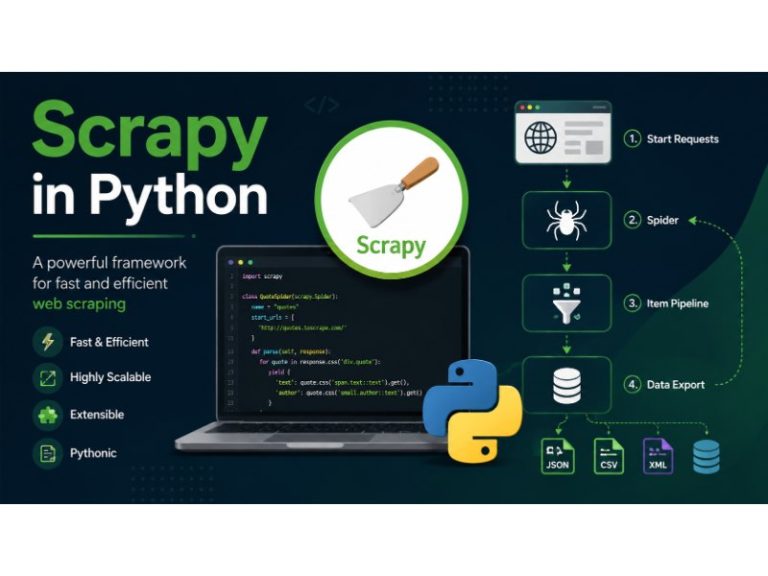
Scrapy in Python: A Practical Guide to Web Scraping
 AI Tools
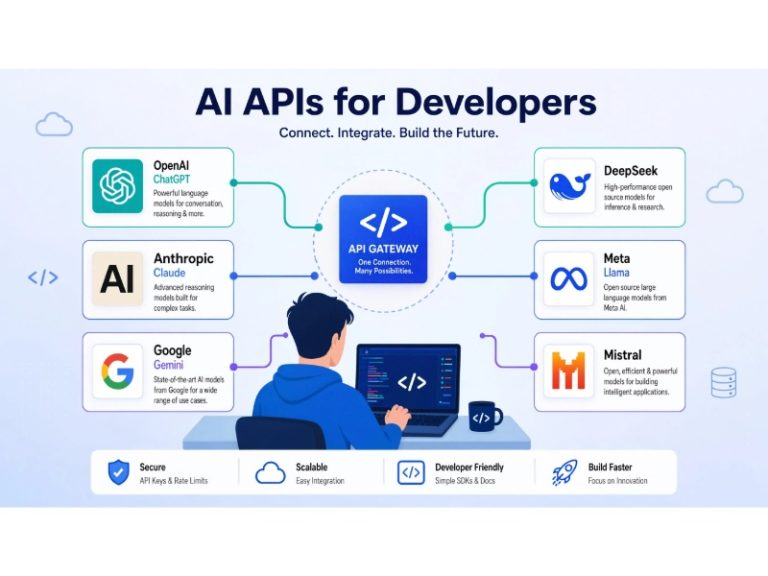
15 Best Free AI APIs for Developers: Free Tiers, Credits, and Limits Explained
 AI Technology