


The digital world poses many challenges to businesses, individuals, and governments alike. Everyone wants to protect their data, networks, and applications from cybercriminals. As more sensitive information moves online, it becomes an even bigger target for attacks. You might ask, “Is AI The Future Of Penetration Testing?” That question highlights an emerging trend you cannot ignore. Many security experts believe artificial intelligence (AI) will transform how we spot vulnerabilities and strengthen digital defenses.
Using AI in penetration testing does not mean we will get rid of human experts. It means we want to carry out more efficient and thorough security checks. By harnessing machine learning, natural language processing, and other AI-driven technologies, penetration testers can assess the security of an organization in record time. You may have seen discussions about how AI can hunt for hidden risks, automate repetitive tasks, and generate predictive analytics. These capabilities can reduce human effort while delivering deeper insight into potential weak points.
But is such a shift the ultimate solution? In this article, we will dig into the evolving relationship between AI and penetration testing and figure out if a blend of human intervention and AI tools can benefit cybersecurity professionals. By reading on, you will learn about the fundamental concepts of penetration testing, discover the key AI technologies fueling next-gen security solutions, and find expert viewpoints on the advantages and drawbacks of such solutions. Finally, you will be able to decide whether AI might lead us into a bright future or whether it will fall short of expectations.
Understanding Penetration Testing
What Is Penetration Testing?
Penetration testing, sometimes called pen testing or ethical hacking, is a structured approach used to evaluate a system, network, or application’s security level. Experts in cybersecurity carry out these tests by simulating real-world cyberattacks. They try to exploit vulnerabilities, find weaknesses, and see if unauthorized access is possible. These ethical hackers aim to help organizations sort out their security gaps before malicious attackers do.
Traditional penetration testing relies heavily on human knowledge and experience. Certified professionals work with teams to examine systems and attempt to break into them using manual techniques, customized scripts, and specialized tools. Once they gain access to sensitive data or compromise a system, they document every step. That process helps security teams address vulnerabilities and tighten defenses as soon as possible.
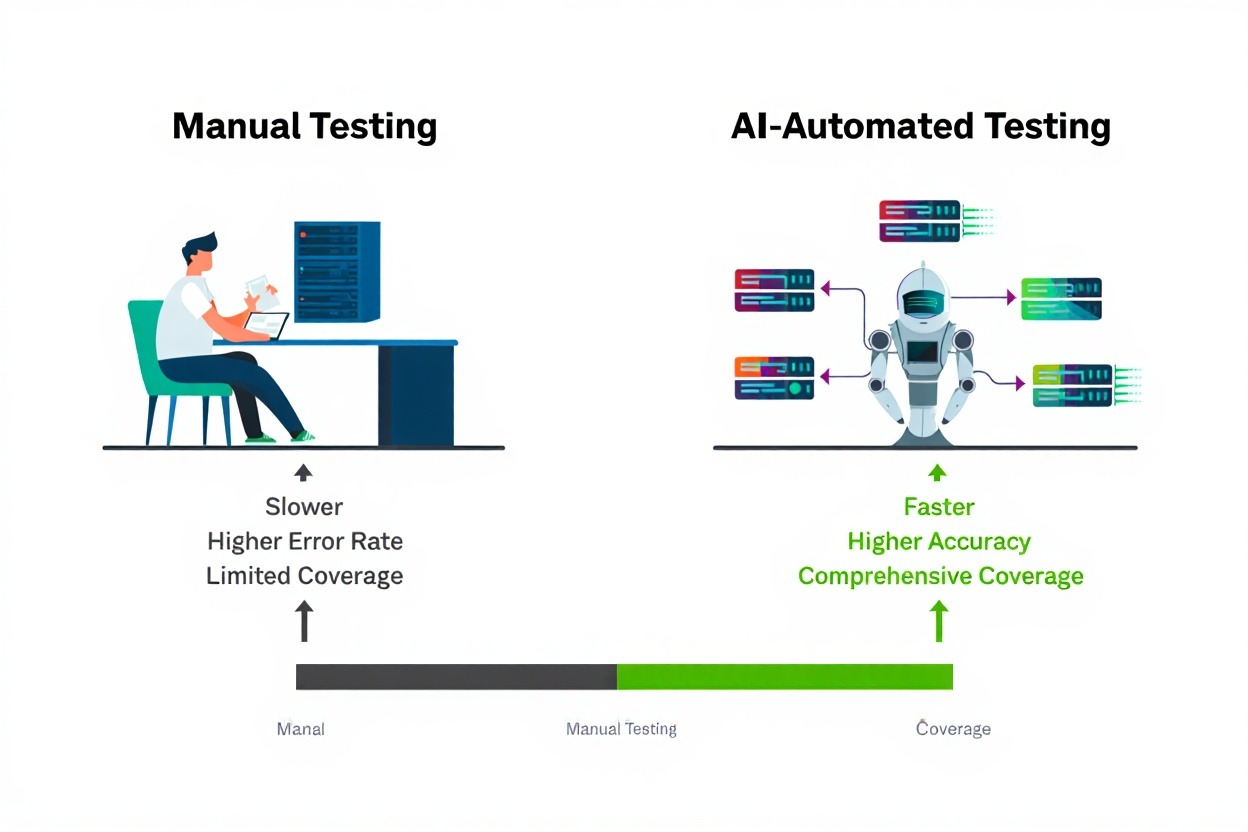
This manual approach offers many insights into how security flaws happen. However, manual testing often takes a lot of time and can be restricted by a tester’s skill set. Human testers might overlook subtle signals, especially when facing large, complicated networks. That is where AI enters the picture to automate and enhance the testing procedure.
The Value of Manual Testing
You may wonder why we do not just rely on automated tools entirely, especially when AI-driven technology is flourishing. The reason is straightforward: human intelligence holds unique value that no machine can fully replicate. Manual testing allows for creativity and adaptability since humans can pick up on unusual patterns, social engineering attempts, and advanced persistent threats that might escape an automated scan.
Moreover, ethical hackers can react in real-time if they stumble upon unexpected leads. Their experiential knowledge encourages them to probe deeper into suspicious activities. A well-trained human tester can also think like a criminal, adapt quickly to changing scenarios, and work around typical security barriers. There is a strategic element to ethical hacking that often goes beyond what automated scripts can do.
Common Tools in Pen Testing
Security teams usually use a mixture of open-source and commercial software to break into systems, identify vulnerabilities, and measure potential impact. Tools like Metasploit, Nmap, and Burp Suite form the backbone of many penetration testing efforts. They automate specific tasks, such as network scanning, port enumeration, or payload delivery, to free up testers for more creative exploits.
At the same time, manual scripts or specialized programs might be written by testers to tackle unique environments. These tools look at issues like misconfigured networks, outdated patches, or overlooked files. However, such tests often require repeated processes. Plus, the complexity of modern systems makes it increasingly difficult to complete a thorough analysis in a short period of time. This limitation signals the growing necessity to incorporate AI-based solutions.
The Emergence of AI in Cybersecurity
The Rise of Artificial Intelligence
Artificial intelligence has become a buzzword in almost every industry, from healthcare to finance, entertainment to environmental science. While it might seem like just another tech fad, AI has demonstrated pragmatic possibilities in the realm of cybersecurity. Machine learning algorithms and pattern recognition methods can handle massive amounts of data more efficiently than humans can do on their own.
In cybersecurity, AI can dive into log files, analyze user behavior, and detect anomalies in record time. It helps reduce false positives and false negatives, creating better detection methods that adapt to evolving threats. Because of its speed and accuracy, software that integrates AI modules can quickly identify suspicious activities and flag them for further investigation.
Driving Forces Behind AI’s Integration
One main driver behind the growing integration of AI in security is the dramatic increase in cyber threats. Attackers do not sit still; they come up with new tactics and exploit zero-day vulnerabilities at a rapid pace. They also rely on sophisticated malware, machine learning, and even AI themselves. To keep up with these criminals, the cybersecurity industry needs advanced solutions that go beyond standard antivirus tools or single-layer firewalls.
Another reason is the sheer volume of data that must be analyzed. Traditional security solutions struggle to parse thousands or millions of events. AI, on the other hand, can go through these events quickly, spot anomalies, and learn from them. It can produce real-time alarms and reduce the time needed for threat detection. That advantage alone makes AI attractive to security professionals looking to step up their capabilities.
Early Applications of AI in Security
You might have already encountered AI-driven antivirus suites or intrusion detection systems that use anomaly-based detection methods. These rely on heuristics and machine learning to differentiate normal behavior from unusual patterns. The success of these early AI-based systems has spurred deeper exploration into even more advanced applications.
Threat intelligence platforms also use AI to look into criminal forums, dark web marketplaces, and social media channels. They search for leaked credentials, stolen data, or upcoming hacking techniques to warn businesses before threats escalate. By automating data collection and analysis, these platforms can free up security experts to handle more complex tasks like penetration testing and threat remediation.
At the intersection of these advancements lies AI The Future Of Penetration Testing, where specialized frameworks leverage machine learning and analytical algorithms for more comprehensive security audits. Let us now take a closer look at how AI and penetration testing can merge to bring about a new era of robust cybersecurity.
AI and Penetration Testing: The Perfect Pair?
Advantages of AI-Driven Pen Testing
When discussing “Is AI the Future Of Penetration Testing?”, many security analysts point out the noteworthy benefits. First and foremost, AI can speed up the identification of vulnerabilities. In large-scale environments with multiple subnets, assets, and applications, it can be difficult to keep track of potential weaknesses using manual or even semi-automated methods. AI, however, can scan every piece of the network, comparing known vulnerabilities with live data at lightning speed.
Second, AI excels at pattern recognition. It does not get bored or tired, so it can slog through repetitive tasks without losing focus. This consistency makes it less likely that a hidden vulnerability will slip past the testing procedure or remain undetected for months at a time. By freeing human testers from menial tasks, organizations can draw on professional knowledge where it really matters—where creative or cutting-edge exploits are necessary.
Third, AI-driven testing frameworks can learn from their mistakes. Machine learning models get better with more input data. If they detect vulnerabilities or intrusions in one scenario, they can apply these new insights to other systems and networks. Over time, the system’s detection rate grows more refined, helping the organization maintain security in dynamic environments.
Balancing Automation and Creativity
Despite these advantages, AI-based penetration testing still comes with certain limitations. For instance, penetration testing is not just about scanning or enumerating vulnerabilities. It involves strategic thinking, social engineering, and real-time creative responses. An AI system can get stuck if it confronts a tactic outside its core training data.
Additionally, some organizations might rely too heavily on automated tools, forgetting that human oversight remains pivotal. You can run into trouble if you let AI do the entire job by itself, especially if your security staff never double-checks the findings. That over-reliance might create gaps that attackers exploit once they figure out how the AI is configured.
So, should we rely on AI alone for penetration testing? The answer is no. A balanced approach that merges AI power with human expertise stands out as the most secure path forward. Human testers can explore unconventional vulnerabilities and social engineering angles. Meanwhile, AI handles data heavy-lifting and scanning tasks.
Cost and Resource Considerations
One factor that influences whether organizations embrace AI-based penetration testing is cost. Integrating machine learning tools can require expensive hardware, specialized software, and staff training. Small and medium businesses may find it difficult to take on these expenses unless they demonstrate clear value. However, as the market expands, more cost-effective AI-based solutions will likely emerge.
On the other hand, the cost of ignoring AI might prove more expensive in the long run. A single breach can cost millions of dollars in remediation expenses, legal fees, and damage to a company’s reputation. Investing in AI-driven testing could reduce the risk of catastrophic attacks, making it a compelling option for those willing to take a chance on cutting-edge solutions.
Real-World Use Cases
Some organizations have already started to roll out AI-powered vulnerability scanning tools. For example, various financial institutions use AI modules to look for anomalies in transactional data and identify suspicious patterns. Health care providers incorporate these technologies to ensure electronic medical records remain protected from intrusions. Government agencies with critical infrastructure also leverage AI solutions to proactively spot potential security weaknesses before they can be exploited.
By exploring these real-world examples, we see that AI is not simply a pipe dream. It is an evolving technology that can come through when used correctly. But it is essential to combine it with skillful human testing for a truly well-rounded approach.
Key AI Technologies Enhancing Penetration Testing
Machine Learning Algorithms
At the heart of many AI solutions are machine learning algorithms that build predictive models based on vast amounts of data. These algorithms can identify patterns of network traffic or user behavior that signify vulnerabilities or potential attacks. By training these models, testers can work through large data sets more efficiently.
Supervised learning methods use labeled examples to teach the AI what suspicious activity looks like. Unsupervised learning, on the other hand, helps the tool detect anomalies without prior labeling—an approach especially helpful in zero-day vulnerabilities or brand-new attack types. Reinforcement learning is also gaining traction. It rewards the AI for finding new ways to compromise systems, refining its strategy over time.
Natural Language Processing (NLP)
NLP focuses on enabling computers to understand, interpret, and generate human language. In penetration testing, NLP can help AI-based tools read code, documentation, and error logs. It can pick up on subtle references to misconfigurations or leftover developer comments that might contain clues to hidden weaknesses.
Moreover, NLP-driven solutions can assist in sorting out phishing campaigns, social engineering scripts, or malicious attachments. By analyzing textual content, the AI can identify suspicious threats faster than a manual approach. This ability then supports pen testers in pinpointing existing vulnerabilities and shutting them down.
Intelligent Vulnerability Scanning
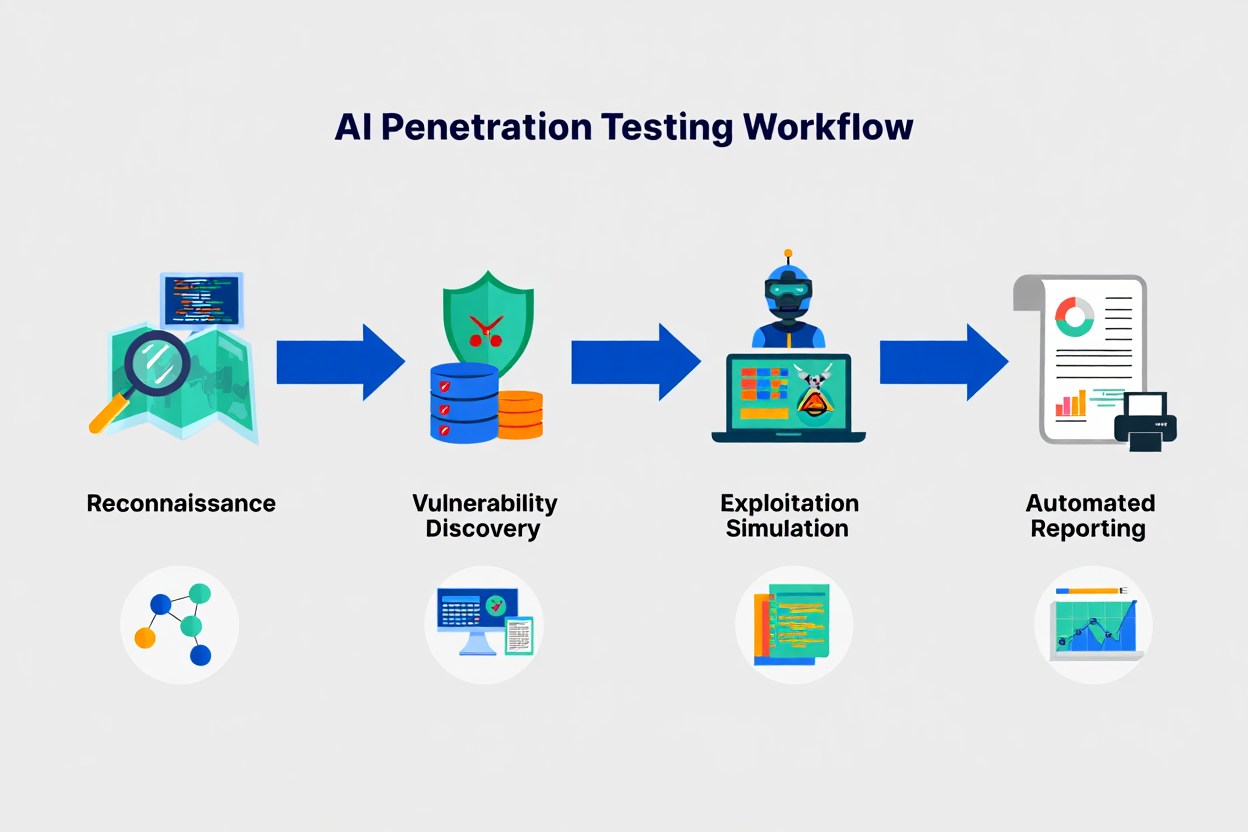
Traditional vulnerability scanners rely on signature-based methods. They match known vulnerabilities with recognized patterns. However, AI-powered scanners go deeper. They can look for misconfigurations, outdated libraries, or flawed lines of code that do not necessarily match a known signature. This dynamic scanning approach ensures no potential gap is overlooked.
Furthermore, these intelligent scanners improve their performance by learning from each assessment. If they detect a new, previously unknown vulnerability, they can mark it, share the data, and adapt their scanning routine immediately. This refinement process makes future scanners even more accurate and responsive to emerging threats.
Automated Exploit Generation
Some advanced AI-based pentesting tools go beyond scanning and charting vulnerabilities—they can automatically develop and test exploits. By analyzing a vulnerability’s technical details, the AI can construct proof-of-concept attacks to confirm the vulnerability is real, not a false positive. This automated exploit generation capability speeds up the testing process and supplies better reports, although it also raises ethical concerns if it falls into the wrong hands.
Still, for ethical hackers and security teams, having a tool that can figure out damage potential in minutes can be extremely valuable. It saves time by eliminating guesswork and ensures rapid responses. The team can then patch bugs or misconfigurations before malicious hackers have a chance to act.
Potential Risks and Limitations
Ethical and Regulatory Concerns
As we ask whether AI is the future of penetration testing, it is crucial to recognize possible drawbacks. AI-based pentesting tools can generate exploits automatically. If these tools land in unauthorized hands, they might enable criminals to discover and weaponize vulnerabilities at a larger scale. Balancing innovation against the risk of misuse remains a tricky tightrope to walk.
Regulators and lawmakers are still catching up with AI developments, and legal frameworks differ from region to region. For example, using AI to analyze personal data might be subject to strict data protection laws. Companies that rely on AI-based scanning tools must understand these regulations and make sure they comply. Otherwise, they could face legal problems or fines.
Overreliance on Automation
Automation can help testers stay on top of tasks. But an overreliance can erode human expertise and creativity—two essential traits in ethical hacking. If teams automate every step of pentesting, they may become complacent, ignoring proactive measures. Cybercriminals could figure out how AI-based tools work, then get around them by exploiting areas humans have neglected because they believed everything was fully covered.
Therefore, organizations should ensure a balanced approach where AI manages routine tasks, data analysis, and scanning, while human testers step in to handle complex or novel attacks. Maintaining ongoing training for staff members can prevent skill degradation and improve synergy between humans and AI.
Data Bias and False Positives
Machine learning models are only as good as the data they are trained on. If the training data is biased, incomplete, or low in quality, the findings might be inaccurate. That inaccuracy could manifest as excessive false positives or, worse, false negatives. A false negative is when the tool fails to detect a real threat, leaving a company exposed.
In addition, adversaries might try out methods of “poisoning” the AI’s input data, skewing the model’s ability to detect threats. This scenario can undermine the effectiveness of AI-driven pentesting and highlights the need for continuous monitoring and retraining of these systems. Human oversight and robust data gathering practices are indispensable for reducing the impact of data bias.
Cost and Technical Complexity
We have touched on financial implications before, but it is worth pointing out that adopting AI-based pentesting demands both technical and monetary investments. Tools can be expensive, and companies might need specialized staff who can manage or customize these tools. Smaller organizations might find it hard to justify these upfront costs or struggle to recruit the required talent.
Integration into existing workflows can also be a hurdle. Not every company’s IT infrastructure is ready to accommodate advanced AI modules. Merging new tech with old architecture might lead to system disruptions if not managed carefully. These complexities require planning, resource allocation, and expert guidance to avoid operational setbacks.
The Future Landscape of AI-Powered Penetration Testing
Ongoing Advances in Machine Learning
Machine learning algorithms continue to evolve, outshining their predecessors in terms of accuracy and efficiency. In penetration testing, these evolving algorithms can learn to detect new vulnerabilities faster and adapt to creative exploitation techniques. Expect to see more advanced forms of deep learning and reinforcement learning that hunt down zero-day vulnerabilities with minimal human intervention.
Additionally, natural language models are getting smarter. They can interpret code comments, patch notes, and even developer forums. As these models grow in sophistication, they will likely spot clues about potential flaws, enabling organizations to head off exploits before they materialize. Large-scale language models can also help testers keep up with the ever-changing threat landscape by analyzing open-source intelligence quickly.
Collaboration Between AI and Humans
In the near future, synergy between AI systems and human ethical hackers could lead to a powerful human-machine team up. Consider an environment where AI scans and prioritizes vulnerabilities. It then hands these leads to a human professional who uses creative hacking techniques to probe deeper. Once that portion of the test is complete, the human returns their findings to the AI, which adjusts its scanning strategy for the next steps.
This back-and-forth process harnesses the best qualities of both AI—speed, accuracy, and big-data capabilities—and human intelligence—flexibility, intuition, and empathy. Such a combination can create a formidable barrier against advanced persistent threats and emergent cyberattack techniques.
Greater Accessibility
As AI in cybersecurity continues to develop, we can anticipate lowered costs and broader accessibility. Cloud-based solutions already exist for many scanning services, and AI-driven pentesting might follow the same path. This shift could grant smaller organizations access to advanced strategies once reserved for large enterprises.
Moreover, the user experience for AI-powered platforms is predicted to simplify. User-friendly dashboards, automated reporting, and guided wizards can help companies with limited security expertise take advantage of next-level protection. This widespread accessibility stands to strengthen overall cybersecurity and reduce the success rate of criminal activities.
Ethical AI in Security
Expect to see more conversation around “ethical AI” in penetration testing over the next few years. Security professionals, ethicists, and policymakers will push for guidelines that prevent irresponsible or malicious use of artificially intelligent systems. Discussing topics like AI transparency, accountability, and fairness will shape new policies and set industry standards.
Creating these standards will not happen overnight, but as the technology matures, the conversation will deepen. Certifying AI-based pentesting tools, requiring them to follow certain ethical principles, and restricting their distribution could mitigate the risks associated with misuse. The result should be a more stable path for adopting AI in cybersecurity.
5G, IoT, and Cloud Evolutions
With 5G networks gearing up worldwide, the Internet of Things (IoT) and cloud expansions are intensifying. These technologies broaden the attack surface. More devices and applications mean more possible entry points for hackers. AI-driven pentesting solutions will rise to meet these challenges, delivering real-time scans and immediate responses.
Expect to see specialized AI modules designed for IoT device testing. These might predict anomalies in connected devices, respond autonomously to suspicious activity, and even quarantine compromised devices to limit damage. When combined with edge computing, these modules could run localized checks on each device before it even communicates with the broader network. This self-monitoring approach can bring about quicker detection and reduce overall risk.
Conclusion
Is AI The Future Of Penetration Testing? The simple answer is that AI is poised to revolutionize how we conduct security audits—yet it will not displace human ethical hackers entirely. The synergy between AI’s data processing abilities and a human’s creative problem-solving edge represents the strongest formula for modern cybersecurity. AI can handle massive amounts of data, automate tedious tasks, and discover hidden vulnerabilities at lightning speed. Meanwhile, human engineers can craft cunning strategies, adapt to unique scenarios, and keep the solution ethical.
Moving forward, an integrated approach looks like the best way to head off determined cybercriminals. By leveraging AI The Future Of Penetration Testing in combination with skilled professionals, organizations will stay ahead in an intensifying cybersecurity arms race. Regardless of your current resources, adopting AI-based scanning in some capacity will likely become necessary to keep your network and data safe. Take a thoughtful, balanced approach to harness the power of AI: let it take over repetitive tasks, but keep experienced humans in the loop to validate, explore further, and address unforeseen threats.
FAQ About Is AI the Future of Penetration Testing:
Is AI The Future Of Penetration Testing?
AI brings unprecedented speed, accuracy, and scalability to penetration testing efforts. It can automate repetitive tasks and detect vulnerabilities more efficiently, making it a valuable tool for modern cybersecurity.
Will AI Replace Human Ethical Hackers?
No. While AI can handle large amounts of data and automate several phases of penetration testing, humans still excel at creative problem-solving and strategic thinking. A combined approach is best.
Can AI Tools Guarantee Complete Security?
No. AI cannot guarantee absolute security because new threats keep emerging, and attackers can sometimes outsmart automated systems. Human oversight remains essential for a well-rounded security posture.
Do Small Businesses Benefit from AI-Driven Pentesting?
Yes. Small businesses gain from AI’s efficiency and scalability, but they must adapt their budget and expertise. Over time, more affordable and user-friendly AI solutions will become widely available.
Are AI-Based Pentesting Tools Risky if They Fall into the Wrong Hands?
Yes. These powerful tools can be misused by cybercriminals to discover and exploit vulnerabilities more quickly. Proper controls and legal frameworks are necessary to prevent unethical activities.
You May Also Like
 VPN & Proxy
Why Does Google Say Our Systems Have Detected Unusual Traffic From Your Computer Network?
 Web Development
Supabase vs Firebase: Which Backend Platform is Right for Your Project?
 Web Development
REST API vs SOAP API: Differences, Pros & Cons, and Use Cases
 Web Development
What Is API Rate Limiting? (A Practical, Simple Guide for Safer, Faster APIs)
 Data Security & Privacy
Is Eldorado.gg Legit? An Honest 2026 Review
 Data Security & Privacy
Is Gameflip Legit and Safe for Gift Cards?
 Cybersecurity
Is Fanatical Legit? An Honest Review Based on Real Gamer Experiences
 Cybersecurity
Is Groupon Legit? An Honest Review In 2026
 Cybersecurity