


Groupon is a legitimate deals marketplace that has been operating since 2008, and yes, it works — but with important caveats that most reviews skip over. I have used Groupon for close to eight years across restaurant vouchers, spa treatments, home cleaning services, weekend getaways, and a fair share of impulse buys I probably should have thought through more carefully. Some of those experiences were excellent. A few were forgettable. One or two taught me lessons I still apply every time I click “Buy.”
This article is not a marketing summary. It is a working consumer’s take on whether Groupon is legit in 2026, how the platform actually functions, where it delivers real value, where it falls short, and how to use it without getting burned. If you are wondering whether to trust the site with your credit card, or whether a specific type of deal is worth it, you will have a clear answer by the end.
Below I will cover what Groupon actually is, how it makes money, the categories where it genuinely shines, the categories where I would tell a friend to stay away, and the practical rules I follow every time I buy. All of it comes from personal experience, not press releases.
What Is Groupon and Is It a Real Company?
Groupon is a legitimate publicly traded e-commerce marketplace that connects consumers with local businesses, travel providers, and product sellers through discounted offers. The company was founded in Chicago in 2008 by Andrew Mason, went public on the Nasdaq in 2011 under the ticker GRPN, and continues to operate in more than a dozen countries in 2026.
The business is real. The transactions are real. The vouchers you buy are backed by an official refund policy called the Groupon Promise, which I have used personally more than once. If a deal falls through, is misrepresented, or the business closes before you redeem, Groupon typically refunds you — sometimes in cash back to your original payment method, sometimes as Groupon credit, depending on the timing and the situation.
So the answer to “is Groupon legit” is a clear yes. The more useful question is: is Groupon worth using for the specific thing you want to buy? That answer is more mixed, and it depends heavily on the category.
How Groupon Actually Works
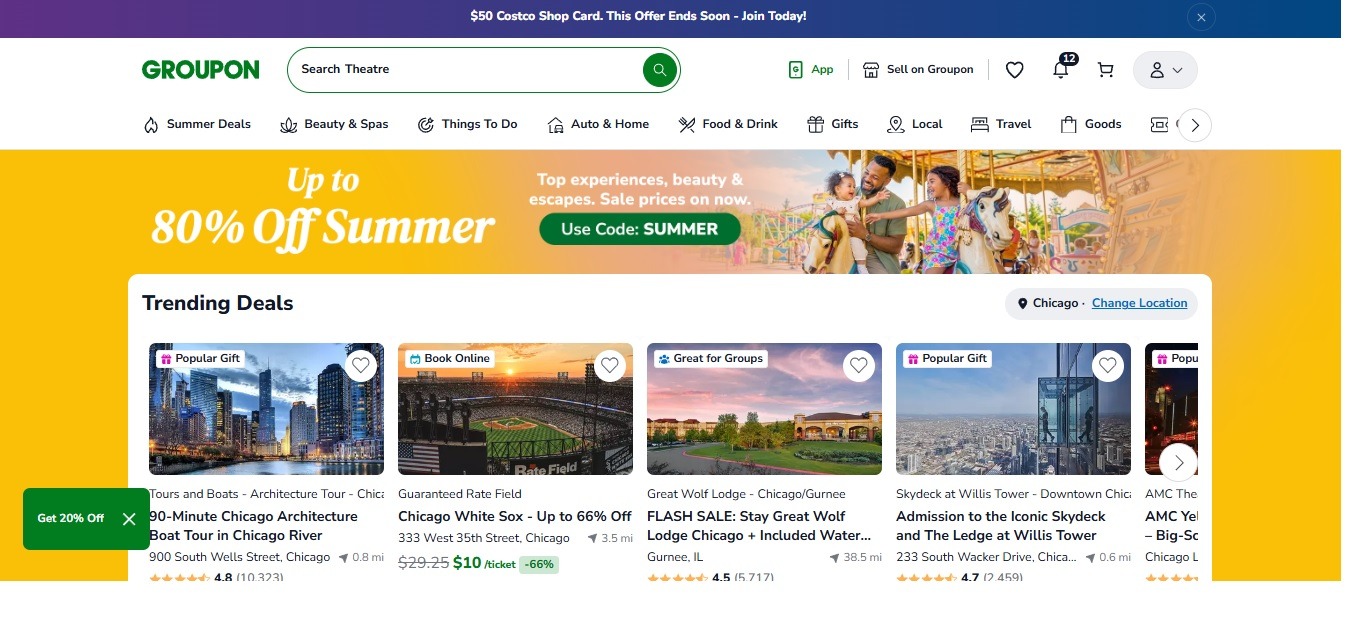
Groupon operates as a middleman between local businesses and consumers. Businesses list discounted offers on the platform. You buy a voucher through Groupon. Groupon takes a percentage of each sale. You redeem the voucher directly with the business.
The mechanics matter because they explain some of the friction people run into.
- You pay Groupon upfront, not the business.
- Groupon takes a cut of the sale, historically around 30 to 50 percent depending on the category and the deal.
- The business receives the remainder after redemption, usually on a payment schedule.
- You redeem the voucher at the business within a set expiration window.
- Any dispute goes to Groupon first, then to the business as a secondary route.
The reason some businesses treat Groupon customers differently is baked into this model. The merchant is receiving a fraction of their normal price. A few of them behave professionally regardless. A few of them do not. That difference is where most of the negative reviews come from — not from Groupon being a scam, but from individual merchants delivering a diluted version of their normal service.
Categories Where Groupon Actually Delivers Value
After eight years of testing, these are the categories where I have consistently gotten my money’s worth.
- Restaurants with fixed-price menus. Prix fixe experiences, tasting menus, and set brunch deals hold up well because the business has already priced the offering around the discount.
- Spa and beauty treatments at established locations. Facials, massages, and nail services from well-reviewed businesses with a long presence on the platform.
- Home services like cleaning and carpet care. Especially useful for one-off deep cleans before an event or move.
- Fitness classes and studio trials. A cheap way to try a boutique gym, yoga studio, or pilates class before committing to a membership.
- Getaways and hotel stays through Groupon Travel. Often the strongest section of the site, with real discounts on real properties.
- Activities and experiences. Escape rooms, wine tastings, sky diving, cooking classes — categories where the business benefits from filling seats.
- Local attractions in cities you are visiting. Museum passes, boat tours, and city cards frequently discount well.
- Oil changes and basic car maintenance. Recurring services that mechanics use to pull in new regulars.
The common thread in every one of these is that the business is using Groupon as a marketing channel to acquire new customers, not to offload discounted service to people they resent seeing walk through the door.
Categories Where I Would Tell a Friend to Be Careful
These are the categories where I have either had bad experiences myself or watched people I know get burned.
- Third-party physical goods. Electronics, gadgets, and generic branded items sold by unfamiliar sellers. Quality varies wildly.
- Very deep discounts from unknown businesses. Anything at 80 percent off from a brand you have never heard of deserves extra scrutiny.
- Restaurants that limit voucher use to specific weekdays with heavy blackout dates. The fine print eats the value.
- Medical or cosmetic procedures. Laser treatments, teeth whitening, and injectables belong at established medical practices, not deal-driven storefronts.
- Fitness memberships with auto-renewal terms. Read the small print carefully. Some deals convert into paid memberships if you do not cancel.
- Photography packages with hidden add-on costs. The base voucher often covers less than you think, and the upsells arrive fast.
- Deals from businesses with fewer than 100 reviews on Groupon. New listings on the platform carry more risk than established ones.
None of these categories are automatic scams. They are just the areas where I have seen the highest rate of disappointment.
The Groupon Promise: How Refunds Actually Work
Groupon offers a refund policy called the Groupon Promise, and in my experience it genuinely works, but with real limits. The policy covers vouchers that were misrepresented, businesses that failed to deliver, and deals that could not be redeemed for reasons outside your control.
What I have successfully gotten refunded over the years:
- A spa voucher for a business that closed before I could redeem it
- A restaurant deal where the menu bore no resemblance to what was advertised
- A hotel booking cancelled by the property on the day of arrival
- A cleaning service that never showed up despite multiple confirmations
- A product that arrived damaged and was never replaced by the seller
What I have not successfully gotten refunded:
- Vouchers I forgot to redeem before expiration
- Experiences I simply did not enjoy but that were delivered as described
- Products that arrived slower than expected but eventually did arrive
The pattern is clear. Groupon backs you when the merchant fails. Groupon does not back you when you fail. That is a fair line, honestly, and once you understand it, the refund system stops feeling mysterious.
How to Tell If a Specific Groupon Deal Is Trustworthy
The single best skill you can develop as a Groupon user is knowing how to read a deal listing before you click buy. These are the signals I check every time.
- Total number of Groupon reviews. Deals with 500+ reviews are safer than deals with 20.
- The average star rating. I avoid anything below 4.2 stars on Groupon itself.
- Cross-reference with Google, Yelp, and Tripadvisor. External reviews often tell a different story than the Groupon page alone.
- Fine print in the deal terms. Look for redemption windows, blackout dates, appointment requirements, and add-on fees.
- How long the business has been on Groupon. Long-running listings are usually more reliable.
- Photos. Real photos from customer reviews are more useful than the marketing images on the deal page.
- The discount depth. Anything above 70 percent off is worth extra scrutiny. Real businesses rarely sustain steep discounts without cutting corners somewhere.
- Location and address details. Confirm the business exists at a real, verifiable address before purchasing.
Ten minutes of research before a purchase has saved me from bad deals more times than I can count.
Practical Rules I Follow Every Time I Buy
These are the personal rules that have kept my Groupon experience overwhelmingly positive over the years.
- Buy from businesses with strong reviews on Groupon and on independent review sites
- Book redemption appointments as soon as I buy the voucher
- Screenshot the deal page in case terms change later
- Read every line of the fine print, especially expiration and blackout terms
- Redeem within the first month whenever possible
- Treat the voucher price as the maximum I am willing to pay, expecting no upsells
- Use a credit card with strong dispute protection rather than a debit card
- Avoid stacking multiple vouchers on the same visit unless the deal explicitly allows it
- Communicate directly with the business early to confirm they honour the deal
- Keep receipts and confirmation emails until after the redemption is complete
The rules sound obvious written down. They are less obvious in the moment, when a 70 percent discount is pulling at your attention.
Common Complaints About Groupon and What They Actually Mean
Reading Groupon complaints online is a study in how expectations shape experiences. Most of the complaints I have seen fall into a handful of patterns.
- “The business treated me like a second-class customer.” Sometimes true, and a real problem when it happens. Usually reflects a specific merchant, not Groupon itself.
- “The voucher expired before I could use it.” Almost always a customer scheduling issue rather than a platform failure.
- “The refund took too long.” Groupon refunds do take longer than most retailers. Expect a week or more.
- “The product I ordered was cheap junk.” Common in the third-party goods category. This is why I limit my Groupon buying to local services.
- “I could not get through to customer service.” A legitimate complaint. Groupon’s support has improved over the years but is still slower than premium retailers.
Every large marketplace attracts complaints. The volume of Groupon complaints does not make it a scam. It makes it a marketplace with a diverse merchant base, some of which perform better than others.
Is Groupon Safe for Payment and Personal Data?
Groupon is safe for payment and personal data at the level you would expect from any established e-commerce company. The site uses standard encryption for transactions, stores payment information under industry practices, and complies with regional privacy laws including GDPR in Europe and equivalent frameworks elsewhere.
I have never had a fraudulent charge originate from my Groupon account in eight years of use. I do use a dedicated credit card with strong dispute protection for online purchases across every platform, which I would recommend regardless of the site involved.
Two-factor authentication is available on Groupon accounts and worth enabling. Reused passwords are a bigger risk than the platform itself.
Groupon vs Other Discount Platforms
Groupon is not the only player in the deals market. Here is how it compares to other options I have used.
| Platform | Best For | Where It Falls Short |
|---|---|---|
| Groupon | Local services and experiences | Third-party physical goods |
| LivingSocial | Similar profile (owned by Groupon) | Limited independent inventory |
| Travelzoo | Curated travel deals | Smaller local inventory |
| Costco Travel | Bundled travel packages | Membership required |
| RetailMeNot | Coupon codes for existing retailers | Not a voucher marketplace |
| Honey | Automatic coupon application | Not for local services |
| Yelp Deals | Local restaurant offers | Limited breadth compared to Groupon |
Groupon’s strength remains local services and experiences. For travel, I compare Groupon Travel against Travelzoo and direct booking every time. For physical goods, I usually skip Groupon entirely and go to Amazon or the retailer direct.
Is Groupon Still Relevant in 2026?
Groupon is still relevant in 2026, though the platform has changed significantly from its 2011 peak. The company has narrowed its focus to local experiences and services after struggling with its physical goods business earlier in the decade. That refocus has actually made the platform stronger in the categories where it always delivered the most value.
The competition has shifted too. Direct booking apps for restaurants, spas, and fitness studios now often include their own promotions, which reduces some of Groupon’s price advantage. Where Groupon still wins is discovery — finding local businesses and experiences you would not otherwise have known existed. That has always been the underrated strength of the platform.
Signs a Groupon Deal Might Not Be Worth It
A few red flags I watch for whenever I browse a listing.
- The business has fewer than 50 Groupon reviews
- The average external rating on Google or Yelp is below 3.5 stars
- The fine print includes long lists of blackout dates
- The redemption window is under 30 days
- The deal requires purchases beyond the voucher price to be usable
- The listing photos look generic or stock rather than specific
- The business address does not match a verifiable physical location
- The savings claim looks inflated compared to normal market pricing
- The listing has been active for less than three months
- The deal terms mention “additional service fees” without specifying amounts
Any single flag is not disqualifying. Three or more usually is.
Frequently Asked Questions
Is Groupon a real, legitimate company?
Yes. Groupon is a legitimate publicly traded company that has operated since 2008 and trades on the Nasdaq under the ticker GRPN. The platform processes real transactions, is backed by a formal refund policy, and complies with consumer protection laws in the regions where it operates.
Will Groupon actually refund me if something goes wrong?
Yes, in most valid cases. The Groupon Promise covers misrepresented deals, businesses that fail to deliver, and vouchers that cannot be redeemed for reasons outside your control. Refunds are less likely if you simply forget to redeem the voucher or change your mind after purchase.
Are Groupon deals really discounted, or are prices inflated first?
Yes and no depending on the category. Local services and experiences are usually genuinely discounted because businesses are using Groupon to attract new customers. Some third-party physical goods have inflated “original prices” that make the discount look larger than it is. Always cross-check pricing against the business’s own website before buying.
Do businesses treat Groupon customers differently?
Yes, sometimes, though not always in negative ways. Reputable businesses treat Groupon customers the same as any other customer because they want repeat business. Lower-quality businesses occasionally provide diluted service to Groupon buyers. Choosing well-reviewed merchants avoids most of this.
Is it safe to enter my credit card on Groupon?
Yes. Groupon uses standard e-commerce security practices, complies with major data protection frameworks, and processes transactions through secure payment infrastructure. Using a credit card rather than a debit card provides an added layer of protection through your card issuer’s dispute process.
Can I trust Groupon travel deals?
Yes, with the same due diligence you would apply to any travel booking. Groupon Travel is one of the stronger parts of the platform, offering real discounts at real hotels. Always verify the property on independent review sites before booking, and confirm the booking directly with the hotel where possible.
Does Groupon still work well in 2026?
Yes. The platform has refocused on local services, experiences, and travel — the categories where it always delivered the most value. Physical goods have become a smaller part of the business, which has improved overall reliability. Groupon remains one of the most useful discovery tools for local businesses in most major cities.
Should I use Groupon for medical or cosmetic procedures?
No. Medical and cosmetic procedures belong at established licensed practices chosen based on credentials, not on price. The risks of complications from low-cost cosmetic procedures far outweigh any savings. Use Groupon for lower-stakes services and choose medical providers through professional channels.
Are Groupon vouchers transferable to someone else?
Yes, in most cases. Groupon vouchers can typically be given as gifts or transferred to another person, though specific deals occasionally restrict this. Check the fine print of the individual deal before assuming transfer is allowed.
What happens if the business closes before I redeem my voucher?
Yes, you are eligible for a refund in this situation. Groupon’s Promise policy specifically covers business closures during the redemption window. Contact Groupon customer support with the details, and expect the refund to be processed within a week or two.
Final Thoughts
Groupon is legitimate, and in the right categories it still delivers real value in 2026. That is the honest short answer after eight years of using the platform across services, experiences, and travel. The longer answer is that Groupon works best when you use it as a discovery tool for local businesses rather than as a bargain hunt for whatever happens to be discounted the deepest.
The people who have the worst experiences on Groupon tend to be the ones who buy quickly, skip the fine print, choose businesses with thin review histories, and assume every deal is equally trustworthy. The people who have the best experiences do a small amount of research before each purchase, stick to categories with strong track records, and treat the platform as a supplement to their normal buying decisions rather than a replacement for judgment.
Use Groupon for what it does well. Skip it for what it does poorly. Read the reviews, check the fine print, and redeem your vouchers promptly. Follow those three habits and Groupon will earn its place in your regular routine, the way it has in mine, without any of the drama that fills the negative reviews online.
Every marketplace reflects the choices of the people using it. Make the right choices, and Groupon becomes exactly what it promised to be — a way to try more things, meet more local businesses, and stretch your money a little further than it would go anywhere else.
You May Also Like
 Cybersecurity
Is Fanatical Legit and Safe? My Honest Take on Buying Game Keys
 Data Security & Privacy
Is Gameflip Legit and Safe for Gift Cards? What Buyers Should Know
 Data Security & Privacy
Is Eldorado.gg Legit and Safe in 2026? My Investigation and What Buyers Should Know
 Web Development
Supabase vs Firebase: Which Backend Platform is Right for Your Project?
 VPN & Proxy
Why Does Google Say Our Systems Have Detected Unusual Traffic From Your Computer Network?
 Web Development
REST API vs SOAP API: Differences, Pros & Cons, and Use Cases
 Web Development
What Is API Rate Limiting? (A Practical, Simple Guide for Safer, Faster APIs)
 Cybersecurity
Is Romspure Safe? An Honest Look at the ROM Site’s Risks and Trust Scores
 Cybersecurity