

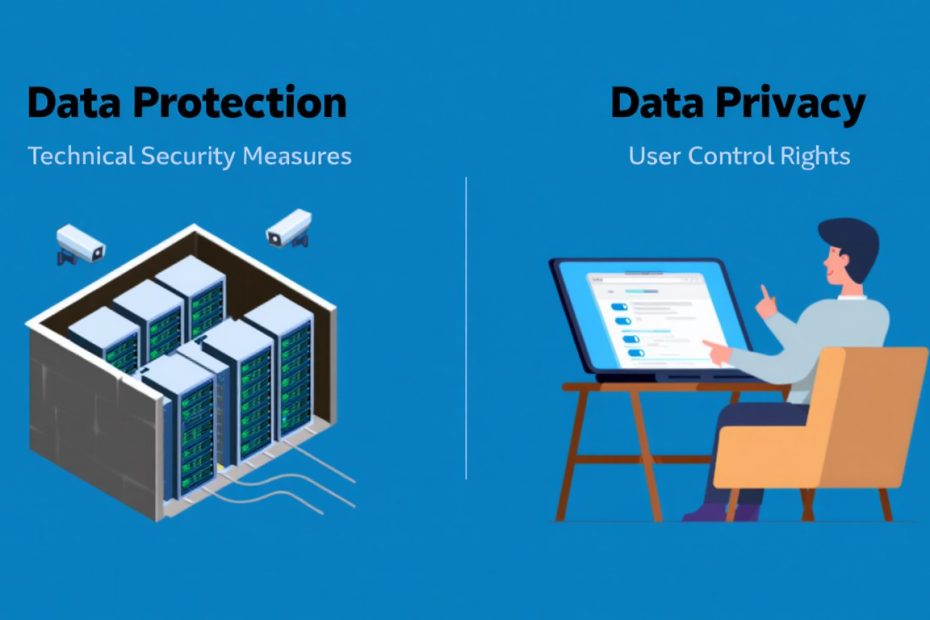
Data protection and privacy are practices that keep your personal information safe from unauthorized access. These measures help prevent others from misusing your data. Data protection focuses on security tools that protect information. Privacy deals with how organizations handle your personal data with respect to your rights.
Data protection uses tools like encryption and access management to stop breaches. Privacy covers how companies collect, use, and share your information. Both work together to make sure your personal details stay confidential. They ensure only authorized people can see your data.
Businesses collect lots of personal information when you shop online, use social media, or visit websites. This makes data protection and privacy essential for everyone. Data encryption helps protect your information from prying eyes.
Why is Data Protection and Privacy Important?
Data protection and privacy matter because they protect your rights. They help prevent financial losses and keep trust in digital systems. When your data gets into the wrong hands, it can lead to identity theft or fraud. Companies that fail to protect your data face legal trouble and lose customer trust.
Recent studies show the average data breach cost $4.45 million in 2023. That’s a 15% increase over three years. About 83% of consumers stop doing business with a company after a breach. These numbers show the real risks of poor data protection. How companies protect customer data is crucial for business success.
Privacy laws like the GDPR can fine companies up to €20 million or 4% of global revenue. Beyond legal requirements, respecting privacy shows that an organization values people. It demonstrates a commitment to treating individuals with dignity.
What’s the Difference Between Data Protection and Data Privacy?
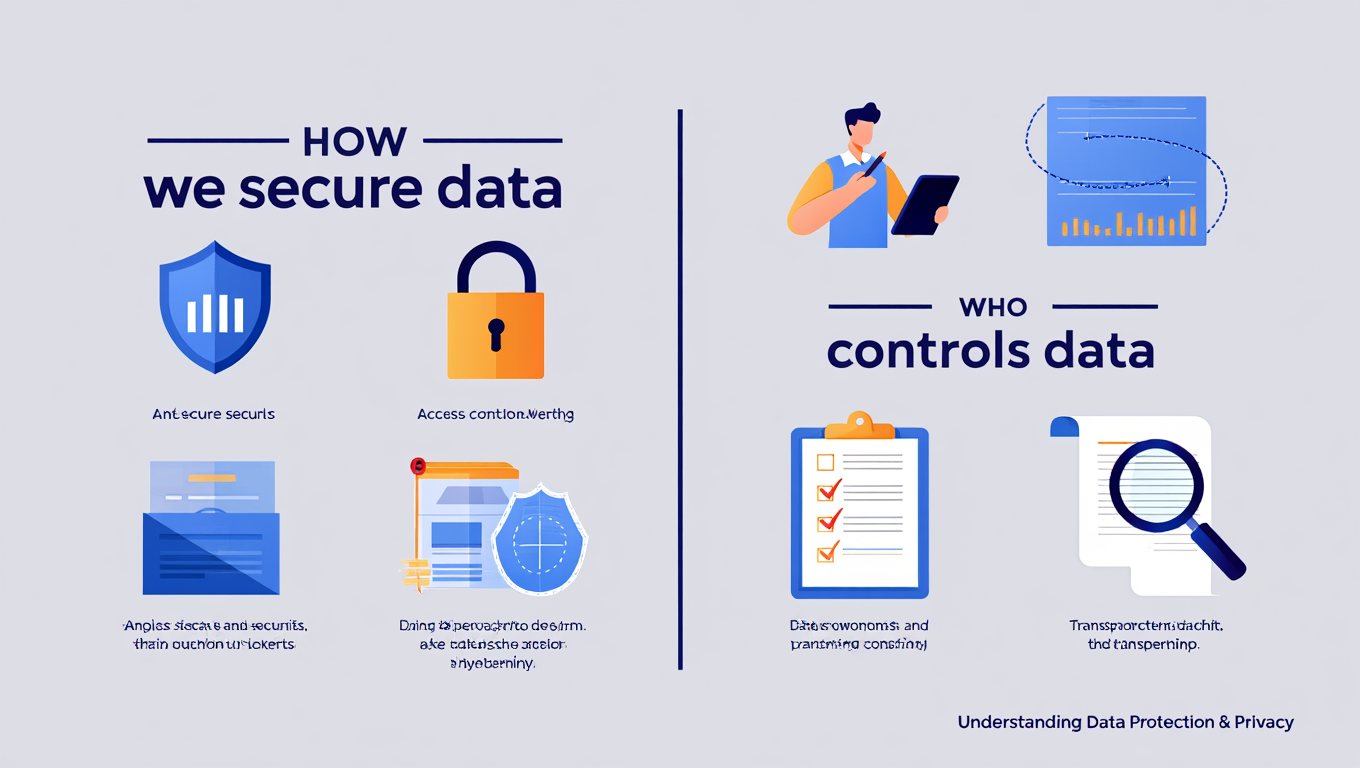
Data protection focuses on security measures that secure data. Data privacy refers to the policies that govern the handling of personal information. People often use these terms interchangeably, but they have distinct meanings.
Data protection involves technical controls that stop unauthorized access. These measures include:
- Encryption technologies
- Access control systems
- Network security protocols
- Data backup procedures
- Physical security measures
Data privacy centers on the proper handling of personal information. Key privacy considerations include:
- Consent for data collection
- Transparency about data usage
- Purpose limitation
- Data minimization
- Individual rights regarding personal data
Data protection keeps information secure from unauthorized access. Data privacy ensures organizations handle personal information ethically and legally. Both are essential for responsible information management. Data loss prevention best practices help bridge both protection and privacy.
What Are the Key Principles of Data Protection?
The key principles of data protection include lawfulness, fairness, transparency, purpose limitation, data minimization, accuracy, storage limitation, integrity, confidentiality, and accountability. These principles guide organizations in handling personal information responsibly.
- Lawfulness, Fairness, and Transparency: Organizations must process personal data lawfully and fairly. They need a valid legal basis for processing. They must be honest about data usage and provide clear information to you.
- Purpose Limitation: Personal data should only get collected for specific purposes. Companies should not use it for other reasons without additional consent. For example, data collected for orders should not get used for marketing without permission.
- Data Minimization: Organizations should collect only the personal data they absolutely need. This means avoiding the collection of unnecessary information.
- Accuracy: Personal data must be correct and kept up to date. You should have the chance to fix inaccurate information about you.
- Storage Limitation: Personal data should not get kept longer than necessary. Companies need appropriate data retention schedules.
- Integrity and Confidentiality: Organizations must implement measures to protect personal data. This includes protection against unauthorized processing, loss, or damage.
- Accountability: The data controller must show compliance with these principles. This involves maintaining documentation and conducting assessments.
When a retail company collects your information, they must explain why they need it. They should only collect data necessary to process your order. They must use the data only for that purpose unless you give additional consent. They should keep your data only as long as necessary. They must protect it with appropriate security measures. They need to demonstrate their compliance with these requirements.
Following these principles helps organizations build trust. It ensures compliance with legal requirements. It reduces the risk of data breaches and misuse. Confidential computing helps ensure data integrity and confidentiality.
What Are the Major Data Protection and Privacy Laws?
Major data protection laws include the GDPR, CCPA, HIPAA, and China’s PIPL. These regulations establish requirements for how organizations handle personal information. They impose significant penalties for non-compliance.
General Data Protection Regulation (GDPR)
The GDPR is a comprehensive data protection law from the European Union. It started in 2018. It applies to all organizations processing personal data of people in the EU. Key provisions include:
- Requirements for obtaining valid consent
- Data subject rights like access and deletion
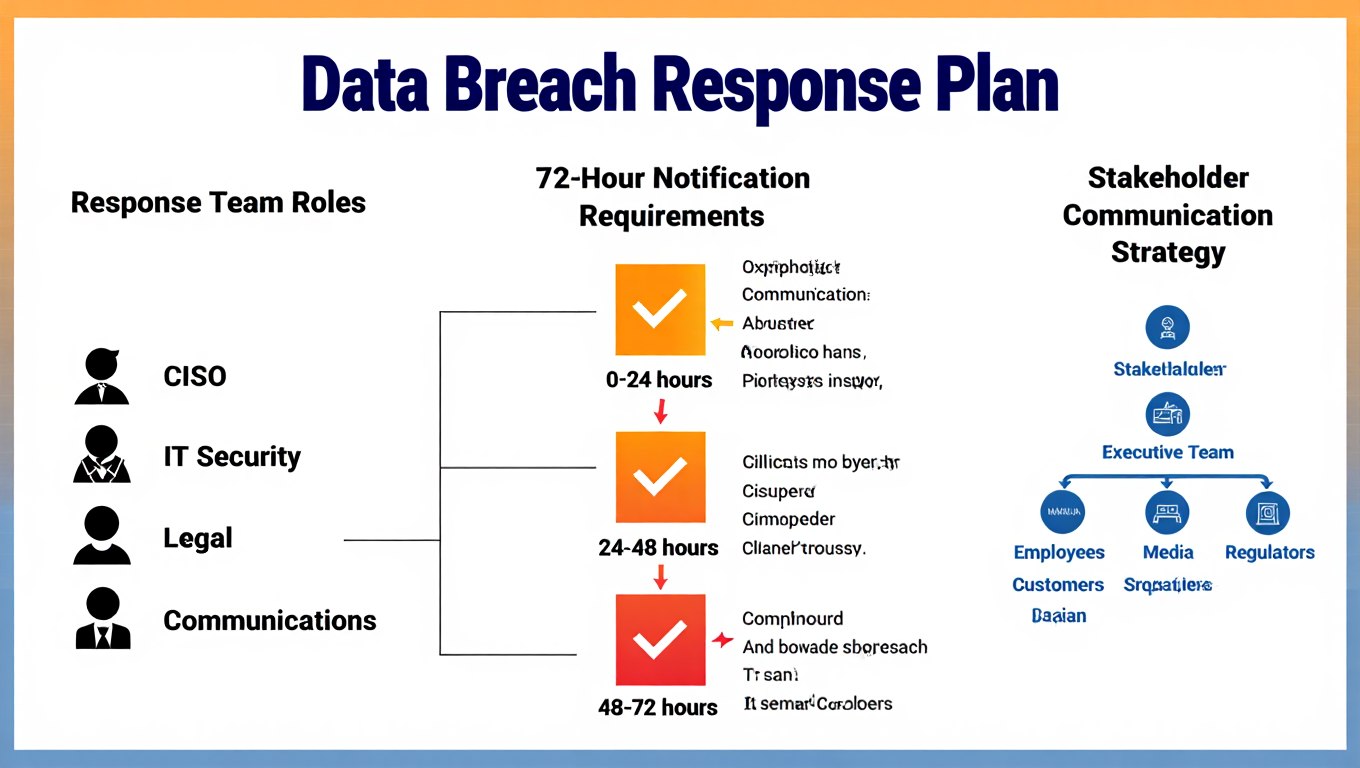
- Obligation to report data breaches within 72 hours
- Data protection impact assessments for high-risk processing
- Fines up to €20 million or 4% of global annual revenue
California Consumer Privacy Act (CCPA)
The CCPA began in 2020. It grants California residents specific rights regarding their personal information. Key provisions include:
- Right to know what personal information gets collected
- Right to delete personal information
- Right to opt-out of the sale of personal information
- Right to non-discrimination for exercising privacy rights
- Penalties up to $7,500 per intentional violation
Health Insurance Portability and Accountability Act (HIPAA)
HIPAA is a US law that protects medical information. Key requirements include:
- Protection of individually identifiable health information
- Implementation of administrative, physical, and technical safeguards
- Restrictions on use and disclosure of health information
- Notification requirements for data breaches
- Penalties ranging from $100 to $50,000 per violation
Personal Information Protection Law (PIPL) of China
China’s PIPL started in 2021. It establishes comprehensive requirements for handling personal information. Key provisions include:
- Requirements for obtaining consent for processing
- Data subject rights similar to those under GDPR
- Restrictions on cross-border data transfers
- Mandatory data protection impact assessments for certain processing
- Fines up to 5% of annual revenue or ¥50 million
Many other countries have their own data protection regulations. These include Brazil’s LGPD, Canada’s PIPEDA, and Japan’s APPI. Organizations operating internationally must navigate this complex regulatory landscape.
How Can Organizations Ensure Data Protection and Privacy?
Organizations can ensure data protection and privacy by implementing a comprehensive framework. They need to establish security controls and train employees. Regular assessments and documentation of compliance efforts are essential. A systematic approach helps organizations meet legal requirements and build trust.
Implement a Data Governance Framework
A data governance framework establishes policies for managing data. Key components include:
- Data classification: Categorizing data based on sensitivity
- Data inventory: Maintaining a record of all data assets
- Roles and responsibilities: Defining who handles data protection
- Policies and procedures: Documenting how to handle data
- Quality management: Ensuring data accuracy
Establish Security Controls
Security measures form the foundation of data protection. Essential controls include:
- Access controls: Limiting system access to authorized users
- Encryption: Protecting data at rest and in transit
- Authentication: Verifying user identities
- Network security: Implementing firewalls and detection systems
- Physical security: Securing facilities where data gets stored
- Backup and recovery: Maintaining copies of data
Train Employees
Human error causes many data breaches. Effective training should include:
- Awareness programs: Educating employees about risks
- Role-specific training: Providing targeted instruction
- Phishing simulations: Testing ability to recognize threats
- Regular updates: Keeping training current
- Culture building: Fostering privacy awareness
Conduct Regular Assessments
Ongoing evaluation helps identify vulnerabilities. Key activities include:
- Risk assessments: Identifying threats to personal data
- Privacy impact assessments: Evaluating privacy implications
- Security testing: Conducting vulnerability scans and audits
- Compliance reviews: Verifying adherence to laws
- Vendor assessments: Evaluating third-party practices
Maintain Documentation
Thorough documentation demonstrates compliance. Essential documentation includes:
- Records of processing activities: Documenting data operations
- Data protection policies: Formalizing commitments
- Procedures manuals: Providing detailed instructions
- Incident response plans: Outlining steps for breaches
- Training materials: Documenting education efforts
A step-by-step approach includes:
- Assess current state through data mapping and risk assessment
- Develop a framework with policies and procedures
- Implement controls with technologies and processes
- Train personnel through awareness programs
- Monitor compliance with audits and reviews
- Respond to incidents by detecting and mitigating breaches
- Improve continuously by updating policies and training
Ways to prevent a data security breach are critical for ensuring data protection.
What Are Data Subject Rights?
Data subject rights are entitlements you have regarding your personal information. These rights include access, correction, deletion, and restriction of data processing. They empower you to maintain control over your personal information.
Right to Access
You have the right to request confirmation that an organization processes your data. You can access that data. This includes:
- Receiving a copy of your personal data
- Information about the purposes of processing
- Categories of personal data being processed
- Recipients who have received your data
- How long will your data be stored
- Information about the source of the data
Right to Rectification
You can request the correction of inaccurate personal data. You can also complete incomplete data. This right ensures:
- Your information stays accurate and up-to-date
- Decisions based on your data remain valid
- You maintain control over your personal narrative
Right to Erasure (Right to be Forgotten)
The right to erasure lets you request deletion of your personal data in certain cases:
- When the data is no longer necessary
- When you withdraw consent
- When you object to processing
- When the data was processed unlawfully
- When the data must be erased to comply with laws
Right to Restrict Processing
You can request limitation of processing your personal data in specific situations:
- When the accuracy of your data is contested
- When processing is unlawful but you oppose erasure
- When the organization no longer needs your data, but you need it for legal claims
- When you have objected to processing
Right to Data Portability
The right to data portability allows you to receive your data in a structured format. You can transmit that data to another organization. This right applies when:
- Processing is based on your consent or a contract
- Processing uses automated methods
- The data concerns the information you provided
Right to Object
You have the right to object to the processing of your personal data in certain situations:
- Direct marketing
- Processing based on legitimate interests
- Processing for research or statistical purposes
Rights Related to Automated Decision-Making
You have protections regarding automated decision-making:
- The right not to be subject to decisions based solely on automated processing
- The right to obtain human intervention
- The right to express your point of view
- The right to contest the decision
Organizations must handle these rights requests promptly, usually within 30 days. They must provide information about how to exercise these rights. Failure to respect these rights can result in penalties and damage to reputation.
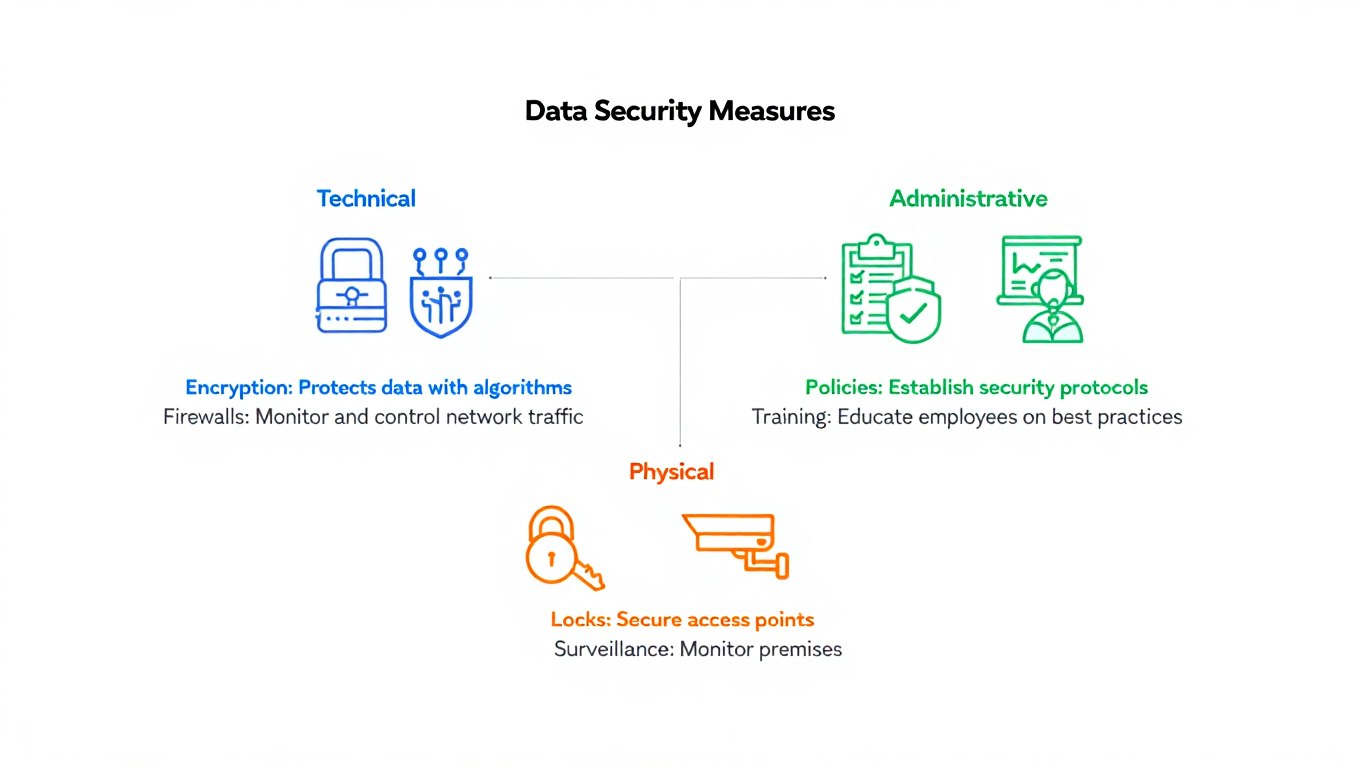
What Are Common Data Security Measures?
Common data security measures include encryption, access controls, authentication, network security, backup systems, and physical security. These measures work together to protect personal data from unauthorized access.
Encryption
Encryption transforms data into a coded format that only authorized parties can read. Key practices include:
- Data at rest encryption: Protecting stored data
- Data in transit encryption: Securing data moving across networks
- End-to-end encryption: Ensuring data stays encrypted from sender to recipient
- Full disk encryption: Protecting entire storage devices
- File and folder encryption: Securing specific sensitive files
VPN encryption protocols are essential for securing data in transit.
Access Controls
Access controls ensure only authorized individuals can access data. Effective measures include:
- Role-based access control: Granting permissions based on job responsibilities
- Least privilege principle: Providing only necessary access
- Multi-factor authentication: Requiring multiple verification methods
- Privileged access management: Controlling administrative accounts
- Access reviews: Regularly evaluating permissions
Network Security
Network security measures protect data as it travels across networks. Key controls include:
- Firewalls: Filtering network traffic based on security rules
- Intrusion detection systems: Identifying suspicious activities
- Virtual private networks (VPNs): Creating secure connections
- Network segmentation: Dividing networks into controlled segments
- Secure Wi-Fi configurations: Implementing strong encryption
How a VPN can help you bypass geo-blocking restrictions is an important aspect of network security.
Data Backup and Recovery
Backup systems ensure data can be restored after loss. Essential practices include:
- Regular backups: Creating copies at scheduled intervals
- Off-site storage: Maintaining backup copies in separate locations
- Encryption of backups: Protecting backup data
- Testing restoration: Verifying backups work correctly
- Versioning: Maintaining multiple versions for recovery
Physical Security
Physical security measures protect hardware and facilities. Important controls include:
- Secure facilities: Implementing access controls for data centers
- Surveillance systems: Monitoring physical spaces
- Environmental controls: Maintaining appropriate temperature and humidity
- Device security: Protecting laptops and mobile devices
- Secure disposal: Properly destroying storage media
Security Monitoring and Incident Response
Continuous monitoring helps detect and address security incidents. Key components include:
- Security information management: Collecting and analyzing security data
- Intrusion detection: Identifying potential breaches
- Vulnerability scanning: Checking for security weaknesses
- Incident response planning: Preparing for security incidents
- Forensic capabilities: Preserving evidence after incidents
Organizations should implement these security measures in layers. This creates defense-in-depth strategies that protect data even if one control fails. The specific measures needed depend on factors like data sensitivity and regulatory requirements.
What Are Data Breaches and How Should They Be Managed?
A data breach is a security incident where unauthorized parties access, disclose, alter, or destroy personal data. Effective breach management involves detection, assessment, notification, mitigation, and prevention of future incidents.
Types of Data Breaches
Data breaches can occur in various forms:
- Hacking incidents: External attackers gaining unauthorized access
- Insider threats: Employees exposing data intentionally or accidentally
- Physical theft: Loss or theft of devices containing personal data
- Ransomware attacks: Malicious software encrypting data until payment
- Phishing attacks: Deceptive attempts to obtain sensitive information
- Accidental disclosure: Unintentional exposure through misconfigured systems
What to do if you’re infected by ransomware provides guidance on handling this dangerous type of breach.
Breach Detection and Assessment
Quickly identifying and evaluating breaches is critical. Key steps include:
- Monitoring systems: Implementing tools to detect unusual activities
- Investigating alerts: Promptly examining potential incidents
- Determining scope: Identifying what data was affected
- Assessing risk: Evaluating potential harm to affected individuals
- Documenting findings: Recording details about the breach
Breach Notification
Most data protection laws require organizations to notify about breaches. Notification requirements typically include:
- Timing requirements: Reporting within specified timeframes
- Content requirements: Including specific information about the breach
- Direct notification: Contacting affected individuals when risk is high
- Regulatory reporting: Informing authorities about significant breaches
- Public disclosure: Making breach information public in some cases
Breach Response and Mitigation
After detecting a breach, organizations must take steps to contain it. Response activities include:
- Containing the breach: Stopping unauthorized access
- Assessing ongoing risks: Determining if the threat is fully addressed
- Notifying affected parties: Informing individuals and authorities
- Providing support: Offering assistance like credit monitoring
- Investigating causes: Determining how the breach occurred
- Implementing corrective actions: Addressing vulnerabilities
To learn more about LockBit 3.0 ransomware attacks, which represent a significant breach threat, explore our comprehensive article.
Post-Breach Activities
Following a breach, organizations should take additional steps:
- Reviewing and updating policies: Strengthening data protection measures
- Enhancing employee training: Addressing human factors that contributed
- Conducting security audits: Evaluating existing controls
- Implementing additional safeguards: Adding new security measures
- Monitoring for misuse: Watching for signs of data misuse
- Communicating improvements: Informing stakeholders about changes
Effective breach management requires preparation before incidents occur. Organizations should develop response plans, establish response teams, conduct training, and maintain relationships with legal counsel and forensic experts.
What Are Privacy Policies and Why Are They Important?
Privacy policies are public statements that explain how organizations collect, use, share, and protect personal information. These policies serve as both legal documents and transparency tools. They help organizations comply with privacy laws while building trust with individuals.
Purpose of Privacy Policies
Privacy policies serve several important functions:
- Legal compliance: Meeting requirements of privacy laws
- Transparency: Informing individuals about data handling
- Trust building: Demonstrating commitment to privacy
- Consent foundation: Providing information for meaningful consent
- Accountability: Creating a public record of data handling
Key Components of Privacy Policies
Effective privacy policies typically include:
- Information collected: Describing types of personal data collected
- Collection methods: Explaining how data is obtained
- Purposes of use: Stating why the organization collects and uses data
- Data sharing practices: Identifying third parties who receive information
- Data retention periods: Explaining how long data is kept
- Security measures: Describing how personal data is protected
- Individual rights: Informing users about their privacy rights
- International data transfers: Explaining when data is sent to other countries
- Policy updates: Describing how changes will be communicated
- Contact information: Providing details for privacy inquiries
Best Practices for Privacy Policies
Organizations should follow these best practices:
- Plain language: Writing in clear, understandable terms
- Accessibility: Making the policy easy to find and read
- Layered approach: Providing summaries with links to details
- Consistency: Ensuring the policy reflects actual practices
- Regular updates: Reviewing and revising as practices change
- User-friendly formatting: Using headings and bullet points
Challenges in Privacy Policy Development
Creating effective privacy policies presents challenges:
- Balancing completeness and readability: Including required information without overwhelming users
- Keeping policies current: Updating as laws and practices evolve
- Addressing multiple jurisdictions: Complying with different requirements across regions
- Translating legal requirements: Converting complex obligations into clear language
- Ensuring consistency: Aligning the policy with actual data handling
Privacy Policy Implementation
Having a privacy policy is not enough; organizations must implement it effectively:
- Employee training: Ensuring staff understand and follow the policy
- Operational integration: Aligning business processes with policy commitments
- Monitoring compliance: Regularly reviewing practices against the policy
- Documentation: Maintaining records of implementation
- User communication: Informing users about updates
- Enforcement: Establishing mechanisms to address violations
Privacy policies should evolve as organizations, technologies, and legal requirements change. Regular reviews ensure policies remain accurate and compliant.
What Is the Role of Data Protection Officers?
A Data Protection Officer (DPO) oversees an organization’s data protection strategy. They ensure compliance with privacy laws and serve as a contact point for individuals and authorities. This position is mandatory under certain conditions in GDPR and other privacy regulations.
When Is a DPO Required?
Organizations must appoint a DPO under specific circumstances:
- Public authorities or bodies (except courts acting in judicial capacity)
- Organizations that engage in large-scale monitoring of individuals
- Organizations that process large amounts of sensitive personal data or criminal records
- Organizations required by national laws to designate a DPO
Even when not legally required, many organizations choose to appoint a DPO to demonstrate commitment to data protection.
Key Responsibilities of a DPO
DPOs have several important responsibilities:
- Informing and advising: Providing guidance on data protection obligations
- Monitoring compliance: Ensuring adherence to laws and policies
- Training and awareness: Educating employees about requirements
- Conducting assessments: Overseeing impact assessments and audits
- Cooperating with authorities: Serving as the contact point for authorities
- Handling inquiries: Responding to questions from individuals
- Advising on breach response: Guiding breach notification
Required Qualifications for a DPO
Effective DPOs typically possess:
- Expert knowledge of data protection laws: Understanding of GDPR, CCPA, and other regulations
- Professional experience: Background in data protection, privacy, or information security
- Understanding of business operations: Knowledge of how data is used throughout the organization
- Communication skills: Ability to explain complex requirements to stakeholders
- Analytical abilities: Capacity to assess risks and evaluate compliance
- Independence: Ability to perform duties objectively
Positioning of the DPO Within an Organization
The DPO’s position within an organization is crucial:
- Direct reporting line: Typically reports to senior management or the board
- Operational independence: Freedom to perform duties without influence
- Adequate resources: Sufficient budget, staff, and tools
- Access to information: Ability to obtain necessary information
- Involvement in planning: Participation in decisions with data protection implications
Challenges Faced by DPOs
DPOs encounter various challenges:
- Balancing business needs with compliance: Finding solutions that meet both requirements
- Keeping current with evolving laws: Staying informed about changing regulations
- Limited resources: Managing responsibilities with constrained budgets
- Organizational resistance: Overcoming pushback from business units
- Global compliance: Addressing conflicting requirements across jurisdictions
- Emerging technologies: Assessing privacy implications of new technologies
Measuring DPO Effectiveness
Organizations should evaluate DPO performance through:
- Compliance indicators: Reduction in regulatory findings or penalties
- Incident metrics: Decrease in data breaches or privacy complaints
- Training effectiveness: Improvement in employee awareness
- Process improvements: Streamlining of data protection practices
- Stakeholder feedback: Positive input from management and employees
- Risk reduction: Lower levels of privacy risk
The DPO role continues to evolve as privacy laws and technologies change. Effective DPOs combine technical knowledge, legal expertise, business acumen, and communication skills.
How Is Data Protection Evolving with New Technologies?
Data protection is changing rapidly with new technologies. Organizations need new approaches to safeguard personal information in artificial intelligence, Internet of Things, blockchain, and other advanced systems. These technologies present both challenges and opportunities for privacy protection.
Artificial Intelligence and Data Protection
Artificial intelligence (AI) systems process vast amounts of data to make decisions. This raises several data protection concerns:
- Transparency challenges: Difficulty explaining how AI systems make decisions
- Data minimization issues: AI often requires large datasets that may exceed necessity
- Automated decision-making: Potential for biased outcomes without human oversight
- Purpose limitation: Using data for AI training may extend beyond the original purposes
Organizations are addressing these challenges through:
- Explainable AI: Developing systems that can explain their decisions
- Privacy-preserving machine learning: Using techniques like federated learning
- Algorithmic audits: Regularly reviewing AI systems for bias and compliance
- Data governance frameworks: Establishing clear policies for AI data use
Internet of Things (IoT) and Privacy
Connected devices create new data protection challenges:
- Continuous data collection: IoT devices constantly gather personal information
- Security vulnerabilities: Many IoT devices have limited security capabilities
- Data aggregation risks: Combining data from multiple sources can reveal sensitive insights
- Consent complexities: Obtaining meaningful consent for device data collection
Privacy solutions for IoT include:
- Privacy by design: Building privacy features into devices from the start
- Data minimization: Collecting only necessary information
- Enhanced security: Implementing strong encryption and access controls
- User controls: Providing options to manage device data collection
Blockchain and Data Protection
Blockchain technology presents unique challenges:
- Immutability: Difficulty in correcting or deleting data once recorded
- Transparency: Public blockchains expose transaction data to all participants
- Personal data on-chain: Storing personal information directly on blockchain creates compliance issues
- Right to erasure conflicts: Incompatibility between blockchain permanence and deletion requirements
Approaches to address blockchain privacy concerns include:
- Off-chain storage: Keeping personal data off the blockchain while storing only references
- Zero-knowledge proofs: Verifying information without revealing underlying data
- Private or permissioned blockchains: Limiting access to authorized participants
- Encryption techniques: Protecting data stored on or referenced by blockchain
Privacy-Enhancing Technologies (PETs)
New technologies are emerging specifically to enhance privacy:
- Homomorphic encryption: Allowing computation on encrypted data without decryption
- Secure multi-party computation: Enabling parties to jointly compute a function while keeping inputs private
- Differential privacy: Adding statistical noise to data to protect individual privacy
- Decentralized identity systems: Giving individuals control over their digital identities
- Synthetic data: Creating artificial datasets that preserve statistical properties
Regulatory Adaptation
Privacy laws are evolving to address technological changes:
- Technology-neutral principles: Establishing requirements that apply regardless of specific technologies
- Sector-specific regulations: Developing rules for high-risk areas like AI and biometrics
- International cooperation: Harmonizing approaches across jurisdictions
- Flexible frameworks: Creating regulations that can adapt to innovation
Future Trends in Data Protection
Several trends are shaping the future of data protection:
- Increased automation: Using AI to monitor compliance and detect privacy risks
- Greater individual control: Empowering users with tools to manage their personal data
- Privacy as a competitive advantage: Organizations differentiating through strong privacy practices
- Global convergence: Movement toward more consistent privacy standards
- Ethical considerations: Expanding focus beyond legal compliance to ethical data use
Organizations must stay informed about these evolving technologies and regulatory developments. This requires ongoing education, flexibility in privacy programs, and engagement with emerging privacy-enhancing solutions.
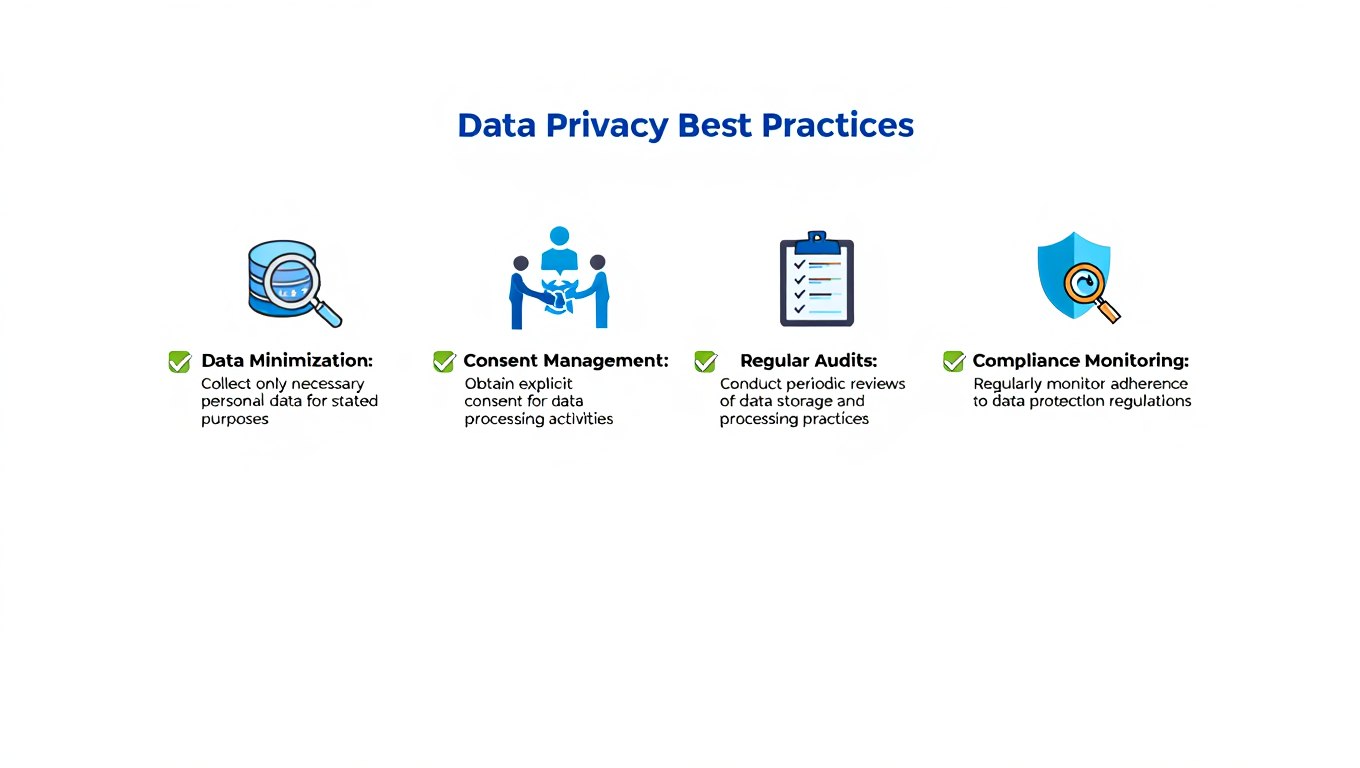
What Are the Best Practices for Data Protection and Privacy?
Best practices for data protection and privacy include implementing privacy by design, conducting regular risk assessments, maintaining transparency, ensuring data accuracy, and fostering a culture of privacy. These practices help organizations achieve compliance, reduce risks, and build trust.
Privacy by Design and Default
Privacy by design and default means building privacy considerations into systems from the beginning:
- Early integration: Addressing privacy requirements at the design stage
- End-to-end protection: Implementing safeguards throughout the data lifecycle
- Visibility and transparency: Ensuring data practices are open and understandable
- Respect for user privacy: Empowering individuals with control over their data
- Default settings: Configuring systems to be privacy-friendly by default
Data Mapping and Inventory
Understanding what data an organization holds is fundamental:
- Comprehensive inventory: Creating a complete record of all personal data processed
- Data flows: Documenting how data moves through the organization
- Classification: Categorizing data based on sensitivity and requirements
- Retention schedules: Establishing clear timelines for data storage and deletion
- Regular updates: Keeping inventory current as practices evolve
Risk Assessment and Management
Systematic evaluation of privacy risks helps prioritize protection:
- Data Protection Impact Assessments (DPIAs): Conducting assessments for high-risk processing
- Risk identification: Recognizing potential threats to personal data
- Risk analysis: Evaluating the likelihood and impact of risks
- Risk treatment: Implementing measures to address unacceptable risks
- Ongoing monitoring: Continuously reviewing and updating risk assessments
Vendor Management
Third parties often process personal data on behalf of organizations:
- Due diligence: Evaluating vendors’ privacy and security practices
- Contractual protections: Including data protection clauses in agreements
- Regular assessments: Monitoring vendor compliance with requirements
- Incident coordination: Establishing procedures for handling vendor-related breaches
- Termination procedures: Ensuring proper data handling when relationships end
Employee Training and Awareness
Human factors are critical to effective data protection:
- Role-based training: Providing targeted instruction based on job responsibilities
- Regular updates: Keeping training current with changing requirements
- Practical examples: Using real-world scenarios to illustrate privacy principles
- Measurement and evaluation: Assessing training effectiveness
- Culture building: Fostering organizational values that prioritize privacy
Incident Response Preparedness
Being prepared for data breaches minimizes their impact:
- Response plans: Developing detailed procedures for handling incidents
- Response team: Designating individuals with specific roles during incidents
- Testing and simulation: Regularly practicing responses to potential scenarios
- Communication protocols: Establishing clear lines for communications
- Documentation requirements: Ensuring proper record-keeping during response
Continuous Improvement
Data protection is an ongoing process:
- Performance monitoring: Tracking metrics related to privacy program effectiveness
- Audit findings: Addressing gaps identified through audits
- Regulatory changes: Updating practices to reflect new requirements
- Technological advances: Incorporating new privacy-enhancing technologies
- Stakeholder feedback: Incorporating input from individuals and employees
Metrics and Measurement
Organizations should measure their data protection performance:
- Compliance metrics: Tracking adherence to legal requirements
- Security metrics: Monitoring the effectiveness of technical controls
- Incident metrics: Tracking the frequency and impact of data breaches
- Training metrics: Measuring employee awareness and knowledge
- Stakeholder satisfaction: Assessing confidence in privacy practices
Implementing these best practices requires commitment from leadership, adequate resources, and a systematic approach. Organizations that prioritize data protection and privacy not only comply with legal requirements but also build trust with customers, partners, and employees.
FAQ
What is the difference between data protection and data privacy?
Data protection focuses on security measures used to secure data. Data privacy deals with policies governing how personal information gets collected, used, and shared. Data protection involves tools like encryption and access management to prevent unauthorized access. Privacy concerns the proper handling of personal data with respect to individuals’ rights and preferences.
What are the main principles of data protection?
The main principles of data protection include lawfulness, fairness, transparency, purpose limitation, data minimization, accuracy, storage limitation, integrity, confidentiality, and accountability. These principles guide organizations in handling personal information responsibly and form the foundation of modern data protection frameworks like the GDPR.
What are the most important data protection laws?
The most important data protection laws include the GDPR in the EU, the CCPA in the US, HIPAA for healthcare, and China’s PIPL. These regulations establish comprehensive requirements for handling personal information with significant penalties for non-compliance.
What rights do individuals have over their personal data?
Individuals have several rights over their personal data, including the right to access, correct, delete, restrict processing, data portability, object to processing, and rights related to automated decision-making. These rights empower individuals to maintain control over their personal information and hold organizations accountable.
What should organizations do in case of a data breach?
In case of a data breach, organizations should detect and assess the incident, contain the breach, notify affected individuals and authorities as required, investigate the causes, implement corrective actions, and take steps to prevent future incidents. Most data protection laws require breach notification within specific timeframes, such as 72 hours under the GDPR.
What is a Data Protection Officer and when is one required?
A Data Protection Officer oversees an organization’s data protection strategy, ensures compliance with privacy laws, and serves as a contact point for individuals and authorities. A DPO is required for public authorities, organizations that engage in large-scale monitoring of individuals, and those processing large amounts of sensitive personal data or criminal records.
How is data protection evolving with new technologies?
Data protection is evolving through the development of privacy-enhancing technologies like homomorphic encryption and differential privacy. Regulatory frameworks are adapting to address challenges in AI, IoT, and blockchain systems. These technologies present both challenges and opportunities for privacy protection.
What are the best practices for data protection and privacy?
Best practices include implementing privacy by design, conducting regular risk assessments, maintaining transparency, ensuring data accuracy, fostering a culture of privacy, managing vendor relationships, preparing for incidents, and continuously improving privacy programs. These practices help organizations achieve compliance, reduce risks, and build trust.
Conclusion
Data protection and privacy are essential for responsible information management. They encompass technical measures, legal requirements, and ethical practices that safeguard personal information. As organizations collect more personal data, implementing robust data protection measures has become both a legal obligation and a business necessity.
Effective data protection requires a comprehensive approach. Organizations must understand legal requirements, implement appropriate security controls, respect individual rights, and foster a culture of privacy. By following data protection principles, complying with privacy laws, and implementing best practices, organizations can protect personal information while maintaining trust with customers and partners.
As technology changes and new privacy challenges emerge, organizations must stay vigilant. This includes staying informed about regulatory changes, adopting privacy-enhancing technologies, and continuously improving privacy programs to address new risks.
Data protection and privacy are not just about following laws. They are about respecting individuals’ rights and maintaining trust. Organizations that prioritize data protection and privacy will be better positioned to navigate the complex landscape of information management while building sustainable, trustworthy relationships.
You May Also Like
 Web Development
Supabase vs Firebase: Which Backend Platform is Right for Your Project?
 Web Development
REST API vs SOAP API: Differences, Pros & Cons, and Use Cases
 Web Development
What Is API Rate Limiting? (A Practical, Simple Guide for Safer, Faster APIs)
 Data Security & Privacy
Is Eldorado.gg Legit? An Honest 2026 Review
 Data Security & Privacy
Is Gameflip Legit and Safe for Gift Cards?
 Cybersecurity
Is Fanatical Legit? An Honest Review Based on Real Gamer Experiences
 Cybersecurity
Is Groupon Legit? An Honest Review In 2026
 Cybersecurity
Is Romspure Safe? An Honest Look at the ROM Site’s Risks and Trust Scores
 Cybersecurity