


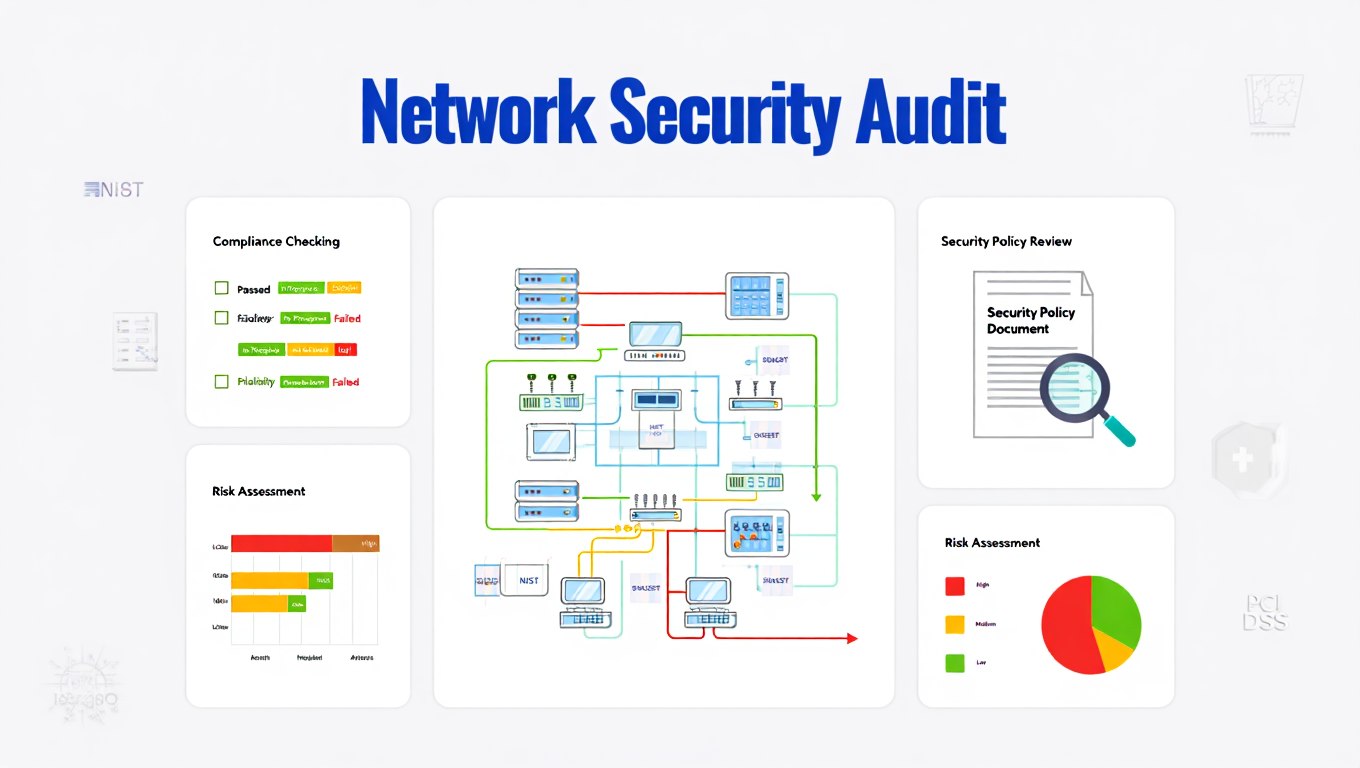
A network security audit checklist is a systematic guide that helps organizations identify vulnerabilities, evaluate security controls, and ensure compliance with cybersecurity standards. This comprehensive framework enables IT teams to assess their network infrastructure methodically, detecting potential threats before they become costly security breaches.
Network security audits have become essential for businesses of all sizes. According to IBM’s 2024 Cost of a Data Breach Report, the global average cost of a data breach reached $4.88 million, representing a 10% increase from 2023. Organizations that conduct regular network security audits reduce their risk of data breaches by 72%, according to Core Security’s 2024 Penetration Testing Report Core Security.
Your business needs a well-defined network security audit checklist to maintain robust cybersecurity defenses. This article provides you with a complete framework for conducting thorough network security assessments, implementing effective security controls, and achieving compliance with industry standards. We’ll cover essential audit components, practical tools, and proven methodologies that help protect your digital assets from evolving cyber threats.
What Is a Network Security Audit and Why Do You Need One?
A network security audit is a comprehensive evaluation of your organization’s network infrastructure, security policies, and protection mechanisms. This systematic assessment identifies vulnerabilities, evaluates security controls, and measures compliance with established cybersecurity standards.
Network security audits examine multiple layers of your IT environment. These assessments analyze network architecture, access controls, data protection measures, and security monitoring systems. The audit process involves both automated scanning tools and manual testing procedures to detect potential security gaps.
Organizations conduct network security audits for several critical reasons. First, these audits help identify vulnerabilities before attackers exploit them. Second, they ensure compliance with regulatory requirements such as PCI DSS, HIPAA, and SOX. Third, they provide evidence of due diligence for insurance claims and legal proceedings.
The financial impact of inadequate network security is substantial. Cybersecurity Ventures predicts that cybercrime will cost the world $9.5 trillion USD in 2024 Secureworks. Regular security audits help organizations avoid these costly incidents by maintaining strong defensive postures.
Your audit frequency depends on several factors including industry requirements, organizational size, and risk tolerance. Most organizations conduct comprehensive audits annually with quarterly assessments of critical systems. High-risk environments may require monthly or continuous monitoring approaches.
How Do You Prepare for a Network Security Audit?
Preparation is the foundation of successful network security audits. You must establish clear objectives, define scope boundaries, and assemble necessary resources before beginning the assessment process.
Start by defining your audit objectives and scope. Determine which systems, networks, and processes require evaluation. Consider including all network segments, wireless infrastructure, remote access systems, and cloud environments. Document any limitations or exclusions that may affect the audit results.
Gather essential documentation before the audit begins. Collect network diagrams, asset inventories, security policies, and previous audit reports. Data loss prevention best practices require maintaining current documentation to support effective auditing processes.
Assemble your audit team with appropriate skills and expertise. Include network administrators, security professionals, and compliance specialists. Consider engaging external auditors for independent assessments of critical systems. External auditors provide objectivity and specialized knowledge that internal teams may lack.
Establish baseline security metrics to measure audit effectiveness. Document current security configurations, incident response times, and vulnerability counts. These baselines help you track improvements and demonstrate progress to stakeholders.
Communicate audit plans to relevant stakeholders and system users. Notify employees about potential service disruptions and testing activities. Clear communication prevents confusion and ensures cooperation during the audit process.
What Should Your Network Infrastructure Audit Cover?
Network infrastructure audits examine the physical and logical components that support your organization’s connectivity and data transmission. These assessments evaluate hardware configurations, network topologies, and communication protocols.
Network Architecture Assessment
Review your network topology and design principles. Examine network segmentation strategies, VLAN configurations, and traffic flow patterns. Proper network segmentation reduces attack surfaces and limits potential damage from security breaches.
Document all network devices including routers, switches, firewalls, and wireless access points. Verify device configurations against security best practices and vendor recommendations. Check for default passwords, unnecessary services, and outdated firmware versions.
Evaluate network redundancy and failover mechanisms. Test backup systems and alternate communication paths to ensure business continuity during outages. Server redundancy plays a crucial role in maintaining network availability and preventing service disruptions.
Network Device Security
Assess router and switch security configurations. Verify access control lists, routing protocols, and management interfaces. Disable unnecessary protocols and services that could provide attack vectors.
Review firewall rules and security policies. Examine inbound and outbound traffic filtering, application controls, and intrusion prevention settings. Test firewall effectiveness using penetration testing techniques and vulnerability scanners.
Evaluate wireless network security implementations. Check encryption protocols, access point configurations, and guest network isolation. Wireless network security protocols like WEP, WPA, WPA2, and WPA3 provide different levels of protection that require careful evaluation.
Network Monitoring and Logging
Examine network monitoring capabilities and log management systems. Verify that security events are properly captured, stored, and analyzed. Effective monitoring helps detect suspicious activities and supports incident response efforts.
Review intrusion detection and prevention systems. Test alerting mechanisms and response procedures for security incidents. Ensure that monitoring covers all critical network segments and communication channels.
Assess network performance monitoring and capacity planning. Monitor bandwidth utilization, latency measurements, and error rates. Performance issues can indicate security problems or infrastructure weaknesses.

How Do You Conduct Access Control and Authentication Audits?
Access control audits evaluate how your organization manages user identities, authentication mechanisms, and authorization processes. These assessments ensure that only authorized individuals can access network resources and sensitive data.
User Account Management
Review user account provisioning and deprovisioning procedures. Verify that new accounts are created according to established policies and that terminated employees lose access immediately. Orphaned accounts create security risks and compliance violations.
Examine user access rights and privilege assignments. Apply the principle of least privilege to limit access to necessary resources only. Regular access reviews help identify and remove excessive permissions that accumulate over time.
Audit shared accounts and service accounts. These accounts often have elevated privileges and weak authentication controls. Implement strong authentication and monitoring for all shared accounts.
Authentication Mechanisms
Evaluate password policies and enforcement mechanisms. Check password complexity requirements, expiration settings, and account lockout procedures. Weak passwords remain one of the most common attack vectors in cybersecurity breaches.
Assess multi-factor authentication implementations. Verify that MFA is required for administrative accounts and sensitive systems. Privileged access management solutions provide additional security layers for high-risk accounts.
Review single sign-on configurations and federation trusts. Examine authentication protocols, session management, and token security. SSO implementations require careful configuration to prevent security weaknesses.
Authorization and Permissions
Audit file system permissions and network share access. Verify that users can only access files and folders necessary for their job functions. Review ACLs and permission inheritance settings for accuracy.
Examine application access controls and role-based permissions. Test authorization mechanisms to ensure proper enforcement of access policies. Applications should validate user permissions for every access request.
Review database access controls and privilege management. Audit database user accounts, roles, and permissions. Database security vulnerabilities can expose sensitive information to unauthorized users.
What Vulnerability Assessment and Penetration Testing Should Include?
Vulnerability assessments and penetration testing provide active evaluation of your network security defenses. These testing methodologies identify exploitable weaknesses and demonstrate real-world attack scenarios.
Vulnerability Scanning Procedures
Conduct comprehensive vulnerability scans across all network segments. Use both credentialed and non-credentialed scans to identify different types of security issues. Best free penetration testing tools can support organizations with limited security budgets.
Prioritize vulnerabilities based on risk severity and exploitability. Focus remediation efforts on critical and high-risk vulnerabilities that pose immediate threats. According to Edgescan’s 2024 Vulnerability Statistics Report, organizations discovered an average of 5.33 vulnerabilities per minute during assessment activities.
Validate vulnerability scan results through manual testing. False positives can waste remediation resources and create security blind spots. Manual verification ensures that identified vulnerabilities represent genuine security risks.
Network Penetration Testing
Perform network-based penetration tests to simulate external attacks. Test perimeter defenses, remote access systems, and public-facing services. External penetration tests reveal how attackers might compromise your network from the internet.
Conduct internal penetration tests to assess lateral movement capabilities. Assume that attackers have gained initial access and test their ability to escalate privileges and access sensitive resources. Internal tests reveal the effectiveness of network segmentation and monitoring controls.
Test wireless network security through specialized penetration testing techniques. Evaluate wireless encryption, access point configurations, and guest network isolation. Wireless networks often provide convenient attack vectors for unauthorized access.
Penetration Testing Results Analysis
Document all penetration testing findings with detailed technical information. Include vulnerability descriptions, exploitation methods, and potential business impacts. Clear documentation helps development teams understand and address security issues.
Provide remediation recommendations for each identified vulnerability. Prioritize fixes based on risk levels and implementation complexity. Include both immediate mitigations and long-term security improvements.
Verify remediation efforts through retesting activities. Confirm that security fixes address the underlying vulnerabilities without introducing new problems. Retesting validates the effectiveness of security improvements.
How Do You Audit Data Protection and Encryption Controls?
Data protection audits evaluate how your organization secures sensitive information throughout its lifecycle. These assessments examine encryption implementations, data classification systems, and information handling procedures.
Data Classification and Handling
Review data classification policies and implementation procedures. Verify that sensitive information is properly identified, labeled, and protected according to organizational requirements. How companies can protect customer data involves implementing comprehensive data protection frameworks.
Audit data retention and disposal procedures. Ensure that information is stored for appropriate periods and securely destroyed when no longer needed. Poor data disposal practices can expose sensitive information to unauthorized access.
Examine data backup and recovery procedures. Test backup integrity and restoration capabilities to ensure business continuity. Verify that backup systems receive the same security protections as production systems.
Encryption Implementation
Assess data encryption at rest for databases, file systems, and storage devices. Verify that encryption algorithms meet current security standards and that keys are properly managed. Data encryption fundamentals provide the foundation for effective data protection programs.
Evaluate data encryption in transit for network communications. Check SSL/TLS implementations, VPN configurations, and secure email systems. ECC vs RSA in SSL/TLS helps organizations choose appropriate encryption methods for their security requirements.
Review key management systems and procedures. Audit key generation, distribution, rotation, and destruction processes. Weak key management can undermine even the strongest encryption implementations.
Data Loss Prevention
Examine data loss prevention (DLP) controls and monitoring systems. Verify that DLP solutions detect and prevent unauthorized data transfers. Test DLP policies against common data exfiltration scenarios.
Review email security controls and content filtering. Assess spam filtering, malware detection, and data leak prevention capabilities. Email remains a primary vector for data breaches and malware distribution.
Audit cloud data protection controls and configurations. Verify that cloud storage services implement appropriate security controls and access restrictions. Confidential computing technologies provide additional protection for sensitive data in cloud environments.

What Compliance and Regulatory Requirements Should You Check?
Compliance audits ensure that your organization meets regulatory requirements and industry standards. These assessments evaluate policies, procedures, and technical controls against specific compliance frameworks.
Industry-Specific Regulations
Review PCI DSS compliance requirements for organizations handling credit card data. Examine cardholder data environments, payment processing systems, and security controls. PCI DSS violations can result in significant fines and payment processor sanctions.
Assess HIPAA compliance for healthcare organizations handling protected health information. Verify administrative, physical, and technical safeguards for PHI. HIPAA violations can result in substantial penalties and reputational damage.
Evaluate SOX compliance requirements for publicly traded companies. Review IT general controls, financial reporting systems, and change management procedures. SOX compliance requires demonstrating effective internal controls over financial reporting.
Security Framework Alignment
Assess alignment with the NIST Cybersecurity Framework for comprehensive security program evaluation. Review identify, protect, detect, respond, and recover functions. The NIST framework provides a structured approach to cybersecurity risk management.
Evaluate ISO 27001 compliance for information security management systems. Review security policies, risk assessments, and control implementations. According to OneTrust, ISO 27001 certifications require annual surveillance audits for the first two years and recertification audits every three years OneTrust.
Review SOC 2 compliance for service organizations handling customer data. Examine security, availability, processing integrity, confidentiality, and privacy controls. SOC 2 reports provide assurance to customers about service provider security controls.
Documentation and Evidence
Collect documentation to support compliance claims and audit findings. Maintain policies, procedures, training records, and security assessments. Comprehensive documentation demonstrates organizational commitment to security and compliance.
Review incident response procedures and documentation. Verify that security incidents are properly reported, investigated, and resolved. Many regulations require specific incident reporting timelines and procedures.
Assess business continuity and disaster recovery planning. Test recovery procedures and document results. Compliance frameworks often require demonstrating ability to maintain operations during disruptions.
Which Network Security Tools Should You Use for Audits?
Effective network security audits require appropriate tools and technologies to identify vulnerabilities and assess security controls. Select tools based on your specific requirements, budget constraints, and technical expertise.
Vulnerability Scanning Tools
Nessus provides comprehensive vulnerability scanning capabilities for networks, systems, and applications. This commercial tool offers extensive vulnerability databases and detailed reporting features. Nessus excels at identifying configuration issues and security weaknesses across diverse IT environments.
OpenVAS offers open-source vulnerability scanning with broad coverage of security issues. This free tool provides network discovery, vulnerability assessment, and reporting capabilities. OpenVAS works well for organizations with limited security budgets and technical expertise.
Qualys VMDR delivers cloud-based vulnerability management with continuous monitoring capabilities. This service provides real-time vulnerability assessment and risk prioritization features. Cloud-based tools reduce infrastructure requirements and maintenance overhead.
Network Analysis Tools
Wireshark enables detailed network protocol analysis and traffic inspection. This open-source tool captures and analyzes network packets to identify security issues and performance problems. Network analysts use Wireshark to investigate suspicious activities and troubleshoot connectivity issues.
Nmap provides network discovery and port scanning capabilities for security assessments. This versatile tool identifies active hosts, open ports, and running services. Security professionals use Nmap to map network topology and identify potential attack vectors.
Angry IP Scanner offers fast network scanning and host discovery features. This lightweight tool quickly identifies active IP addresses and basic service information. Organizations use Angry IP Scanner for network inventory and reconnaissance activities.
Penetration Testing Frameworks
Metasploit provides a comprehensive penetration testing framework with exploit modules and payloads. This commercial tool enables security professionals to test network defenses and validate vulnerabilities. Metasploit includes extensive databases of known exploits and attack techniques.
Kali Linux offers a complete penetration testing distribution with pre-installed security tools. This specialized operating system includes hundreds of security testing utilities and frameworks. Security professionals use Kali Linux for comprehensive security assessments and penetration testing activities.
OWASP ZAP delivers web application security testing capabilities for identifying common vulnerabilities. This open-source tool scans web applications for security flaws like SQL injection and cross-site scripting. Organizations use ZAP to test web-based systems and APIs.
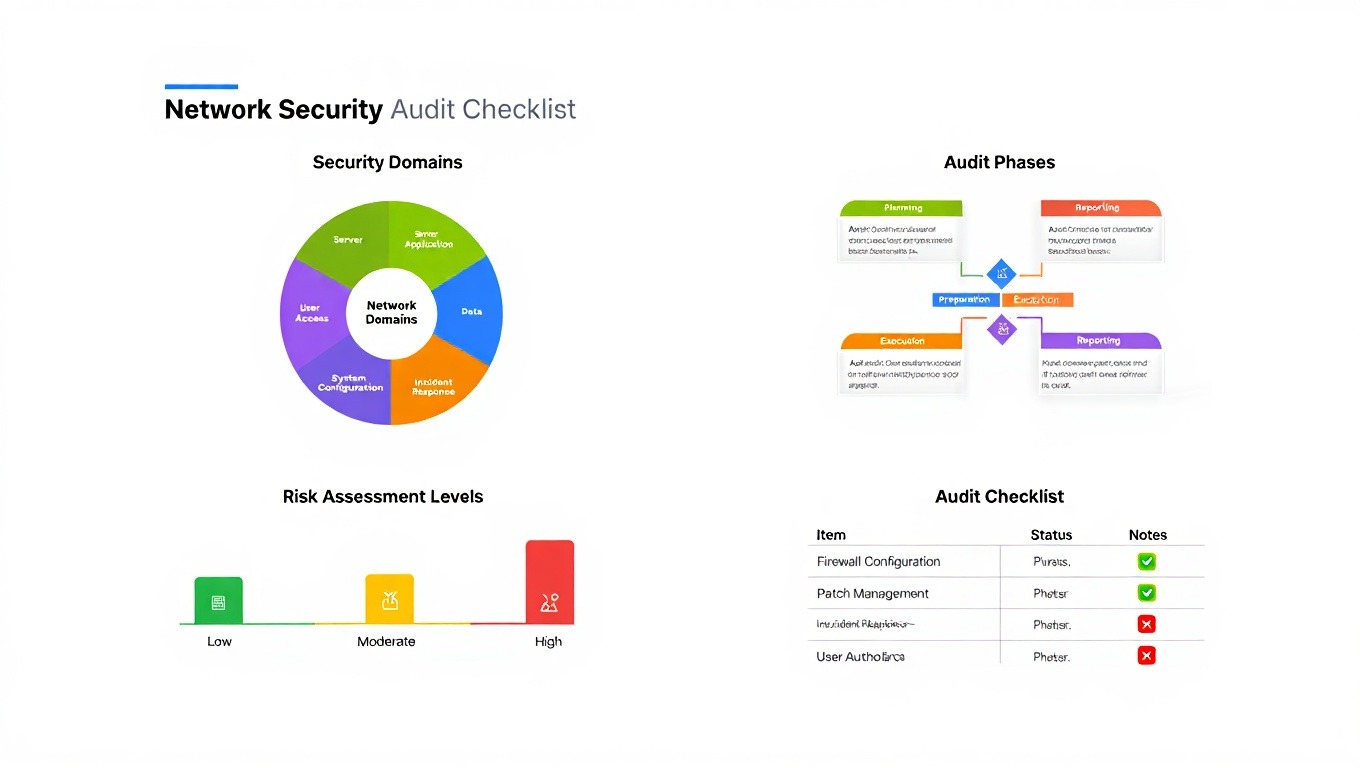
How Do You Create an Effective Audit Reporting and Remediation Plan?
Effective audit reporting translates technical findings into actionable business intelligence. Your reports should communicate security risks clearly while providing practical remediation guidance for stakeholders.
Executive Summary Development
Create concise executive summaries that highlight key findings and business risks. Focus on potential impacts rather than technical details. Executives need to understand how security vulnerabilities affect business operations and regulatory compliance.
Include risk ratings and prioritization recommendations in executive communications. Use standardized risk scales that align with organizational risk management frameworks. Clear risk ratings help executives make informed decisions about security investments.
Provide cost estimates for remediation activities and potential breach impacts. Compare remediation costs against potential loss estimates from security incidents. Financial analysis helps justify security expenditures and resource allocation decisions.
Technical Findings Documentation
Document technical vulnerabilities with sufficient detail for remediation teams. Include vulnerability descriptions, affected systems, and exploitation methods. Technical teams need comprehensive information to understand and address security issues effectively.
Provide step-by-step remediation procedures for each identified vulnerability. Include configuration changes, patches, and security control implementations. Clear instructions reduce remediation time and ensure consistent security improvements.
Include evidence and proof-of-concept demonstrations for critical vulnerabilities. Screenshots, log entries, and test results support vulnerability claims and help development teams reproduce issues. Evidence validates audit findings and supports remediation efforts.
Remediation Planning and Tracking
Develop realistic remediation timelines based on risk levels and resource availability. Prioritize critical vulnerabilities that pose immediate threats to business operations. Strategies for prioritizing vulnerability remediation help organizations focus limited resources effectively.
Assign remediation responsibilities to specific individuals or teams. Clear ownership ensures accountability and prevents important security fixes from being overlooked. Include contact information and escalation procedures for coordination.
Establish progress tracking mechanisms and regular status updates. Monitor remediation activities and adjust timelines as needed. Regular communication maintains momentum and ensures that security improvements stay on schedule.
What Are the Best Practices for Ongoing Network Security Monitoring?
Continuous monitoring provides ongoing visibility into network security posture and threat activities. Implement monitoring practices that detect security incidents quickly and support rapid response efforts.
Security Information and Event Management
Deploy SIEM solutions to collect and analyze security events from across your network infrastructure. Centralized logging and correlation help identify attack patterns and security incidents. SIEM systems provide real-time alerting and historical analysis capabilities.
Configure log collection from all critical systems including firewalls, servers, and network devices. Comprehensive logging ensures that security events are captured and available for analysis. Standardize log formats and timestamps to support effective correlation.
Develop security monitoring use cases and detection rules for common attack scenarios. Focus on indicators of compromise and suspicious activities relevant to your environment. Zero-day vulnerability identification and mitigation requires advanced monitoring capabilities and threat intelligence.
Threat Intelligence Integration
Incorporate threat intelligence feeds into monitoring systems to identify known malicious indicators. External threat intelligence provides context about current attack campaigns and adversary tactics. Intelligence-driven monitoring improves detection accuracy and reduces false positives.
Monitor for indicators of compromise associated with your industry and geographic region. Targeted threat intelligence helps focus monitoring efforts on relevant threats. Industry-specific intelligence provides insights into common attack vectors and techniques.
Participate in threat intelligence sharing programs and security communities. Collaborative intelligence sharing improves overall security awareness and response capabilities. Information sharing helps organizations stay current with emerging threats and attack trends.
Incident Response Integration
Establish clear escalation procedures for security alerts and potential incidents. Define response criteria and contact information for security team members. Rapid escalation ensures that security incidents receive appropriate attention and resources.
Develop playbooks for common security scenarios and incident types. Standardized procedures improve response consistency and effectiveness. Automated patch management processes support rapid response to vulnerability-related incidents.
Conduct regular incident response exercises and tabletop scenarios. Training activities help teams maintain readiness and identify process improvements. Regular exercises ensure that response procedures remain current and effective.
How Often Should You Conduct Network Security Audits?
Audit frequency depends on multiple factors including regulatory requirements, risk tolerance, and organizational changes. Establish appropriate audit schedules that balance security needs with resource constraints.
Risk-Based Audit Scheduling
Conduct comprehensive annual audits for all critical systems and network infrastructure. Annual assessments provide thorough evaluation of security posture and compliance status. Comprehensive audits examine all aspects of network security including policies, procedures, and technical controls.
Perform quarterly assessments of high-risk systems and environments. Quarterly reviews help identify emerging threats and configuration changes that affect security posture. Focus quarterly audits on critical systems and recent infrastructure changes.
Implement continuous monitoring for dynamic environments and cloud infrastructure. Continuous assessment provides real-time visibility into security configuration and compliance status. Automated monitoring tools support continuous assessment with minimal resource requirements.
Trigger-Based Audit Requirements
Conduct audits following significant infrastructure changes or system deployments. New systems and configurations introduce potential security vulnerabilities and compliance gaps. Change-driven audits ensure that security controls remain effective after modifications.
Perform audits after security incidents or data breaches. Post-incident audits identify root causes and validate remediation efforts. Incident-driven assessments help prevent similar occurrences and demonstrate due diligence.
Execute audits when regulatory requirements change or new compliance obligations emerge. Regulatory changes often require updates to security controls and audit procedures. Compliance-driven audits ensure continued adherence to regulatory requirements.
Resource Planning and Budgeting
Allocate sufficient resources for audit activities including personnel, tools, and external services. Adequate resource allocation ensures comprehensive coverage and quality results. Budget planning should account for both internal staff time and external audit services.
Plan audit schedules to minimize business disruption and resource conflicts. Coordinate audit activities with other IT projects and maintenance windows. Effective scheduling reduces operational impact while maintaining security effectiveness.
Consider outsourcing specialized audit activities to qualified security firms. External auditors provide expertise and objectivity that internal teams may lack. IT health checks and security assessments benefit from independent evaluation perspectives.
What Common Network Security Audit Mistakes Should You Avoid?
Understanding common audit mistakes helps organizations conduct more effective security assessments and avoid critical oversights. Learn from typical errors to improve your audit processes and results.
Scope and Planning Errors
Avoid defining audit scope too narrowly or excluding critical systems. Comprehensive audits should examine all components that affect network security including legacy systems and cloud infrastructure. Incomplete scope creates security blind spots and compliance gaps.
Don’t underestimate the time and resources required for thorough audits. Rushed assessments often miss important vulnerabilities and produce incomplete results. Allow sufficient time for proper testing, analysis, and documentation activities.
Avoid conducting audits without proper stakeholder communication and coordination. Lack of communication creates confusion and reduces cooperation from system administrators and users. Clear communication ensures smooth audit execution and accurate results.
Technical Assessment Limitations
Don’t rely exclusively on automated scanning tools without manual validation. Automated tools can produce false positives and miss complex vulnerabilities that require human analysis. Combine automated and manual testing for comprehensive coverage.
Avoid testing only during normal business hours when systems experience typical load patterns. Attackers often strike during off-hours when monitoring may be reduced. Include after-hours testing to evaluate security posture during all operational periods.
Don’t ignore legacy systems and applications that may not support modern security testing tools. Older systems often contain significant vulnerabilities and require specialized assessment techniques. Legacy system evaluation is crucial for comprehensive security assessment.
Reporting and Follow-up Issues
Avoid creating technical reports that stakeholders cannot understand or act upon. Tailor reporting to different audiences with appropriate levels of technical detail. Executive summaries should focus on business risks while technical reports provide implementation guidance.
Don’t conduct audits without establishing clear remediation timelines and accountability. Audit findings without follow-up actions provide limited security value. Establish ownership and deadlines for addressing identified vulnerabilities.
Avoid treating audits as one-time activities rather than ongoing security processes. Security audits should be part of continuous improvement programs that evolve with changing threats and business requirements. Regular assessment and monitoring provide sustained security benefits.
What Tools and Templates Can Help Streamline Your Network Security Audit Process?
Standardized tools and templates improve audit consistency while reducing time and effort requirements. Develop audit resources that support repeatable processes and comprehensive coverage.
Audit Checklist Templates
Create standardized checklists that cover all aspects of network security assessment. Comprehensive checklists ensure consistent coverage and prevent important areas from being overlooked. Small business network security checklists provide targeted guidance for resource-constrained organizations.
Develop role-specific checklists for different audit team members. Specialized checklists help team members focus on their areas of expertise while ensuring comprehensive coverage. Role-based checklists improve efficiency and reduce redundant effort.
Maintain version control for audit templates and update them regularly based on new threats and regulatory requirements. Current templates ensure that audits address emerging security concerns and compliance obligations.
Documentation Templates
Standardize vulnerability reporting formats to ensure consistent documentation and facilitate remediation efforts. Uniform reporting helps technical teams understand and address security issues efficiently. Include fields for vulnerability descriptions, risk ratings, and remediation recommendations.
Create executive dashboard templates that summarize audit results in business-friendly formats. Executive dashboards should highlight key metrics, risk trends, and remediation progress. Visual presentations help stakeholders understand security posture and make informed decisions.
Develop remediation tracking templates that monitor progress and maintain accountability. Tracking templates should include task assignments, deadlines, and status updates. Structured tracking ensures that security improvements stay on schedule and receive appropriate attention.
Automation and Integration
Implement audit management platforms that coordinate assessment activities and maintain audit evidence. Centralized platforms improve collaboration and ensure comprehensive documentation. Commercial audit tools often include workflow management and reporting capabilities.
Integrate vulnerability scanners with ticketing systems to streamline remediation workflows. Automated integration reduces manual effort and ensures that vulnerabilities receive appropriate attention. Integration supports efficient remediation tracking and reporting.
Use configuration management tools to validate security settings and identify compliance deviations. Automated configuration checking provides continuous assurance and reduces manual audit effort. Configuration tools support both assessment and ongoing monitoring activities.
Conclusion
Network security audits serve as your organization’s primary defense against evolving cyber threats and regulatory compliance challenges. The systematic approach outlined in this comprehensive checklist provides the framework needed to identify vulnerabilities, assess security controls, and maintain robust cybersecurity postures.
Effective network security auditing requires combining multiple assessment techniques including vulnerability scanning, penetration testing, and compliance evaluation. Regular audits help organizations stay ahead of emerging threats while meeting regulatory requirements and demonstrating due diligence to stakeholders.
The investment in thorough network security audits delivers significant returns through reduced breach risks, improved compliance posture, and enhanced stakeholder confidence. Organizations that implement regular audit programs demonstrate commitment to cybersecurity excellence and protect their most valuable digital assets.
Your network security audit checklist should evolve with changing threats, technologies, and business requirements. Regular updates ensure that audit processes remain effective and continue providing value to your organization’s overall security program.
Frequently Asked Questions
What is the difference between vulnerability scanning and penetration testing?
No, vulnerability scanning and penetration testing are not the same. Vulnerability scanning identifies potential security weaknesses using automated tools, while penetration testing actively exploits vulnerabilities to demonstrate real-world attack scenarios. Scanning provides broad coverage quickly, while penetration testing offers deeper analysis of specific vulnerabilities.
How long does a comprehensive network security audit take?
No, there is no standard timeframe for network security audits. The duration depends on network size, complexity, and audit scope. Small business audits may take 1-2 weeks, while enterprise assessments can require 4-8 weeks or longer. Proper planning and resource allocation are essential for realistic timeline development.
Can automated tools replace manual security auditing?
No, automated tools cannot completely replace manual security auditing. Automated tools excel at identifying known vulnerabilities and configuration issues, but they miss complex attack scenarios and business logic flaws. Effective audits combine automated scanning with manual testing and analysis for comprehensive coverage.
What is the most important aspect of network security auditing?
Yes, comprehensive documentation and follow-up remediation are the most critical aspects of network security auditing. Technical findings without proper documentation and remediation planning provide limited security value. Effective audits require clear reporting, accountability assignment, and progress tracking to achieve meaningful security improvements.
How much should organizations budget for network security audits?
No, audit costs vary significantly based on organization size, complexity, and requirements. Internal audits primarily require staff time and tool licenses, while external audits can range from $10,000 to $100,000 or more. Organizations should budget 2-5% of their IT budget for security assessment activities including both internal and external resources.
Are network security audits required by law?
Yes, many industries have regulatory requirements that mandate regular security assessments. Healthcare organizations must comply with HIPAA security rules, financial institutions follow various banking regulations, and payment processors must meet PCI DSS requirements. Even organizations without specific mandates benefit from regular audits for risk management and insurance purposes.
What happens if audit findings are not addressed promptly?
No, ignoring audit findings does not make security risks disappear. Unaddressed vulnerabilities remain exploitable by attackers and may violate compliance requirements. Organizations should prioritize remediation based on risk levels and implement compensating controls when immediate fixes are not possible. Regular progress tracking ensures that security improvements receive appropriate attention.
Can small businesses conduct effective network security audits?
Yes, small businesses can conduct effective network security audits with appropriate planning and resource allocation. Many free and low-cost tools support comprehensive security assessment activities. Small businesses may benefit from outsourcing specialized audit activities while maintaining internal oversight and remediation capabilities. The key is developing realistic audit programs that fit available resources while addressing critical security concerns.
You May Also Like
 Cybersecurity
Is Fanatical Legit and Safe? My Honest Take on Buying Game Keys
 Data Security & Privacy
Is Gameflip Legit and Safe for Gift Cards? What Buyers Should Know
 Data Security & Privacy
Is Eldorado.gg Legit and Safe in 2026? My Investigation and What Buyers Should Know
 VPN & Proxy
Why Does Google Say Our Systems Have Detected Unusual Traffic From Your Computer Network?
 Cybersecurity
Is Groupon Legit? An Honest Review In 2026
 Cybersecurity
Is Romspure Safe? An Honest Look at the ROM Site’s Risks and Trust Scores
 Cybersecurity
Is KashKick Legit? Honest KashKick Review (Payouts, Earnings, and Pros & Cons)
 Cybersecurity
Bookvip reviews: Is Bookvip Travel Legit or Scam?
 Cybersecurity