

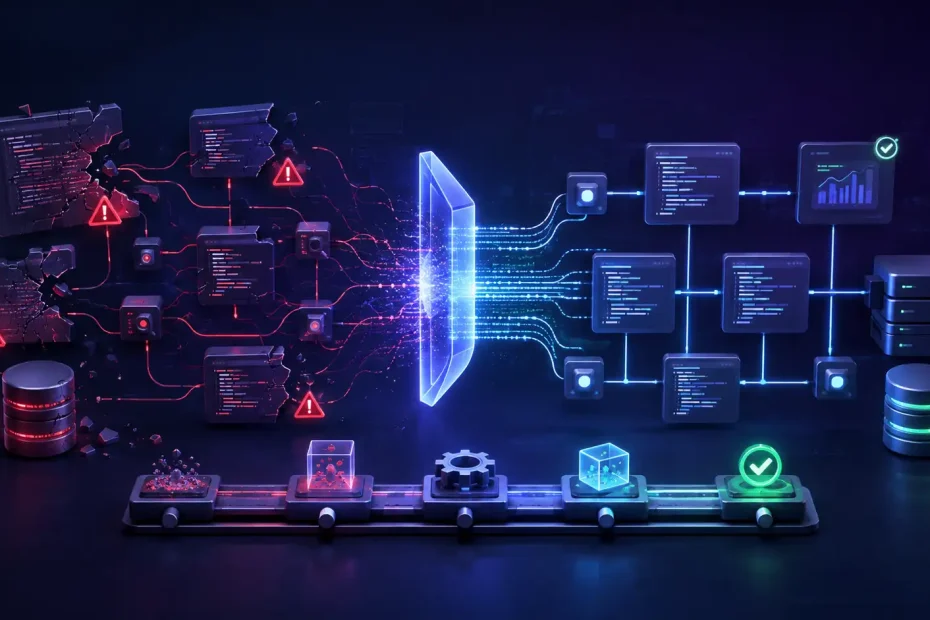
Every software product has bugs. But sometimes the problem is bigger: releases create new issues, integrations become unreliable, and even small updates feel risky.
At that point, the project needs more than another round of fixes. It needs a structured recovery process that identifies why the product keeps breaking and makes future development safer.
Signs That a Software Project Is in Trouble
A struggling product may still have users and working features, but development becomes slower and less predictable.
Common warning signs include:
- Every release creates new bugs.
- Fixed issues keep returning.
- Small changes affect unrelated features.
- APIs and integrations fail unpredictably.
- Critical workflows such as payments, bookings, or content generation are unstable.
- The previous team left unclear code or missing documentation.
When these problems become part of everyday development, adding more features usually creates more technical debt. The system needs to be stabilised first.
What Software Project Rescue Means
Software project rescue is not about patching every visible issue or immediately rebuilding the system. Most troubled products still contain useful code, business logic, and data worth keeping.
The process begins with reviewing the codebase, integrations, logs, releases, and critical workflows. The team then identifies the most fragile areas, prioritises issues affecting users or revenue, fixes critical breakpoints, and improves monitoring and release control.
Professional software project rescue services help companies understand what should be fixed now, what can wait, and which parts of the product should remain unchanged.
Why a Full Rewrite Is Rarely the First Choice
Starting again may sound easier, but a full rewrite can take months and introduce new risks. The existing product may contain years of business rules, customer data, and edge cases that are difficult to reproduce.
A safer approach is usually to preserve working components, refactor fragile areas, remove unnecessary complexity, and replace unreliable dependencies. A full rewrite should only be considered when the existing system cannot support future development.
A Real Example: How We Rescued a Multi-AI Content Platform
One multi-AI platform was designed to turn user text into completed videos. It already used a language model, a text-to-speech service, and an AI video provider. Each integration worked separately, but the full process remained unreliable because the services were not properly connected.
ASD Team mapped the pipeline and built the missing orchestration layer. We structured the input, extracted a clear script and delivery tone, passed the data between services, and connected speech generation with final video creation. We also removed unnecessary workarounds and replaced unreliable providers.
The result was a connected pipeline that could consistently turn user text into finished AI-generated videos. The full multi-AI content platform rescue case study shows how several working integrations do not automatically create a reliable product.
What Changes After Stabilisation
A successful rescue should make future development safer and easier to manage.
After stabilisation:
- Releases become more predictable.
- Integrations work more consistently.
- Critical workflows are easier to monitor.
- Developers understand which areas are safe to change.
- Recurring issues are fixed at their source.
The team can then return to building new features instead of constantly reacting to incidents.
Final Thoughts
A failing software project does not always need to be abandoned or rebuilt. In many cases, it can be recovered by identifying its weak points, protecting critical workflows, and simplifying fragile areas. If every release creates new problems and the team is afraid to change the product, the safest next step is to stop adding complexity and stabilise the foundation first.
You May Also Like
 Cloud Computing
8 Best AWS S3 Alternatives Compared: Pricing, Egress, and S3 Compatibility
 SaaS
SaaSWhat is Confluence Used For In Project Management?
 SaaS
SaaSCognito Forms to Jira Software Cloud Integration: Setup, Automation, Field Mapping, and Best Practices
 Web Development
Building Apps with Lovable and Supabase: A Step-by-Step Guide
 Web Development
Heroku vs. Netlify (2026): Pricing, Features, and Best Uses
 Software
9 Best Free Laser Engraver Software Tools in 2026
 SaaS
SaaS25 Best Pipedrive Integrations to Automate Sales and Grow Your Business
 SaaS
SaaS10 Best Virtual Phone Number Services for 2026: A Practical Buying Guide
 SaaS
SaaS