


Cloud migration remains a major priority for businesses in 2026. Moving applications, data, and infrastructure to the cloud can improve scalability, resilience, speed, and cost efficiency — but only if the migration is planned and executed well.
The challenge is that cloud migration is no longer just about “lift and shift.” In 2026, most organizations also need workload assessment, dependency mapping, security controls, compliance support, modernization, cost optimization, and post-migration operations.
That is why choosing the right migration partner matters. Some providers are strongest for hyperscale infrastructure moves, others for large enterprise transformation, SAP workloads, or cloud-to-cloud data transfer.
This guide refreshes the list for 2026, removes unnecessary HTML, and rewrites the article in clean markdown with updated links and images.
What Is Cloud Migration?
Cloud migration is the process of moving digital assets — such as applications, databases, storage, and workloads — from on-premises infrastructure or another cloud environment into a target cloud platform.
In practice, cloud migration can include:
- rehosting existing workloads
- replatforming applications
- refactoring or rearchitecting apps
- moving databases and file storage
- modernizing legacy systems
- setting up governance, security, and operations in the new cloud environment
Why Use a Cloud Migration Service Provider?
A strong migration provider can help you:
- assess your current estate and map dependencies
- reduce migration risk and downtime
- improve security and compliance
- modernize applications instead of only moving them
- optimize cloud spend after cutover
- provide ongoing support, monitoring, and operations
How Cloud Migration Partners Typically Help
1. Assessment and planning
Good migration partners start with discovery, cost estimation, dependency mapping, target architecture design, and migration-wave planning.
2. Migration execution
They handle replication, workload moves, testing, cutover, rollback planning, and validation.
3. Modernization
The best providers also support replatforming, refactoring, containerization, database modernization, and cloud-native redesign.
4. Security and compliance
Enterprise migrations usually require access controls, encryption, monitoring, auditability, and policy alignment.
5. Post-migration optimization
Migration is not the end. Providers increasingly help with FinOps, performance tuning, observability, resilience, and managed operations.
11 Top Cloud Migration Service Providers in 2026
Note: This is a practical shortlist for 2026 based on current official vendor/service pages and publicly described capabilities. It is not a one-size-fits-all ranking.
Quick comparison
| Provider | Best fit | What stands out | Official link |
|---|---|---|---|
| AWS Application Migration Service | Broad server/application migration to AWS | Replication-based migration from physical, virtual, and cloud environments | https://aws.amazon.com/application-migration-service/ |
| Azure Migrate | Microsoft-centric estates | Discovery, assessment, migration, modernization, and Azure-guided tooling | https://azure.microsoft.com/en-us/products/azure-migrate/ |
| Google Cloud Migration Center | Assessment-heavy migrations to GCP | Unified platform for discovery, cost estimates, assessment, planning, and execution | https://docs.cloud.google.com/migration-center/docs/migration-center-overview |
| Capgemini | Large enterprise AWS programs | End-to-end strategy, migration, modernization, platform engineering | https://www.capgemini.com/us-en/solutions/cloud-migration-with-aws/ |
| Deloitte | Complex transformation programs | Full lifecycle support across planning, integration, migration, and management | https://www.deloitte.com/us/en/alliances/aws/aws-cloud-migration.html |
| DXC Technology | Enterprise workloads with complex dependencies | Strong focus on migration strategy, dependency management, and business-critical systems | https://dxc.com/solutions/cloud-and-infrastructure/public-cloud/cloud-migration-services |
| Infosys | Legacy modernization plus migration | Automated remediation, migration planning, cloud-first deployment approach | https://www.infosys.com/services/cloud-cobalt/offerings/cloud-migration-services.html |
| Wipro | Modernization-led cloud programs | Rehosting, replatforming, refactoring, and rearchitecting under FullStride Cloud | https://www.wipro.com/cloud/migration-and-modernization/ |
| Lemongrass | SAP on AWS | Deep SAP specialization, near-zero-downtime focus, automation-led approach | https://lemongrasscloud.com/cloud/sap-on-aws/ |
| Future Processing | Mid-market and modernization projects | Cloud & Data Modernisation Framework plus cost optimization support | https://www.future-processing.com/services/cloud/cloud-migration-modernisation/ |
| Cloudsfer | Cloud-to-cloud and content migration | Real-time replication and broad data-transfer focus | https://cloudsfer.com/ |
1. AWS Application Migration Service

AWS Application Migration Service is one of the strongest options if your target landing zone is AWS and you need to migrate applications from physical servers, VMware, Hyper-V, or other clouds. AWS emphasizes simplified migration, continuous replication, modernization options, and the ability to keep normal business operations running during replication. It also highlights built-in modernization paths such as disaster recovery, OS upgrades, and license conversion.
Best for
- businesses standardizing on AWS
- large-scale server and application migration
- teams that want a proven replication-based migration path
Key strengths
- supports migration from multiple source infrastructures
- minimizes disruption during replication
- supports modernization during migration
- backed by AWS ecosystem services and tooling
2. Microsoft Azure Migrate
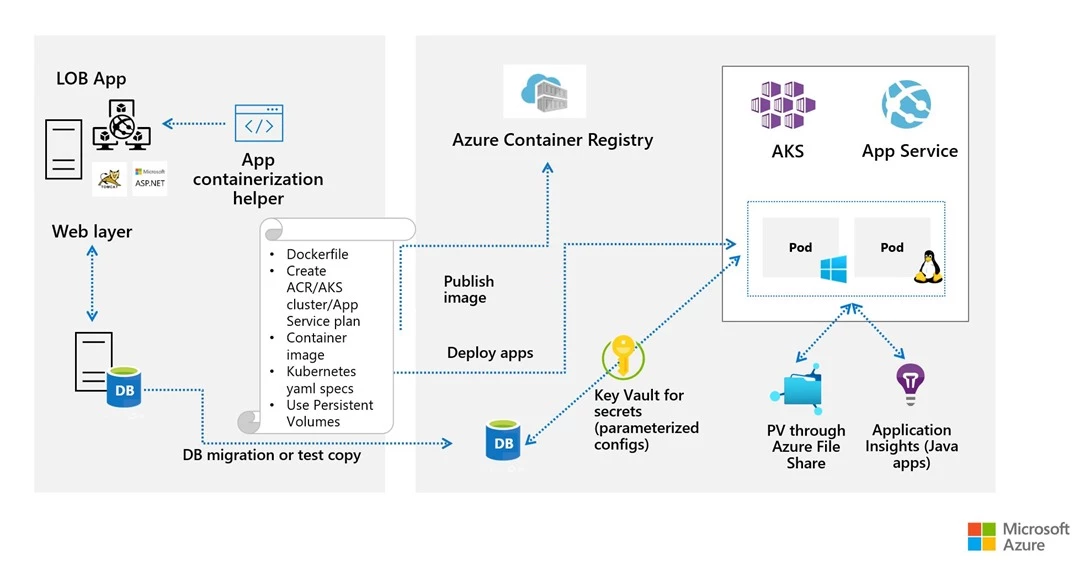
Azure Migrate remains Microsoft’s central migration hub for discovery, assessment, migration, and modernization into Azure. Microsoft’s current positioning also ties Azure Migrate into a broader AI-guided experience with Azure Copilot, covering migration, deployment, observability, optimization, resiliency, and troubleshooting. The service supports physical servers, application grouping, partner tooling, and modernization after migration.
Best for
- Microsoft-heavy environments
- Windows Server, SQL Server, and hybrid estates
- organizations that want strong assessment plus modernization support
Key strengths
- discovery and assessment tools
- application-aware grouping of dependent resources
- support for migration and post-migration modernization
- strong Azure ecosystem integration
3. Google Cloud Migration Center

Google Cloud Migration Center is a unified migration platform designed to accelerate end-to-end migration from on-premises or other cloud environments into Google Cloud. Google highlights rapid cost estimation, automated asset discovery, infrastructure assessment, dependency analysis, migration planning, and support for migration strategies such as rehost, replatform, and refactor.
Best for
- organizations evaluating GCP seriously, not just as a secondary cloud
- teams that want strong discovery and TCO-style assessment
- data-heavy environments planning phased migrations
Key strengths
- rapid cloud cost estimation
- automated discovery of servers and databases
- dependency analysis and technical fit recommendations
- unified workflow for planning and execution
4. Capgemini

Capgemini positions its AWS migration offering as a broad enterprise transformation capability rather than just a technical move. Its official page emphasizes an end-to-end portfolio spanning strategy, migration, application modernization, cloud-native transformation, and platform engineering. Capgemini also highlights support through AWS’s Migration Acceleration Program and its own accelerators for DevSecOps and industry-specific delivery.
Best for
- global enterprises
- regulated industries
- organizations pairing migration with broader transformation
Key strengths
- strategy through operations coverage
- AWS-focused enterprise delivery model
- modernization and platform engineering capability
- cost-offset opportunities through AWS MAP
5. Deloitte
Deloitte continues to target organizations that need cloud migration tied closely to business change, governance, compliance, and transformation management. Deloitte says it provides full lifecycle support across planning, integration, migration, and management of cloud transformation. Its positioning emphasizes faster innovation, lower IT costs, and stronger security/resilience.
Best for
- large enterprises with complex stakeholder environments
- public sector and regulated environments
- programs where adoption and operating model matter as much as the migration itself
Key strengths
- full-lifecycle transformation support
- strong alignment between migration and business planning
- focus on resilience, compliance, and operating model change
6. DXC Technology
DXC Technology focuses heavily on execution discipline for large enterprise migrations. Its official cloud migration page stresses the importance of application, database, and infrastructure experience, along with dependency management across landing zones, network connectivity, testing, freeze periods, and third-party coordination. That makes DXC a strong option for business-critical migrations where complexity is the main risk.
Best for
- large, business-critical workload migrations
- enterprises with complicated dependencies
- organizations needing structured program delivery
Key strengths
- integrated strategy and dependency management
- strong enterprise application focus
- proven experience with tight-deadline migrations
7. Infosys
Infosys positions its migration services around resilience, cost efficiency, and automation. Its cloud migration offering emphasizes migration planning, knowledge-based workload migration, automated remediation, cloud-first deployment, and minimized application-layer code changes. Infosys also says its approach helps extend legacy investments while improving scalability, availability, security, performance, and cost outcomes.
Best for
- enterprises modernizing older application estates
- organizations seeking automation-led migration
- teams that need continuity during transition
Key strengths
- migration planning suite
- automated remediation
- reduced provisioning and deployment effort
- business continuity focus
8. Wipro
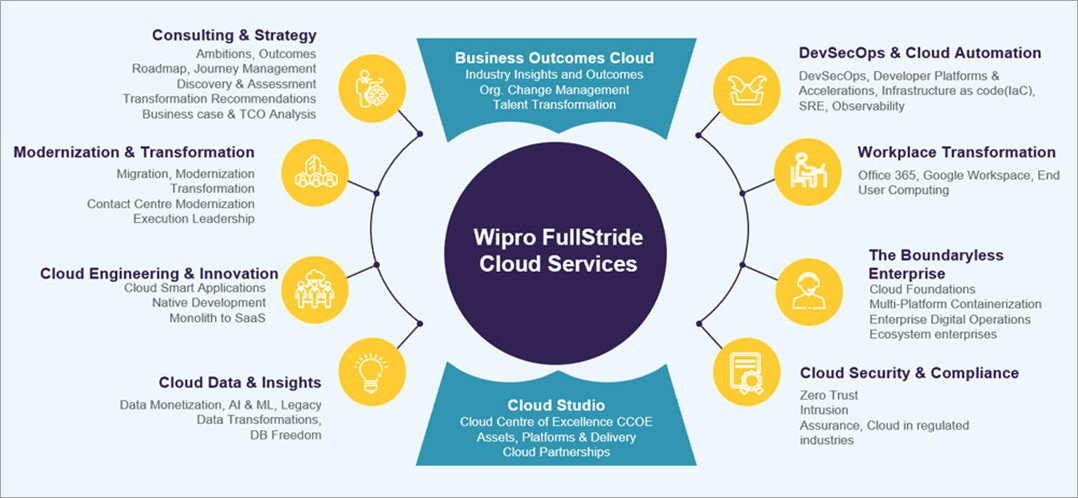
Wipro’s FullStride Cloud offering explicitly frames migration as a modernization exercise, not just a lift-and-shift project. Wipro highlights strategic support, cloud economics and FinOps, and a full range of modernization patterns including rehosting, replatforming, refactoring, and rearchitecting. This makes it a strong candidate for organizations trying to reduce technical debt while moving to cloud.
Best for
- modernization-first programs
- enterprises with heavy technical debt
- organizations wanting migration tied to cloud economics
Key strengths
- end-to-end migration and modernization support
- strong emphasis on FinOps and return on cloud investments
- full modernization path beyond simple rehosting
9. Lemongrass

Lemongrass is more specialized than the global consultancies above, but that specialization is exactly why it belongs on a 2026 shortlist. The company focuses on SAP on AWS and says it has migrated hundreds of SAP customers, manages more than 8,000 SAP servers, and supports 750K+ users. Its official positioning emphasizes near-zero-downtime migration planning, AWS specialization, and its LCP Migrate automation tooling.
Best for
- SAP on AWS migration programs
- enterprises prioritizing SAP modernization and operations
- teams that need a specialist, not a generalist
Key strengths
- deep SAP-on-AWS focus
- strong partner credentials around AWS and SAP
- migration plus ongoing optimization support
10. Future Processing
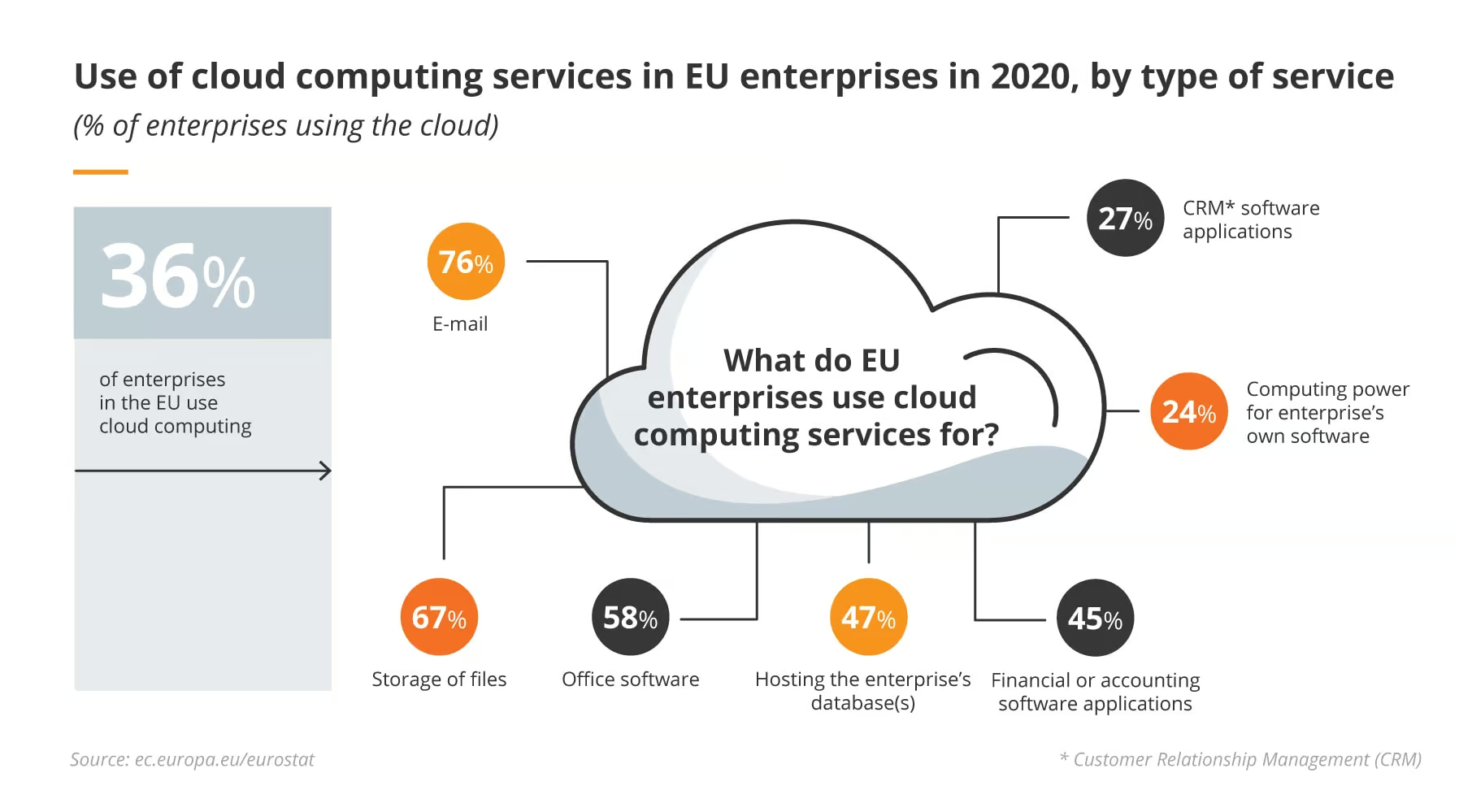
Future Processing positions its offer around becoming cloud native through migration, modernization, and optimization. Its official page highlights a proprietary Cloud & Data Modernisation Framework, AWS- and Microsoft-certified specialists, and support across cost optimization, implementation, testing, monitoring, and continuous optimization. This makes it appealing for organizations that want a more hands-on partner for structured modernization work.
Best for
- mid-market organizations
- cloud-native modernization initiatives
- companies that want migration plus ongoing optimization
Key strengths
- structured modernization framework
- cloud cost optimization support
- AWS and Microsoft partnership depth
11. Cloudsfer

Cloudsfer is different from the broader consulting-led providers above: it is especially useful when the core problem is cloud-to-cloud or content/data migration rather than full infrastructure transformation. On its official site, Cloudsfer emphasizes real-time replication, 24/7 support, more than 16 years of migration experience, over 20 million users migrated, and thousands of terabytes moved across systems.
Best for
- cloud-to-cloud data migration
- SaaS/content transfer projects
- teams needing a more productized migration platform
Key strengths
- real-time replication mode
- long history in content/data migration
- simpler onboarding for transfer-oriented projects
Factors to Consider When Choosing a Cloud Migration Provider
1. Target cloud and workload fit
If you already know your destination, start there:
- AWS-first: AWS MGN, Capgemini, Lemongrass
- Azure-first: Azure Migrate, Deloitte, Wipro
- Google Cloud-first: Google Cloud Migration Center
- Mixed or transformation-led: DXC, Infosys, Future Processing
2. Migration vs modernization
Some providers are strongest at moving workloads quickly. Others are better when you also need:
- app refactoring
- containerization
- database modernization
- operating model redesign
- FinOps optimization
3. Industry and compliance requirements
Regulated sectors should prioritize providers that clearly handle:
- governance
- risk management
- access controls
- auditability
- resilience and business continuity
4. Post-migration operations
Do not evaluate only the migration phase. Ask whether the provider also supports:
- managed operations
- observability
- performance tuning
- cloud cost control
- security hardening
5. Project scope
A productized migration platform may be enough for straightforward data transfer. A large enterprise transformation usually needs a partner that can handle architecture, change management, and long-term optimization.
FAQ
Do I need a cloud migration service provider?
Not always — but for most business-critical migrations, yes. Internal teams may be able to handle smaller or simpler projects, but external specialists reduce risk, speed up execution, and help avoid architectural, security, and cost mistakes.
What are the biggest benefits of using one?
The main advantages are:
- lower migration risk
- better planning and dependency management
- reduced downtime
- stronger security and compliance alignment
- faster modernization
- better post-migration cost and performance optimization
Which provider is best?
There is no universal winner.
- Best for AWS migration tooling: AWS Application Migration Service
- Best for Microsoft estates: Azure Migrate
- Best for GCP migration assessment and planning: Google Cloud Migration Center
- Best for enterprise transformation: Capgemini, Deloitte, DXC, Infosys, Wipro
- Best for SAP on AWS: Lemongrass
- Best for cloud-to-cloud data movement: Cloudsfer
What should I ask before signing?
Ask about:
- discovery and dependency mapping
- downtime expectations
- rollback planning
- security controls
- compliance support
- modernization options
- cost governance after migration
- post-cutover support model
Conclusion
Cloud migration in 2026 is no longer just about moving servers. The best providers now combine migration, modernization, security, resilience, and cost optimization into one program.
If you want the safest shortlist:
- choose AWS, Azure, or Google Cloud when you want platform-native tooling
- choose Capgemini, Deloitte, DXC, Infosys, or Wipro for large enterprise transformation
- choose Lemongrass for SAP on AWS
- choose Future Processing for structured modernization support
- choose Cloudsfer for cloud-to-cloud data migration
The right choice depends on your target cloud, workload complexity, compliance needs, and whether you want a straight migration or a broader modernization program.
You May Also Like
 Cloud Computing
8 Best AWS S3 Alternatives Compared: Pricing, Egress, and S3 Compatibility
 Cloud Computing
What Is Cloud Cost Optimization? Strategy & Best Practices
 Web Development
Supabase Auth Guide: Authentication, OAuth, OTP, MFA, SSO, Sessions, and Pricing
 Web Development
15 Best CyberPanel Alternatives in 2026: Free and Paid
 Web Development
Heroku vs. Netlify (2026): Pricing, Features, and Best Uses
 Cloud Computing
What Is Hybrid Cloud Computing? A Complete Guide
 Cloud Computing
Cloudflare Outage That Broke X, ChatGPT, and Major Online Media
 E-Commerce
Incident Management for E-commerce Websites: Reducing Downtime and Keeping Your Business Running
 Backup Software