


Elliptic Curve Cryptography (ECC) and Rivest–Shamir–Adleman (RSA) cryptography play major roles in online security. They help secure communication, protect sensitive data, and authenticate servers. Modern internet applications, such as online banking and eCommerce, rely on these cryptographic systems. They reduce the risk of unauthorized access and protect information from hackers.
Electronic commerce uses secure communication layers known as SSL (Secure Sockets Layer) and TLS (Transport Layer Security) to keep data safe during transmission. Both ECC and RSA operate within these protocols to establish trust between clients and servers. When a user visits a website, the SSL/TLS handshake uses these algorithms to verify the website’s identity and encrypt data.
This article looks at the differences between ECC and RSA. It also compares how they work in SSL/TLS protocols. You’ll learn about key sizes, performance, use cases, and strengths of each. By the end, you’ll know which method is best for your security needs.
What Is RSA in Cryptography and SSL/TLS?
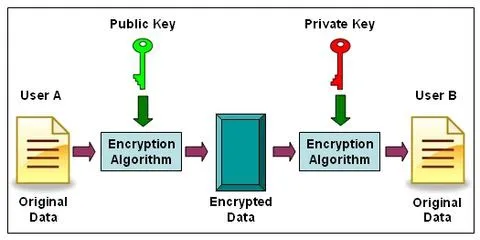
RSA is an asymmetric encryption algorithm used worldwide to secure data in transit and provide digital signatures. RSA uses large prime number factorization for its security. It involves:
- A public key for encryption and signature verification
- A private key for decryption and signature creation
RSA’s Key Features
- Key Size: Common RSA key lengths include 1024-bit, 2048-bit, and 4096-bit scales.
- Security: Factoring large integers provides RSA’s cryptographic strength. The difficulty of factoring these large numbers defines RSA security.
- Performance: RSA encryption and decryption are slower compared to elliptic curve operations with larger key sizes. The math behind RSA can tax CPU resources.
In SSL/TLS, RSA helps establish secure key exchanges and digital signatures. When you see HTTPS in your browser, the SSL/TLS handshake often uses RSA-based certificates. According to the National Institute of Standards and Technology (NIST), RSA has been the standard for secure data transmission for over two decades.

What Is ECC in Cryptography and SSL/TLS?
ECC is an asymmetric encryption method based on elliptic curves. Instead of factoring prime numbers, ECC uses properties of discrete logarithms on elliptic curves to secure data. It operates with:
- A public key based on a point on an elliptic curve
- A private key associated with that point
ECC’s Key Features
- Smaller Key Sizes: ECC can provide the same level of security as RSA with smaller keys. For example, a 256-bit ECC key offers comparable security to a 3072-bit RSA key.
- Faster Computations: ECC calculations often require fewer CPU resources, which can speed up encryption and decryption.
- Strong Security: ECC’s reliance on the elliptic curve discrete logarithm problem complicates attacks with current computational power.
In SSL/TLS, ECC is gaining popularity. Modern protocols, such as TLS 1.3, often rely on elliptic-curve-based key exchange (e.g., ECDHE: Elliptic Curve Diffie–Hellman Ephemeral) to achieve perfect forward secrecy and reduce latency.
How Do RSA and ECC Differ in Key Size?
ECC and RSA differ by how large the keys need to be for the same security level. Here is a general comparison table of key sizes:
| Security Level (bits) | Equivalent RSA Key Size | Equivalent ECC Key Size |
|---|---|---|
| 80 bits of security | 1024 bits (RSA) | 160 bits (ECC) |
| 112 bits of security | 2048 bits (RSA) | 224 bits (ECC) |
| 128 bits of security | 3072 bits (RSA) | 256 bits (ECC) |
| 192 bits of security | 7680 bits (RSA) | 384 bits (ECC) |
| 256 bits of security | 15360 bits (RSA) | 521 bits (ECC) |
Table Note: The security level in bits indicates the approximate “work factor” required to break the key. These comparisons are from various sources, including the National Security Agency (NSA) recommendations.
ECC achieves similar security with smaller key sizes. Smaller keys often improve performance and reduce bandwidth usage, which is essential for high-traffic websites.
How Do RSA and ECC Handle Encryption and Signing?
RSA and ECC both use public and private keys. But, they use different math inside.
- RSA Encryption is used for encrypting data. It uses the recipient’s public key. To decrypt, you need the private key.
- RSA also verifies digital signatures. It checks a signature made with the private key using the public key.
- ECC Encryption works differently. It uses keys from elliptic curve operations for encryption and decryption. Digital signatures (ECDSA) need the signer’s private key and verification with the public key.
ECC is mathematically distinct from RSA. Yet, it offers the same encryption, decryption, and signing functions. ECC is great for devices with limited resources, like smartphones or IoT sensors, because it uses fewer CPU cycles.
Why Does Performance Differ Between ECC and RSA?
Performance varies because ECC uses fewer CPU cycles for the same security level. RSA needs to handle big integer operations, which slows down as key sizes increase.
ECC is efficient because:
- Elliptic curve point operations are efficient on modern hardware.
- Smaller key sizes mean less data to manage in each operation.
- Lower complexity results in lower latency for handshakes and key exchanges.
Performance is key in high-traffic scenarios. Large eCommerce sites benefit from faster negotiations during SSL/TLS handshakes. Studies show that quicker handshakes improve user experience by reducing page load times.
What Is the Impact of ECC and RSA on SSL/TLS Handshake?
The SSL/TLS handshake is a multi-step process. It involves the client and server agreeing on:
- Version of TLS
- Cipher Suites (including cryptographic algorithms)
- Session keys for data encryption
When RSA is used in the handshake:
- The server sends an RSA-based certificate.
- The client encrypts a random secret with the server’s public key.
- The server decrypts with its private key.
When ECC is used in the handshake:
- The server sends an ECC-based certificate (e.g., ECDSA).
- The client and server perform an elliptic curve key exchange (ECDH or ECDHE).
- Both share a secret without sending the private keys across the network.
ECC handshakes often require fewer computational steps, which can reduce negotiation time. For busy servers, this performance edge can help manage more connections simultaneously.

Which Algorithm Is More Common in Modern TLS Deployments?
Historically, RSA reigned as the dominant standard for SSL/TLS. Many public Certificate Authorities (CAs) still issue RSA certificates. However, ECC usage has grown in recent years.
- TLS 1.3:
- This version emphasizes ephemeral key exchanges and often favors ECC.
- Many software libraries, like OpenSSL, default to ECDHE for better security and performance.
- Compatibility:
- Some older systems may lack ECC support.
- RSA certificates remain widespread due to backward compatibility.
- Emerging IoT devices:
- ECC is beneficial for low-power devices.
- Many modern IoT standards choose ECC to reduce overhead.
NIST recommends ECC-based algorithms (like P-256) for longevity against advanced attacks, such as those from quantum computers. Many organizations prefer ECC because it can future-proof their infrastructure to some extent.
Are ECC Certificates More Secure Than RSA Certificates?
ECC certificates are equally or more secure than RSA certificates at comparable key lengths. A 256-bit ECC certificate typically matches the security of a 3072-bit RSA certificate. Public Key Infrastructure (PKI) solutions, including widely recognized CAs, now offer ECC-based certificates with equally strong validation processes.
Important Note: The overall security depends on correct implementation, secure certificate management, and patching known vulnerabilities. Even the strongest algorithm can fail if the system is misconfigured.
What Are the Use Cases for RSA vs ECC?
RSA Use Cases
- Legacy Systems: Many older applications only support RSA.
- Compatible Infrastructure: Some platforms have large libraries of RSA-based software and hardware.
- Digital Signatures: Code-signing certificates and software distribution often use RSA by default.
ECC Use Cases
- High-performance Web Servers: Websites with high traffic volume often choose ECC to reduce handshake time.
- Mobile Applications: ECC’s smaller keys are ideal for devices with limited CPU power.
- IoT Devices: Sensors and embedded systems often use ECC for efficient security.
- Future-proofing: Many believe ECC-based solutions can withstand near-future cryptanalytic advances, although post-quantum cryptography is still being researched.
How Do Quantum Computers Affect RSA and ECC?
Quantum computers could potentially break traditional cryptographic systems faster than classical computers. Shor’s algorithm, in theory, can factor large integers more efficiently, which endangers RSA, and it also threatens ECC’s discrete logarithm approach.
Research on Post-Quantum Cryptography
- Post-quantum cryptography involves new algorithms like CRYSTALS-Kyber or Dilithium.
- NIST has initiated drives to standardize these quantum-resistant algorithms.
- Some experts believe ECC may stand a slightly better chance if quantum attacks remain partially limited. However, both RSA and ECC are vulnerable to sufficiently powerful quantum computers.
Thus, while RSA and ECC remain secure today, transitioning to quantum-safe algorithms is a future consideration for long-term data security.
What Are the Main Advantages and Disadvantages of RSA vs ECC?
Here is an unordered list of advantages and disadvantages for each:
RSA Advantages:
- Widely used and well-understood
- Large support base in legacy applications
- Easy integration into existing infrastructure
RSA Disadvantages:
- Larger key sizes restrict performance
- Slower SSL/TLS handshakes, especially at higher key lengths
- Potentially more vulnerable if factoring algorithms improve
ECC Advantages:
- Smaller keys for similar security levels
- Faster computations and reduced bandwidth usage
- Growing support in modern TLS libraries
ECC Disadvantages:
- Compatibility issues with older systems
- Algorithmic complexity in certain environments
- Patent concerns in early adoption (mostly expired now)

How to Choose Between ECC and RSA for Your SSL/TLS Certificates?
You should choose based on your infrastructure’s capabilities, performance requirements, and compatibility needs. The first step is to ensure that your servers, clients, and third-party dependencies (like payment processors) support ECC if you decide to adopt it. If everything is up-to-date, ECC often provides better security-per-bit and performance.
If you maintain older systems or your clients still rely on older browsers and devices, RSA might remain necessary. However, organizations that aim for speed, reduced CPU load, and possible future-proofing typically choose ECC.
Can You Use Both ECC and RSA for Your Website’s Security?
Yes, you can use both, but you typically must pick one certificate type for your primary SSL/TLS deployment. Some websites serve dual certificate setups. This approach allows older devices to use RSA, while newer clients can negotiate ECC-based connections. It requires advanced server configuration known as Server Name Indication (SNI) with multiple certificates.
Which Algorithm Provides Better Digital Signatures for Code Signing?
ECC (using ECDSA) and RSA both offer strong digital signatures. ECC-based signatures are shorter than RSA-based ones. Code signing often involves verifying large binaries or applications, and ECC’s efficient verification can save time. However, many code-signing tools still default to RSA, so check toolchain support.
Which Algorithm Offers Better Forward Secrecy?
Both ECC and RSA can achieve forward secrecy if implemented with ephemeral Diffie–Hellman key exchanges (DHE or ECDHE). However, ECDHE is usually faster than DHE. A typical TLS 1.3 handshake uses ECDHE with ephemeral curve keys, giving ECC an edge for performance.
Does ECC or RSA Have Higher Adoption Rates Today?
RSA still has a higher adoption rate due to historical integration, but ECC adoption continues to rise. According to Some research from Netcraft, a major internet statistics firm, ECC-based certificate growth has sharply increased in the last few years, especially among security-conscious and performance-driven websites.
Conclusion
ECC and RSA both encrypt data, authenticate servers, and secure online transactions. RSA has larger key sizes and broader legacy support. ECC offers smaller keys, faster performance, and is well-suited for modern applications. Many websites are transitioning to ECC for efficient SSL/TLS handshakes. Others remain on RSA for compatibility with older systems.
Selecting the right algorithm depends on your infrastructure, the devices you support, and your performance requirements. For new deployments, ECC is often a strong candidate due to smaller key sizes and faster operation. For legacy systems, RSA might be easier to maintain until older browsers and servers are updated.
You May Also Like
 VPN & Proxy
Why Do CAPTCHAs Appear When You Use a VPN?
 VPN & Proxy
Why Does Google Say Our Systems Have Detected Unusual Traffic From Your Computer Network?
 VPN & Proxy
How to Block Ads on Pinterest: A Simple Guide
 VPN & Proxy
10 Best VPNs for California in 2026: Privacy, Speed, and Security
 VPN & Proxy
Mobile Proxies vs. Residential Proxies: Differences, Costs, and Use Cases
 VPN & Proxy
Datacenter vs. Residential Proxies: Differences, Costs, and Use Cases
 Web Scraping
Reasons Why You Should Avoid Using Free Proxies For Web Scraping
 Web Scraping
How to Use Proxies for Web Scraping Without Getting Blocked
 VPN & Proxy