


Privileged Access Management solutions, also known as PAM solutions, control and monitor access to critical IT systems. They secure administrative accounts in databases, network devices, servers, and applications. These solutions help organizations reduce the risk of unauthorized activities and data breaches.
Privileged Access Management systems also enforce least privilege practices. They give each user, device, or process only the access rights needed to perform required tasks. Organizations rely on PAM solutions to manage superuser accounts, root accounts, and other high-level credentials. These platforms log privileged sessions and rotate passwords for better accountability.
In this article, you will learn key factors to consider when evaluating Privileged Access Management solutions. You will discover how to assess discovery features, session monitoring, and compliance alignment. You will also learn to compare deployment models, integration capabilities, and future scalability.
What Is Privileged Access Management and Why Is It Important for Preventing Unauthorized Access?
Privileged Access Management is a set of security controls designed to oversee and limit elevated user privileges. It addresses accounts that hold higher access rights than regular user accounts. These accounts can make system-wide changes, access sensitive data, and modify configurations in ways that other accounts cannot.
Privileged Access Management is critical for preventing unauthorized access because it:
- Monitors high-risk accounts like local admins on servers, root accounts in Unix systems, domain administrators in Active Directory, and superuser accounts in databases such as MySQL or Oracle.
- Controls password usage by storing credentials in a password vault and automatically rotating them according to policy.
- Records user sessions so that security teams can review suspicious activity, compliance violations, and changes to critical systems.
- Reduces insider threats by limiting the severity of misuse by authorized users.
- Ensures compliance with popular regulations, such as GDPR, HIPAA, PCI DSS, and SOX, all of which require strict control over data access.
Studies done by Gartner and Forrester indicate that over 80% of data breaches stem from compromised privileged credentials. This statistic highlights the importance of choosing a robust PAM system.
Why Should Organizations Prioritize Privileged Access Management?

Organizations should prioritize Privileged Access Management to protect their core technology and data assets. Privileged users include database administrators, network engineers, DevOps teams, and system administrators. These users manage critical infrastructure. A single compromised privileged account can lead to significant cybersecurity threats, such as:
- Data breaches that reveal private and sensitive information.
- System downtime is caused by unauthorized changes to important services.
- Malicious code injection that compromises system integrity.
- Economic losses due to non-compliance fines and reputational damage.
Leading universities, such as Stanford University, have published research showing that organizations with robust privileged governance programs reduce the likelihood of unauthorized access. This approach aligns with the principle of zero trust, which encourages strict verification and minimal run-time privileges within a network.
How to Evaluate the Core Capabilities of a Privileged Access Management Solution?
Evaluate the core capabilities of a PAM solution by examining automated discovery, credential lifecycle management, session monitoring, and analytics. Each capability plays a crucial role in preventing unauthorized access and simplifying administrator workflows. Below are key factors to check:
- Automated Discovery of Privileged Accounts
- The solution should scan the environment to find privileged accounts in servers, databases, network devices like Cisco routers, and cloud resources like AWS or Azure.
- The tool should categorize accounts based on risk level. This ensures high-risk accounts receive stricter controls.
- Credential Lifecycle Management
- The solution must store passwords in an encrypted password vault.
- It should rotate passwords automatically, enforce password complexity, and support configurable rotation intervals, such as every 30 days or after each use.
- The system must provide secure password checkout for authorized administrators who require temporary credential usage.
- Session Monitoring and Recording
- The solution should provide session video recording for RDP, SSH, and other remote protocols.
- Activity logs must provide precise timestamps, command-line inputs, and session transcripts.
- Some platforms offer real-time session termination if suspicious behavior is detected.
- Analytics and Reporting
- The system must offer dashboards to track anomalous usage trends.
- It should integrate with SIEM platforms like Splunk, IBM QRadar, or LogRhythm for advanced correlation and threat detection.
- Detailed compliance reports must align with regulations like SOX or PCI DSS.
By confirming these core capabilities, you can better ensure that your PAM solution meets industry standards.
Which Deployment Models Are Available for Privileged Access Management Solutions?
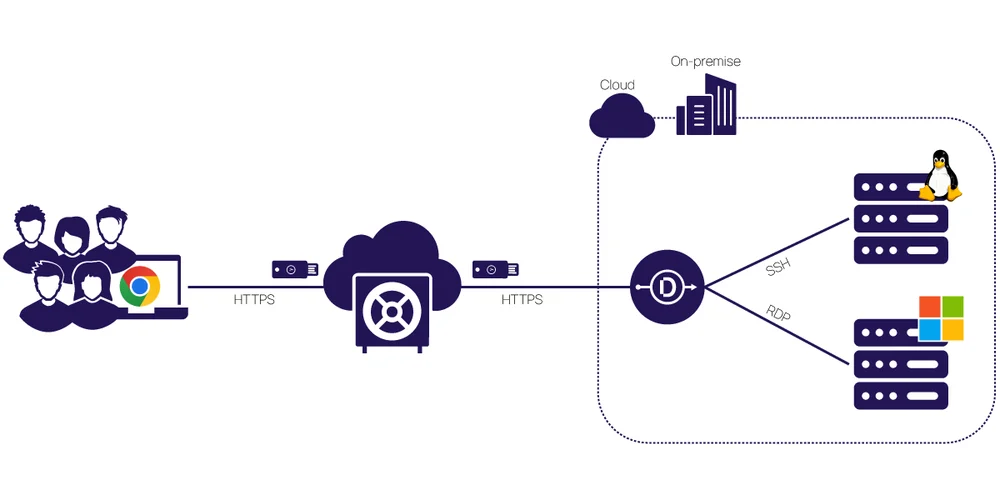
Several deployment models are available for PAM solutions, including on-premises, cloud-based, and hybrid models. Organizations must consider their infrastructure, operational requirements, and compliance restrictions before selecting a model. Below are the main types:
On-Premises
- Deployed fully inside the data center within corporate firewalls.
- Offers greater control over data, which may be beneficial for industries like healthcare or finance.
- Requires internal resources for hardware maintenance, software upgrades, and patch management.
Cloud-Based
- Leverages SaaS or IaaS platforms, reducing hardware expenses and administrative overhead.
- Provides flexibility and quick scalability for growing businesses.
- Requires strong encryption in transit and at rest to secure sensitive credentials in a public cloud environment.
Hybrid
- Combines on-premises deployment for critical assets with cloud-based solutions for distributed or remote operations.
- Offers the best of both worlds but can introduce complexity in managing multiple environments.
How to Assess Integration with Existing Security and IT Infrastructure?
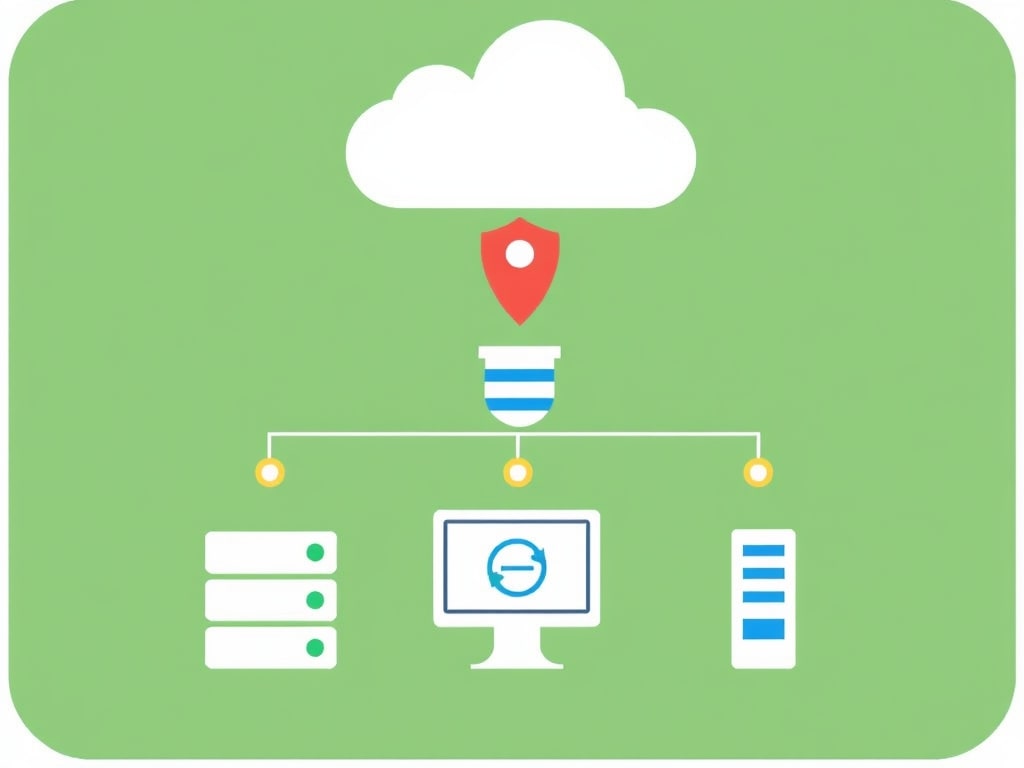
Assess integration by checking whether the PAM solution can communicate seamlessly with directories, ticketing tools, and SIEM systems. Look for the following:
Directory Services Integration
- The solution should integrate with LDAP, Active Directory (AD), or other identity management tools.
- Automated provisioning of AD accounts saves time and reduces errors.
Ticketing Systems Integration
- Automated ticket creation for credential checkouts or account modifications.
- Approval workflows triggered in systems like ServiceNow or Jira for privileged access requests.
SIEM and Logging
- The PAM solution’s logs and session data must feed into SIEM solutions like Splunk or ArcSight.
- Look for real-time alerts for suspicious behavior, such as repeated failed login attempts or abnormal login times.
According to a recent study by Ponemon Institute, seamless integration can reduce administrative overhead by around 30% and improve incident response times by up to 25%.
What Are the Key Security Controls in a Privileged Access Management Solution?
Key security controls in a PAM solution include password vaulting, multi-factor authentication, just-in-time access, and privileged session recording. Understanding these factors helps organizations create a comprehensive privileged access program:
Password Vaulting
- Securely stores credentials using AES-256 encryption or equivalent.
- Facilitates auto-rotation of passwords to reduce risk of static credentials.
Multi-Factor Authentication (MFA)
- Requires additional verification, such as a token or biometrics, before granting privileged access.
- Decreases the risk of credential-based attacks.
Just-In-Time Access
- Grants temporary privileged accounts only when needed.
- Automatically removes privileges once tasks are completed.
Privileged Session Recording
- Captures user interactions in video or text logs.
- Helps in forensic investigations and compliance audits.
Threat Analytics
- Identifies unusual account behavior using artificial intelligence or machine learning.
- Integrates with intrusion detection systems to provide real-time alerts for potential account compromises.
How to Compare User Experience and Ease of Administration?
Compare user experience by evaluating the platform’s interface simplicity, workflow automation, and self-service capabilities. Ease of administration is just as important as security enforcement.
Intuitive Dashboard
- Look for a customizable dashboard that shows account status, session logs, and policy compliance.
Workflow Automation
- Approval requests for new accounts or extended privileges should require minimal manual intervention.
Self-Service Password Checkout
- Authorized users should be able to check out passwords without administrator intervention, under the umbrella of defined policies.
Making the solution user-friendly encourages adoption and better compliance with security policies.
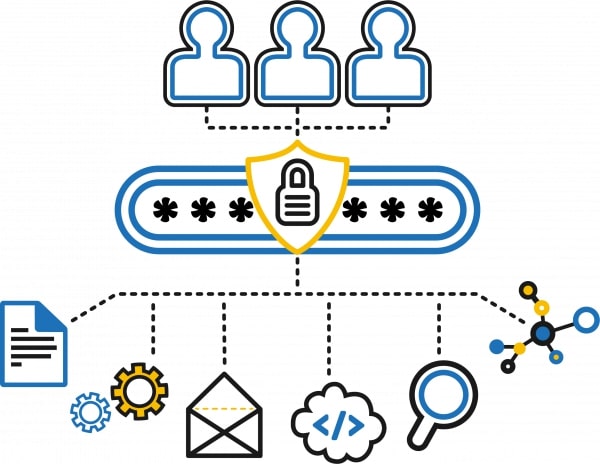
How to Determine Scalability and Performance of a PAM Solution?
Determine scalability by verifying the maximum number of privileged accounts the solution can manage, how it handles load balancing, and whether it provides high availability. Use the following checklist:
Concurrent Session Support
- Does the solution permit multiple users to log in at once?
- Can it handle high concurrency without performance degradation?
High Availability (HA)
- Is there failover support in case a node goes offline?
- Does the vendor provide clustering options and automatic replication of the data store?
Global Coverage
- If you have multiple data centers worldwide, does the PAM solution have distributed architecture?
- Can it replicate credentials regionally for low-latency access?
Upgrade Path
- Evaluate whether upgrading to a higher license tier requires painful migrations or disruptions.
- Confirm that your organization can add new components without re-architecting the entire solution.
Scalability must align with organizational growth. Future needs can include more privileged accounts, compliance requirements, and expansions into new data centers.
What Compliance Features Should a PAM Solution Have?
A PAM solution should align with regulations like HIPAA, PCI DSS, GDPR, and SOX by offering audit trails, access controls, and reporting. Below are essential compliance-related features:
| Regulation | Industry | Key PAM Requirements |
|---|---|---|
| HIPAA | Healthcare | Audit log retention, restricted data access, multi-factor authentication |
| PCI DSS | Payment Card | Logging, secure credentials, password rotation, monitoring privileged use |
| GDPR | General Data | Consent management, encryption at rest, DPO involvement in data handling |
| SOX | Public Companies | Documentation of internal controls, strong password policies, traceable audits |
Audit Trails
- Must retain detailed records for at least 90 days or more, depending on the regulation.
Role-Based Access Control
- Enables mapping of roles to privileged tasks (e.g., system admin, database admin, DevOps engineer).
Automated Reporting
- Provides compliance-focused reports for regulators, reducing manual effort.
Conformance with these compliance features helps avoid fines and reputational harm.
How to Evaluate Vendor Reputation and Support?
Evaluate vendor reputation by reviewing market analyses from Gartner Magic Quadrant, Forrester Wave, and user reviews. Additionally, consider these factors:
Customer References
- Request references from similar-sized organizations to gauge real-world performance.
Technical Support
- Check if the vendor provides 24/7 support with rapid response times.
- Ask about support language options and dedicated representatives.
Professional Services
- Some vendors offer deployment assistance, training, and best practice guidance.
Roadmap and Innovation
- Check how frequently the vendor releases new features.
- Assess if they invest in advancements like AI-driven threat detection or privileged behavior analytics.
Trusted vendors often invest in continuous improvements that can keep your solution future-proof.
What Is the Total Cost of Ownership for Privileged Access Management?
The total cost of ownership (TCO) includes software licenses, hardware infrastructure, ongoing maintenance, and potential professional services. Consider the following components:
License Costs
- Subscription vs. perpetual licensing models.
- Additional costs for features like analytics, session recording, or high availability.
Infrastructure Requirements
- Hardware servers if you choose on-premises.
- Public cloud charges if you prefer SaaS.
Personnel Time
- Administrator and security team resources for deployment, configuration, and maintenance.
Training
- Expenses for training staff or hiring specialized consultants.
Failing to invest in appropriate PAM solutions can cost an organization an average of USD 4.24 million following a privileged credential breach.
How to Plan the Implementation and Adoption of a Privileged Access Management Solution?
Plan the implementation by defining project milestones, stakeholder responsibilities, and success metrics. A structured approach helps ensure minimal disruption and a positive return on investment:
Initiation
- Form a project team that includes IT, security, and compliance officers.
- Define the scope (e.g., on-premises servers, cloud resources, business applications).
Discovery Phase
- Map all existing privileged accounts and associated assets.
- Identify high-risk areas like root accounts in Linux servers or domain admin accounts.
Deployment
- Install or configure the PAM solution in a testing environment first.
- Migrate privileged accounts gradually to ensure minimal disruption.
Policy Definition
- Create policies for password rotation frequency, just-in-time access, and session recording.
- Assign roles and define approval workflows in the PAM platform.
Training and Rollout
- Conduct sessions to teach administrators how to use the platform effectively.
- Guide end-users on how to request privileged access.
Monitoring and Optimization
- Track usage data, performance metrics, and compliance thresholds.
- Adjust policies or scaling parameters as your organization grows.
- A formal project plan with set deadlines and success measures keeps the implementation on track.
How to Measure Success After Deploying a Privileged Access Management Solution?
Measure success by reviewing risk reduction, compliance improvements, user adoption rates, and incident response metrics. Below are clear indicators:
Reduced Incidents
- Fewer unauthorized access attempts or insider threats.
Compliance Audits
- Positive audit outcomes with minimal findings related to privileged account management.
User Adoption
- High usage of self-service password checkout, minimal complaints about user experience.
Incident Response Times
- Faster detection and containment of suspicious activities, aided by real-time session monitoring.
If these metrics demonstrate improvement, the organization can view the PAM deployment as a success.
FAQ (Frequently Asked Questions)
Does Privileged Access Management Improve Compliance for Financial Institutions?
Answer: Yes. Privileged Access Management directly addresses SOX and PCI DSS requirements, helping financial institutions limit and monitor privileged account usage.
Is Privileged Access Management Necessary for Small Businesses with Limited IT Staff?
Answer: Yes. Even small businesses have privileged accounts. A robust PAM solution helps safeguard sensitive data and prevents costly breaches, even if the IT staff is small.
Does a Cloud-Based PAM Solution Offer the Same Security As On-Premises Solutions?
Answer: Yes. Cloud-based PAM solutions often use strong encryption and multifactor authentication. They can match or exceed on-premises security when configured following best practices.
Do All PAM Solutions Offer Strong Session Recording Capabilities?
Answer: No. Some PAM solutions provide limited session recording or omit it altogether. Evaluation should include checking if recording works for RDP, SSH, and database consoles.
Can a Privileged Access Management Platform Protect Against Zero-Day Exploits?
Answer: No. PAM reduces the attack surface by restricting privileged access, but it does not provide complete protection against zero-day exploits. Additional security layers are still required.
Is Multi-Factor Authentication Optional in Most PAM Solutions?
Answer: No. Most reputable PAM solutions offer mandatory multi-factor authentication for privileged accounts. This feature is essential for preventing unauthorized access.
Does Implementing PAM Eliminate Insider Threats Entirely?
Answer: No. PAM reduces insider threats by limiting privilege misuse and logging actions, but it cannot eliminate them entirely. Continuous monitoring and employee training are still necessary.
Do PAM Solutions Integrate Seamlessly with All SIEM Tools?
Answer: No. Not all PAM solutions seamlessly integrate with every SIEM tool. Integration possibilities depend on vendor-provided connectors and APIs.
Are All PAM Solutions Equally Scalable for Large Enterprises?
Answer: No. Some solutions struggle with high volumes of accounts or complex network topologies. Enterprises must test scalability before finalizing a vendor.
Does Implementing PAM Require Significant Downtime?
Answer: No. Proper planning and phased rollouts can minimize or eliminate downtime. Testing in a sandbox environment can also shorten deployment windows.
Conclusion
Privileged Access Management solutions reduce cybersecurity risks by protecting elevated accounts in IT systems. They accomplish this by discovering privileged accounts, rotating passwords, recording sessions, and integrating with SIEM platforms. Organizations enhance compliance with regulatory standards such as PCI DSS, SOX, and HIPAA through robust logging and auditing capabilities.
Evaluation of PAM solutions requires checking functional and non-functional features alike. Features like automated discovery, credential rotation, session monitoring, and reporting are vital to strong PAM. Non-functional aspects like integration, scalability, licensing costs, and vendor reputation offer valuable insights into solution fit.
PAM is essential for organizations of all sizes, from small businesses to large enterprises, as it secures the most sensitive user accounts in the network. Adequate planning, thorough testing, and continuous optimization will help you maximize the benefits of the PAM solution you choose. By following the steps outlined in this article, you can select a platform that not only meets current security requirements but also adapts to future challenges in cybersecurity.
You May Also Like
 VPN & Proxy
Why Does Google Say Our Systems Have Detected Unusual Traffic From Your Computer Network?
 Data Security & Privacy
Is Eldorado.gg Legit? An Honest 2026 Review
 Data Security & Privacy
Is Gameflip Legit and Safe for Gift Cards?
 Cybersecurity
Is Fanatical Legit? An Honest Review Based on Real Gamer Experiences
 Cybersecurity
Is Groupon Legit? An Honest Review In 2026
 Cybersecurity
Is Romspure Safe? An Honest Look at the ROM Site’s Risks and Trust Scores
 Cybersecurity
Is KashKick Legit? Honest KashKick Review (Payouts, Earnings, and Pros & Cons)
 Cybersecurity
Bookvip reviews: Is Bookvip Travel Legit or Scam?
 Cybersecurity