

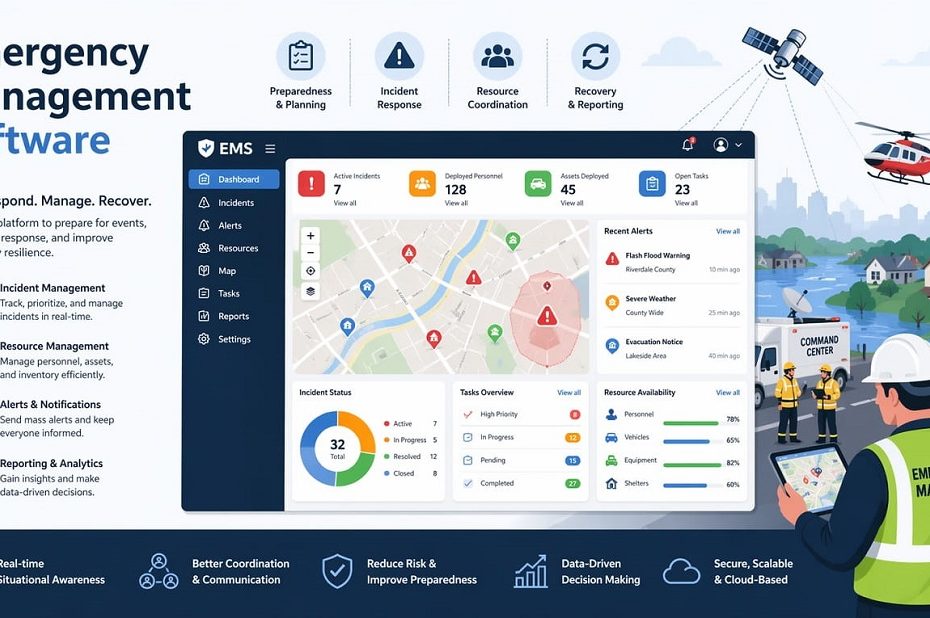
Emergency management operations are being modernized through the integration of advanced technologies, real-time data systems, and improved coordination tools that help agencies respond faster, predict risks more accurately, and protect communities more effectively. From artificial intelligence to connected sensors and cloud platforms, today’s systems are shifting from reactive responses to proactive, data-driven strategies that enhance preparedness and minimize damage during disasters.
Real-World Examples of Modern Emergency Management in Action
- Smart city disaster systems: Cities use connected sensors and automated alerts to detect hazards and respond instantly.
- AI-based wildfire prediction (e.g., California) : AI models analyze weather and terrain data to forecast wildfire risks early.
- Flood monitoring systems in Europe: Real-time water level sensors provide early warnings and improve evacuation planning.
- Use of drones in earthquake zones: Drones quickly assess damage and locate survivors in hard-to-reach areas.
Top Technologies Transforming Emergency Management Operations
Artificial Intelligence and Predictive Analytics
Artificial intelligence is at the core of emergency management modernization, enabling agencies to forecast disasters before they happen. By analyzing historical data, weather patterns, and environmental changes, AI systems can predict events like floods, wildfires, and storms with increasing accuracy. Predictive analytics also supports risk modeling, helping decision-makers identify vulnerable areas and allocate resources efficiently before a crisis escalates.
Internet of Things (IoT) and Smart Sensors
IoT devices and smart sensors are transforming how emergencies are detected and monitored. These connected devices continuously collect data from the environment, such as temperature, water levels, and air quality. This real-time information enables early warning systems to alert authorities and communities quickly. Additionally, infrastructure monitoring helps identify weaknesses in bridges, buildings, and utilities, preventing failures during disasters.
Geographic Information Systems (GIS) and Mapping Tools
GIS technology provides real-time situational awareness by visualizing data on interactive maps. Emergency teams can track the spread of disasters, monitor affected areas, and coordinate resources more effectively. These mapping tools are essential for resource allocation, ensuring that personnel, equipment, and aid reach the right locations at the right time.
Cloud Computing and Data Integration Platforms
Cloud-based systems have revolutionized data sharing in emergency management. They allow multiple agencies to access and update information in real time from a centralized platform. This improves collaboration and ensures that everyone is working with the same data. Cloud platforms also offer scalability, meaning they can handle large volumes of data and increased demand during major crises without system failures.
Drones and Robotics in Disaster Response
Drones and robotics play a crucial role in modern disaster response by providing rapid and safe assessments of affected areas. They are widely used in search and rescue operations, helping locate survivors without putting responders at risk. Drones also assist in damage assessment by capturing high-resolution images and videos, allowing authorities to evaluate the situation quickly and plan recovery efforts more effectively.
Benefits of Modernized Emergency Management Systems
| Benefit | Impact |
|---|---|
| Faster response times | Reduces casualties and damage |
| Better decision-making | Data-driven insights improve accuracy |
| Improved coordination | Seamless agency collaboration |
| Enhanced public safety | Early warnings save lives |
| Cost efficiency | Optimized resource allocation |
Modern systems significantly improve how emergencies are handled by enabling faster and more informed responses. With better coordination and real-time insights, agencies can act quickly, minimize damage, and ensure public safety while also reducing operational costs.
Challenges in Modernizing Emergency Management Operations
Despite the advantages, modernizing emergency management operations comes with several challenges. Budget constraints often limit the adoption of advanced technologies, especially for smaller agencies. Cybersecurity risks are another major concern, as increased connectivity can expose systems to potential attacks. A lack of standardization between different platforms can hinder collaboration across agencies. Additionally, training personnel to use new technologies requires time and resources, while data privacy concerns must be carefully managed to maintain public trust.
How Organizations Can Adapt to Modern Emergency Management Practices?
Organizations can successfully adapt to modern practices by taking a strategic and proactive approach. Investing in scalable technology ensures that systems can grow and evolve with changing needs. Training personnel in digital tools is essential to maximize the benefits of new technologies. Developing integrated response plans helps coordinate efforts across different agencies and departments. Partnering with technology providers can accelerate implementation and bring in expert knowledge. Regular simulations and drills are also critical, as they prepare teams for real-world scenarios and help identify areas for improvement. Many organizations are now leveraging solutions like Emergency Management Software to centralize operations, streamline communication, and enhance overall efficiency during crises.
Frequently Asked Questions
What does modernization in emergency management mean?
It refers to integrating advanced technologies, data analytics, and improved coordination systems to enhance disaster preparedness, response, and recovery.
How is AI used in emergency management?
AI helps predict disasters, analyze risks, optimize resource allocation, and provide real-time insights during emergencies.
What technologies are most important in modern emergency response?
Key technologies include AI, IoT sensors, GIS mapping, cloud computing, drones, and real-time communication platforms.
What are the benefits of modern emergency management systems?
They improve response speed, coordination, decision-making, and overall public safety while reducing costs and risks.
What challenges do agencies face when modernizing?
Common challenges include budget limitations, cybersecurity threats, lack of interoperability, and workforce training gaps.
How do smart cities improve emergency management?
Smart cities use connected sensors, real-time data, and automation to detect risks early and respond more efficiently.
Conclusion
Emergency management modernization is transforming how disasters are predicted, managed, and mitigated. By leveraging cutting-edge technologies and improving coordination across agencies, modern systems are making responses faster, smarter, and more effective. While challenges remain, the continued adoption of innovative tools and strategies will play a critical role in building safer and more resilient communities in the future.
You May Also Like
 Cloud Computing
8 Best AWS S3 Alternatives Compared: Pricing, Egress, and S3 Compatibility
 SaaS
SaaSWhat is Confluence Used For In Project Management?
 SaaS
SaaSCognito Forms to Jira Software Cloud Integration: Setup, Automation, Field Mapping, and Best Practices
 Web Development
Building Apps with Lovable and Supabase: A Step-by-Step Guide
 Web Development
Heroku vs. Netlify (2026): Pricing, Features, and Best Uses
 Software
9 Best Free Laser Engraver Software Tools in 2026
 Software
When Fixing Bugs Is No Longer Enough: How to Rescue a Failing Software Project
 SaaS
SaaS25 Best Pipedrive Integrations to Automate Sales and Grow Your Business
 SaaS
SaaS