


Online privacy tools like Proxifier and VPNs are often misunderstood. Many users assume they serve the same purpose, but their functionalities and security levels differ significantly. This article clarifies whether Proxifier is a VPN, explores their technical distinctions, and helps you decide which tool best suits your needs.
Proxifier is a proxy client that routes application traffic through proxy servers. It allows programs without built-in proxy support to connect via proxies, enabling access to restricted content. However, it does not encrypt data or hide your IP address globally.
A VPN (Virtual Private Network) encrypts all internet traffic and routes it through a remote server, masking your IP address and securing data from hackers or surveillance. Unlike Proxifier, VPNs provide end-to-end encryption, making them ideal for sensitive activities like online banking.
Understanding these tools’ roles is critical for protecting your digital footprint. Below, we break down their features, security protocols, and ideal use cases.
What Is Proxifier and How Does It Work?

Proxifier’s Core Functionality as a Proxy Client
Proxifier is a tool that intercepts your applications’ outgoing network traffic and sends it through a designated proxy server instead of connecting directly to the internet. In doing so, it hides your device’s real IP address and allows your software—whether it’s an email client, game, or any other program lacking built-in proxy support—to bypass restrictions imposed by firewalls or local network policies. Essentially, Proxifier acts as an intermediary, ensuring that even apps not designed to work with proxies can benefit from enhanced privacy and unrestricted access. This makes it especially useful in environments with strict network controls, as it helps maintain both security and connectivity by rerouting data through secure, alternative channels. Key features include:
- Application-specific routing: Choose which apps use proxies.
- Support for multiple protocols: SOCKS, HTTPS, and HTTP proxies.
- Rule-based traffic management: Customize proxy rules based on IP addresses or domains.
Technical Limitations of Proxifier
- No encryption: Data remains unencrypted, exposing it to interception.
- IP masking limited to specific apps: Only routes traffic from configured applications.
- No global traffic redirection: Other apps continue using your direct connection.
What Is a VPN and How Does It Work?

VPN Encryption and Global Traffic Routing
A VPN sets up a secure, encrypted pathway—or tunnel—between your device and a remote server. This means every bit of data you send or receive, from browsing history to login details, is scrambled before it leaves your device, protecting your information even on public Wi-Fi networks. When you connect to a VPN, you’re not just encrypting your data; you’re also routing your connection through the provider’s server. For instance, if you’re in the UK and you connect to a VPN server in the USA, your real IP address is hidden and replaced with one from the USA. This switch not only helps keep hackers, advertisers, or prying eyes at bay but also lets you bypass content restrictions, avoid spam, and reduce the chance of getting blocked by certain websites. Essentially, the VPN makes your online activities much more private and secure by keeping both your data and your identity safe. Features include:
- AES-256 encryption: Military-grade security for data.
- Full IP masking: Hides your real IP address across all apps.
- Kill switch: Blocks internet access if the VPN disconnects.
Advantages Over Proxies
- Comprehensive security: Encrypts all traffic, not just specific apps.
- Broader server networks: Access geo-restricted content globally.
- Protection against surveillance: Prevents ISPs from tracking activities.
Proxifier vs. VPN: Feature Comparison Table
| Feature | Proxifier | VPN |
|---|---|---|
| Encryption | None | AES-256, OpenVPN, WireGuard |
| IP Masking | App-specific | Global (all traffic) |
| Traffic Routing | Select applications | Entire device |
| Speed | Faster (no encryption overhead) | Slower (due to encryption) |
| Use Cases | Bypass app restrictions, gaming | Banking, streaming, torrenting |
Practical Use Cases for Proxifier and VPNs
Here are some practical examples of how you can use Proxifier and VPNs, both separately and together, to enhance your online experience:
Use Case 1: Enhancing Privacy for Specific Apps
If you worry about data leaks from a single program—say your email client or a messaging app—Proxifier lets you set up rules to route just that app’s traffic through a secure proxy (like a SOCKS5 server). This ensures that even if the app doesn’t natively support proxies, its communications remain hidden from prying eyes.
Use Case 2: Bypassing Geo-Restrictions
VPNs are ideal when you want to access content that’s only available in certain regions. For instance, if you’re in the UK but wish to stream shows on a US service like Netflix or Hulu, simply connect to a VPN server in the USA. Your real IP address is replaced with one from the chosen location, allowing you to bypass regional content blocks.
Use Case 3: Double-Layered Anonymity
For maximum privacy, you can combine both tools. First, a VPN masks your true IP address and encrypts all traffic leaving your device. Then, by using Proxifier on top of the VPN, you can apply extra, app-specific routing rules. This double layer ensures that even if one layer were somehow compromised, the other still keeps your online activity obscure.
Use Case 4: Securing Remote Work Environments
Businesses often need to secure remote connections. Employees working from home or while traveling can use a VPN to safely connect to corporate networks. Meanwhile, Proxifier can be configured to route only critical business applications through additional proxy servers, ensuring sensitive data remains protected without slowing down everyday tasks.
Use Case 5: Bypassing Censorship and Network Firewalls
In environments where certain websites or apps are blocked by local firewalls or censorship tools, a VPN can help you bypass these restrictions by rerouting your traffic through a server in a different region. Combined with Proxifier’s ability to target specific applications, you can ensure that only the traffic you want to bypass restrictions gets rerouted, while other connections follow your default network path.
Use Case 6: Optimizing Network Performance
Sometimes the path your data takes can be a bottleneck. A VPN might help by routing your traffic through less congested servers. At the same time, Proxifier can direct only certain data flows—like those from a gaming client or a large file transfer application—through alternative proxy chains that may offer better performance. This helps you strike a balance between speed and security.
Using these tools either individually or together gives you granular control over your online privacy, access, and performance. Whether you’re a remote worker protecting corporate data or an individual streaming your favorite shows while traveling, these solutions help ensure your data stays secure and your identity remains private.
Frequently Asked Questions (FAQ)
Is Proxifier a VPN?
No, Proxifier is a proxy client that routes specific app traffic through proxies but lacks encryption and global IP masking.
Can Proxifier Replace a VPN?
No, Proxifier doesn’t encrypt data, making it unsuitable for sensitive tasks. Use a VPN for banking or secure communications.
Do VPNs Offer Better Security Than Proxifier?
Yes, VPNs encrypt all traffic, protecting against hackers and ISP tracking. Proxifier only reroutes traffic without security.
Is Proxifier a Safe Tool to Use?
Yes, Proxifier is safe when configured correctly. It includes robust security features like encryption and authentication protocols to protect your connections. However, improper setup could expose your traffic to risks.
Can I Use Proxifier Without a VPN?
Yes , you can use Proxifier independently to route traffic through proxies. However, doing so leaves non-proxied traffic unprotected, making it less secure than using a VPN.
Does Proxifier Work with Streaming Services?
No , Proxifier alone cannot unblock streaming services because it doesn’t encrypt all traffic. To access geo-restricted content, combine Proxifier with a reliable VPN.
Conclusion
In short, Proxifier and VPNs are both useful for online privacy, but they work very differently. Proxifier is a tool that directs traffic from specific apps through proxy servers. This means that only the traffic from those apps is routed differently, and it does not encrypt your data or change your IP address for everything you do. A VPN, on the other hand, creates an encrypted tunnel for all of your internet traffic, hides your real IP address, and protects all your online activity—even when you’re on public Wi-Fi. Depending on your needs, you might use Proxifier to protect certain apps or a VPN to secure all your internet use. In some cases, using both together can provide extra security.
You May Also Like
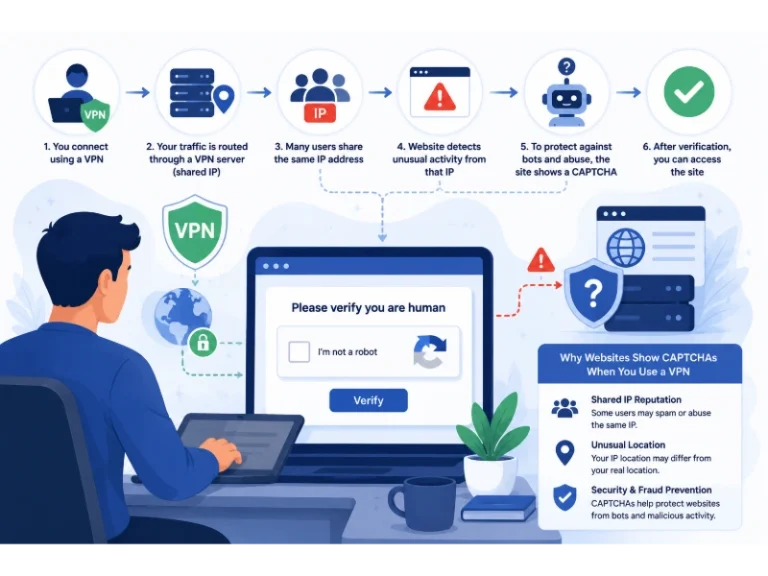 VPN & Proxy
Why Do CAPTCHAs Appear When You Use a VPN?
 VPN & Proxy
Why Does Google Say Our Systems Have Detected Unusual Traffic From Your Computer Network?
 VPN & Proxy
How to Block Ads on Pinterest: A Simple Guide
 VPN & Proxy
10 Best VPNs for California in 2026: Privacy, Speed, and Security
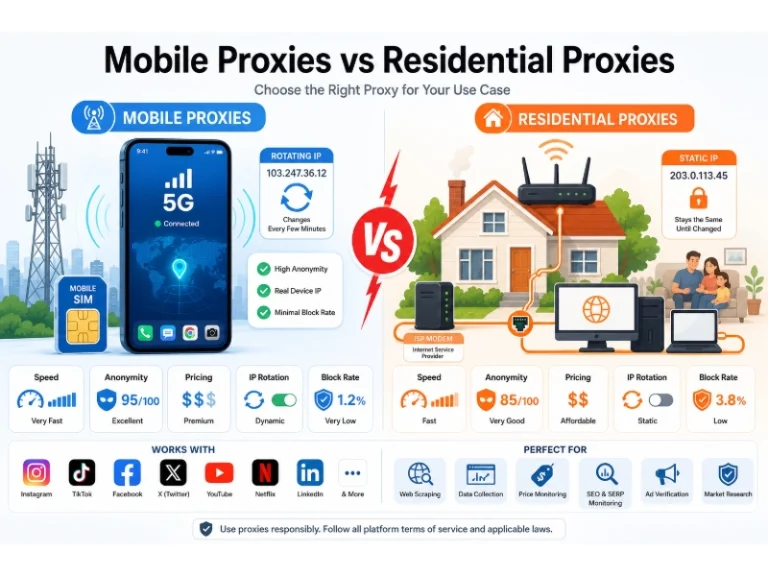 VPN & Proxy
Mobile Proxies vs. Residential Proxies: Differences, Costs, and Use Cases
 VPN & Proxy
Datacenter vs. Residential Proxies: Differences, Costs, and Use Cases
 Web Scraping
Reasons Why You Should Avoid Using Free Proxies For Web Scraping
 Web Scraping
How to Use Proxies for Web Scraping Without Getting Blocked
 VPN & Proxy