


Zillow generates revenue through advertising, real estate services, and mortgage services, leveraging its massive online platform to connect buyers, sellers, renters, and real estate professionals. Founded in 2006, Zillow has transformed the real estate industry by providing free access to property listings, home valuations, and market insights. Its business model thrives on technology, data, and user engagement, offering valuable lessons for startups aiming to disrupt traditional industries. This article explores Zillow’s revenue streams, business strategies, and actionable insights for entrepreneurs.
What Is Zillow and Why Does It Matter?
Zillow is an online marketplace that connects people with homes and real estate professionals. It was started by Rich Barton and Lloyd Frink, who wanted to make real estate information easy to find. Today, Zillow gets millions of visitors each month because it offers free tools like property listings and home value estimates called Zestimates.
Zillow matters because it simplifies the home-buying and renting process. Before Zillow, finding homes or understanding their value was hard. Now, anyone can use Zillow’s website or app to search for properties, see photos, and connect with agents. This has made Zillow a go-to platform for real estate in the United States.
How Does Zillow Generate Revenue?
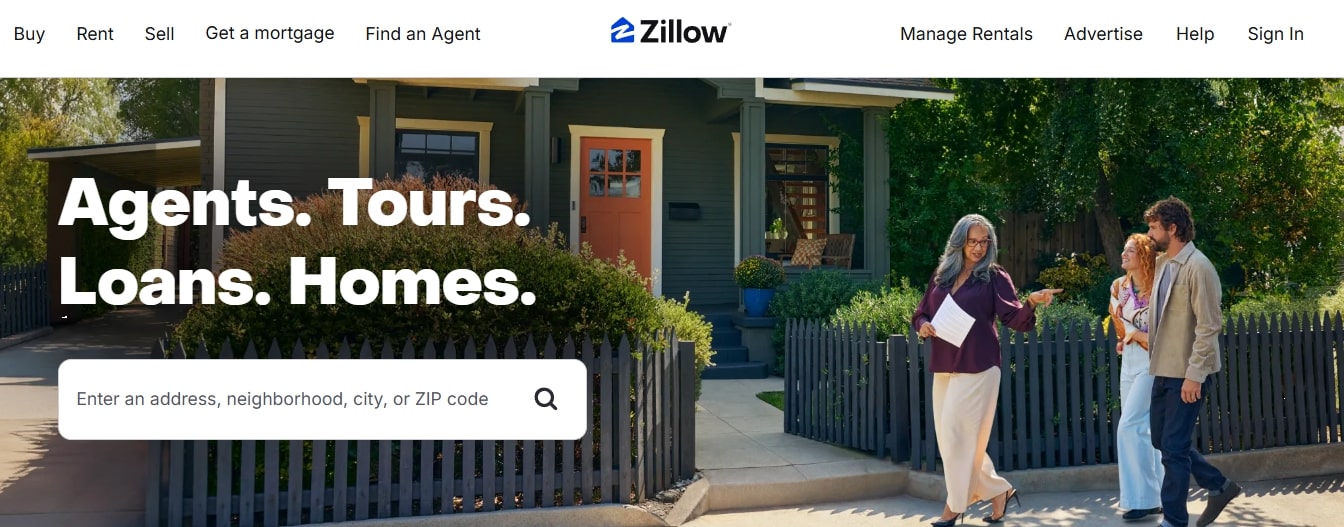
Zillow earns money through three primary revenue streams: advertising and lead generation, real estate services, and mortgage services. These streams capitalize on Zillow’s extensive user base, which includes over 60 million monthly visitors and a database of more than 135 million homes across the United States and Canada. Below, we break down each revenue stream and explain how it contributes to Zillow’s financial success.
Advertising and Lead Generation
Zillow’s largest revenue source is advertising and lead generation, primarily through its Premier Agent program and rental advertising. Real estate agents, property managers, and other businesses pay to advertise on Zillow’s platform, reaching potential buyers, sellers, and renters. In 2023, Zillow’s residential segment, which includes advertising, accounted for 75% of its total revenue of $1.95 billion.
- Premier Agent Program: Real estate agents pay for enhanced profiles and targeted ads to connect with users in their local markets. This program includes features like client reviews, past sales, and direct inquiries from interested buyers or sellers. Agents pay based on the number of ad impressions or clicks, ensuring high visibility.
- Rental Advertising: Property management companies advertise rental listings on Zillow Rental Manager, which includes Zillow, Trulia, and HotPads. Zillow sends qualified leads to advertisers, helping them fill vacant units. This segment generated $93 million in Q4 2023, a 52% increase from the previous year.
- Other Advertising: Zillow sells ad space to businesses like mortgage lenders, home builders, interior designers, and general contractors. These ads use cost-per-click (CPC) or cost-per-thousand-impressions (CPM) models, contributing to Zillow’s revenue diversity.
Real Estate Services
Zillow provides real estate services, including listing tools and partnerships, to facilitate home buying, selling, and renting. While listing a property on Zillow is free for homeowners, the platform monetizes these services through agent partnerships and technology solutions.
- Zillow Listing Services: Homeowners can list properties for sale or rent as “For Sale By Owner” (FSBO) or through an agent. Zillow markets these listings to real estate agents, who pay for leads to connect with potential clients.
- Zillow Offers (Discontinued): From 2018 to 2021, Zillow operated Zillow Offers, an iBuying program where it bought homes directly from sellers, made repairs, and resold them. This service aimed to streamline the selling process but was shut down in November 2021 due to significant losses of $420 million in Q3 2021.
- Technology Solutions: Zillow provides tools like ShowingTime, a scheduling platform for home tours, and software for real estate professionals, generating revenue through subscriptions and fees.
Mortgage Services
Zillow earns revenue through mortgage services by offering home loans and connecting users with lenders. In 2018, Zillow acquired Mortgage Lenders of America, enabling it to provide direct loans. This segment generated $22 million in Q4 2023, a 22% year-over-year increase.
- Zillow Home Loans: Zillow offers conventional, FHA, and VA loans with competitive rates and low down payment options, earning interest on these loans.
- Lender Partnerships: Zillow charges mortgage lenders for leads, connecting them with users seeking loans or refinancing options.
- Mortgage Calculators: Free tools like mortgage affordability calculators attract users, who are then funneled to Zillow’s loan services or partner lenders.
Evidence: Zillow’s diversified revenue streams reflect its ability to monetize its platform without charging users for basic services. In 2023, the company reported $1.95 billion in total revenue, with the residential segment (advertising and lead generation) contributing the majority, followed by rentals (18%) and mortgages. The closure of Zillow Offers highlights the risks of high-cost ventures, but Zillow’s focus on advertising and technology has sustained its growth.
What Makes Zillow’s Business Model Successful?
Zillow’s business model is a technology-driven platform that connects buyers, sellers, renters, and real estate professionals, monetizing user engagement through advertising, services, and partnerships. Launched in 2006 by founders Rich Barton and Lloyd Frink, Zillow addressed information asymmetry in real estate by providing free access to property data, valuations, and market insights. Its model is built on three core pillars: user empowerment, data and technology, and strategic partnerships.

User Empowerment
Zillow empowers users by offering free tools and information to make informed real estate decisions. The platform allows users to browse millions of listings, estimate home values, and access neighborhood data without cost.
- Property Listings: Zillow hosts over 160 million home listings, including homes for sale, rent, and those not on the market, with detailed descriptions, photos, and virtual tours.
- Zestimate: Zillow’s proprietary algorithm provides estimated home values based on recent sales, market conditions, and property features. In July 2016, the typical Zestimate error was $14,000, demonstrating its reliability.
- Search Tools: Advanced filters, mortgage calculators, and renter tools streamline the home search process, attracting 194 million unique users in Q4 2023.
Data and Technology
Zillow leverages big data and advanced technology to enhance user experience and drive revenue. Its database of 135 million homes is powered by public records, user submissions, and proprietary algorithms.
- Natural Language Processing (NLP): Zillow uses NLP models to improve search recommendations, tailoring results based on user preferences and location.
- 3D Home Models: Since 2018, Zillow’s app allows users to create 3D home models from uploaded photos, enhancing listing appeal.
- AI and Analytics: Predictive analytics and interactive dashboards provide actionable insights for users and advertisers, strengthening Zillow’s market position.
Strategic Partnerships
Zillow builds partnerships to expand its reach and enhance its offerings. Collaborations with media outlets, real estate associations, and technology providers drive traffic and revenue.
- Media Partnerships: Zillow partners with outlets to share housing price insights, gaining media coverage and backlinks.
- Acquisitions: Zillow acquired Trulia in 2015 for $2.5 billion and ShowingTime in 2021, expanding its portfolio and user base.
- Influencer Collaborations: Partnerships with real estate professionals and influencers humanize the brand and broaden its audience.
Evidence: Zillow’s business model has driven consistent growth, with 48.11% of U.S. real estate website traffic in 2023. Its focus on free user tools, like Zestimate and property listings, attracts millions, while technology and partnerships ensure monetization. However, the failure of Zillow Offers shows the importance of aligning high-risk ventures with core competencies.
What Lessons Can Startups Learn from Zillow?
Startups can learn 8 key lessons from Zillow’s business model to build scalable, user-focused businesses. Zillow’s success stems from its ability to disrupt a traditional industry, leverage technology, and adapt to challenges. Below are actionable insights for entrepreneurs.
1. Solve a Real Problem
Zillow addressed information asymmetry in real estate, making data accessible to consumers. Before Zillow, public housing data was locked in databases, and realtors often provided inconsistent offers. Startups should identify and solve specific pain points in their industry.
- Example: Companies like Airbnb solved the problem of finding affordable, unique accommodations by connecting hosts with travelers.
- Action: Conduct market research to pinpoint customer frustrations and design solutions that address them directly.
2. Offer Free Value to Attract Users
Zillow provides free tools like Zestimate and listings to attract millions of users. This freemium model builds a large user base, which Zillow monetizes through advertising and services.
- Example: Dropbox offers free cloud storage to attract users, then upsells premium plans.
- Action: Create free, high-value features to drive user engagement and build a monetization strategy around premium services.
3. Leverage Data and Technology
Zillow’s use of big data and AI enhances user experience and drives revenue. Its NLP models, 3D home tools, and analytics set it apart in the proptech industry.
- Example: Netflix uses data analytics to recommend content, keeping users engaged.
- Action: Invest in technology that improves your product and provides actionable insights for users and partners.
4. Build Strategic Partnerships
Zillow’s partnerships with media, influencers, and real estate professionals expand its reach. These collaborations drive traffic and enhance credibility.
- Example: Spotify partners with artists and podcasters to diversify its content.
- Action: Identify partners who can amplify your brand and integrate their expertise into your offerings.
5. Diversify Revenue Streams
Zillow’s multiple revenue streams reduce reliance on a single source. Advertising, real estate services, and mortgages provide financial stability.
- Example: Amazon diversifies through e-commerce, AWS, and Prime subscriptions.
- Action: Explore complementary revenue streams that align with your core business.
6. Adapt to Challenges
Zillow pivoted after the failure of Zillow Offers, focusing on its core advertising business. This adaptability helped it recover from a $420 million loss in 2021.
- Example: Netflix shifted from DVD rentals to streaming to stay competitive.
- Action: Monitor market trends and be ready to pivot if a strategy underperforms.
7. Prioritize User Experience
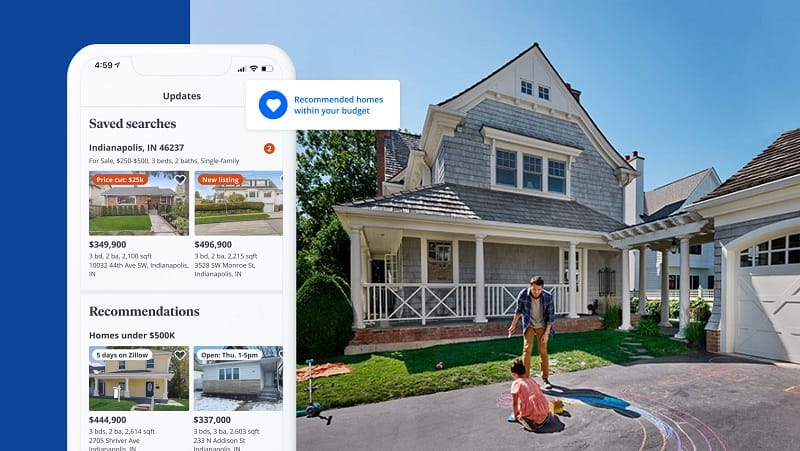
Zillow’s user-friendly platform, with intuitive search tools and mobile apps, keeps users engaged. Its mobile app offers virtual tours, filters, and alerts, enhancing accessibility.
- Example: Uber’s simple app interface makes ride-hailing seamless.
- Action: Design products with intuitive interfaces and features that meet user needs.
8. Scale Thoughtfully
Zillow scaled by acquiring competitors like Trulia and expanding services strategically. Its gradual growth ensured sustainability.
- Example: Facebook scaled through acquisitions like Instagram and WhatsApp.
- Action: Plan for scalability by investing in infrastructure and testing new markets.
Evidence: Zillow’s growth to 60 million monthly visitors and $1.95 billion in 2023 revenue demonstrates the effectiveness of these strategies. Startups can emulate Zillow’s focus on problem-solving, technology, and adaptability to achieve long-term success.
How Has Zillow Evolved Over Time?

Zillow has evolved from a property listing platform to a comprehensive real estate marketplace. Since segment, and mortgages provide financial stability.
- Example: Amazon diversifies through e-commerce, AWS, and Prime subscriptions.
- Action: Explore complementary revenue streams that align with your core business.
6. Adapt to Challenges
Zillow pivoted after the failure of Zillow Offers, focusing on its core advertising business. This adaptability helped it recover from a $420 million loss in 2021.
- Example: Netflix shifted from DVD rentals to streaming to stay competitive.
- Action: Monitor market trends and be ready to pivot if a strategy underperforms.
7. Prioritize User Experience
Zillow’s user-friendly platform, with intuitive search tools and mobile apps, keeps users engaged. Its mobile app offers virtual tours, filters, and alerts, enhancing accessibility.
- Example: Uber’s simple app interface makes ride-hailing seamless.
- Action: Design products with intuitive interfaces and features that meet user needs.
8. Scale Thoughtfully
Zillow scaled by acquiring competitors like Trulia and expanding services strategically. Its gradual growth ensured sustainability.
- Example: Facebook scaled through acquisitions like Instagram and WhatsApp.
- Action: Plan for scalability by investing in infrastructure and testing new markets.
Evidence: Zillow’s growth to 60 million monthly visitors and $1.95 billion in 2023 revenue demonstrates the effectiveness of these strategies. Startups can emulate Zillow’s focus on problem-solving, technology, and adaptability to achieve long-term success.
How Has Zillow Evolved Over Time?
Zillow has evolved from a property listing platform to a comprehensive real estate marketplace. Since its launch in 2006, Zillow has expanded its services, embraced technology, and adapted to market changes, maintaining its position as the leading real estate website in the U.S..
Founding and Early Growth (2006–2011)
Zillow started as a platform to provide free housing data and valuations. Founders Rich Barton and Lloyd Frink, former Microsoft executives, launched Zillow to address the lack of transparency in real estate. Key milestones include:
- 2006: Zillow’s beta launch attracted over 2 million visitors in two days, crashing the website.
- 2008: Partnered with Yahoo Real Estate to power for-sale listings, boosting visibility.
- 2011: Went public, raising $69 million with a $540 million valuation.
Expansion and Acquisitions (2012–2018)
Zillow expanded through acquisitions and new services. It acquired competitors and developed tools to enhance its platform.
- 2012: Acquired HotPads for $16 million, strengthening its rental offerings.
- 2015: Purchased Trulia for $2.5 billion, consolidating its market share.
- 2018: Launched Zillow Offers and acquired Mortgage Lenders of America.
Challenges and Adaptation (2019–2023)
Zillow faced challenges with Zillow Offers but adapted by refocusing on its core business. The iBuying program’s closure in 2021 was a setback, but Zillow’s resilience ensured recovery.
- 2020: Benefited from low interest rates and work-from-home trends, driving user growth.
- 2021: Shut down Zillow Offers, laying off 25% of its workforce.
- 2023: Introduced a Climate Risk Score with First Street, enhancing buyer decision-making.
Evidence: Zillow’s evolution reflects its ability to innovate and adapt. Its acquisitions, like Trulia and ShowingTime, expanded its offerings, while the pivot from Zillow Offers preserved financial stability. In 2023, Zillow’s 57 million monthly visitors underscored its dominance.
What Are the Risks and Challenges of Zillow’s Business Model?
Zillow faces 5 key risks and challenges in its business model. While its platform is robust, external and internal factors pose threats to its success.
- Dependence on Advertising Revenue: Zillow relies heavily on short-term advertising contracts, which accounted for 75% of 2023 revenue. Losing advertisers could impact financial stability.
- Market Volatility: Real estate market fluctuations, like those during the COVID-19 pandemic, affect user engagement and revenue.
- Competition: Competitors like Redfin and Opendoor challenge Zillow’s market share, especially in iBuying and brokerage services.
- Accuracy Concerns: Zestimate’s $14,000 average error in 2016 raised questions about reliability, potentially eroding user trust.
- Operational Risks: The failure of Zillow Offers, with $811 million in accumulated losses, highlights the risks of high-cost ventures.
Evidence: Despite these challenges, Zillow’s adaptability and strong user base mitigate risks. Its focus on technology and partnerships helps it stay competitive, but startups must learn to balance innovation with financial prudence.
FAQ: Common Questions About Zillow’s Business Model
Is Zillow free to use for home buyers and sellers?
Yes, Zillow is free for home buyers and sellers to use. The platform allows users to browse listings, estimate home values, and access tools like mortgage calculators at no cost, attracting millions of users who are then monetized through advertising and services.
Does Zillow charge real estate agents to list properties?
No, Zillow does not charge agents to list properties. Agents can list homes for free, but they pay for advertising through the Premier Agent program to gain visibility and leads.
How accurate is Zillow’s Zestimate?
Zestimate is generally accurate but has an average error of $14,000. It uses a proprietary algorithm based on recent sales and market data, but factors like home condition can affect precision.
Why did Zillow shut down Zillow Offers?
Zillow shut down Zillow Offers due to significant financial losses. The iBuying program lost $420 million in Q3 2021, prompting Zillow to focus on its core advertising and technology businesses.
Can startups replicate Zillow’s business model?
Yes, startups can replicate Zillow’s model by offering free value and monetizing through advertising or services. However, they need substantial data, technology, and user engagement to succeed.
Conclusion
Zillow’s business model demonstrates how technology, data, and user empowerment can disrupt a traditional industry. By offering free tools like Zestimate and listings, Zillow attracts millions of users, monetizing them through advertising, real estate services, and mortgages. Its revenue streams—75% from advertising, 18% from rentals, and the rest from mortgages—show the power of diversification. Startups can learn from Zillow’s focus on solving real problems, leveraging technology, and adapting to challenges. However, risks like market volatility and reliance on advertising highlight the need for careful planning. By emulating Zillow’s strategies, entrepreneurs can build scalable businesses that thrive in competitive markets.
You May Also Like
 Web Development
Supabase vs Firebase: Which Backend Platform is Right for Your Project?
 Web Development
REST API vs SOAP API: Differences, Pros & Cons, and Use Cases
 Web Development
What Is API Rate Limiting? (A Practical, Simple Guide for Safer, Faster APIs)
 Software
What Is B2B Lead Generation Software? A 2026 Guide to Tools, Platforms & Solutions
 Software
10 Best Inventory Management Software Solutions for 2026
 E-Commerce
4 Best Web Scraping API For E-commerce Sites
 SaaS
SaaS10 Best Attendance Management Software: Complete Guide 2026
 E-Commerce
Best Merchandising Planogram Software: Your Guide to Better Store Layouts
 E-Commerce