
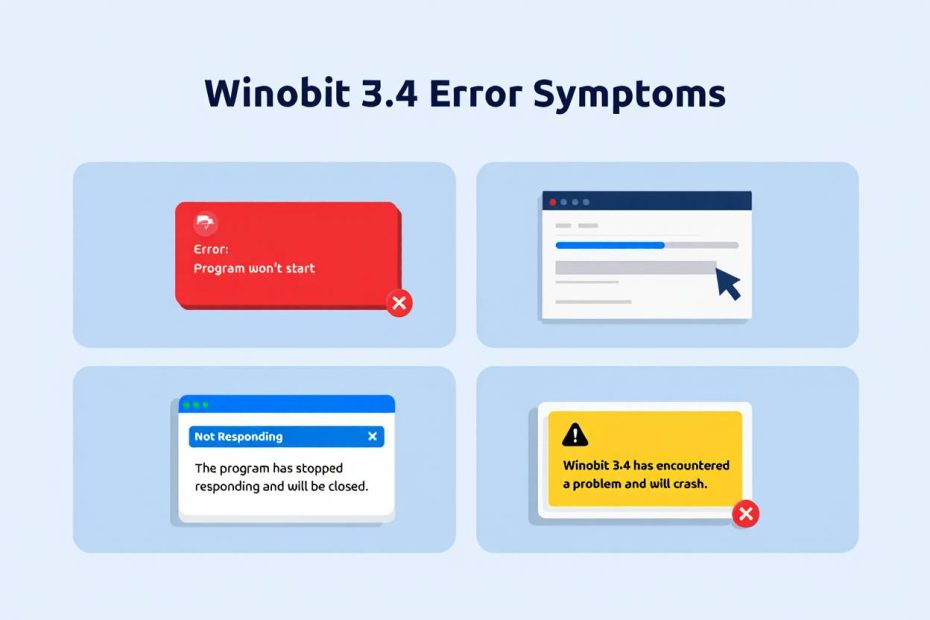
Winobit 3.4 software error happens when your application stops working correctly on your computer. It shows up as crashes, freezes, or messages telling you something went wrong. Most people see this problem on Windows 10 and Windows 11 systems.
When you try to open Winobit 3.4, you might get error codes like 0x0000005 or 0xc0000142. Sometimes the program just closes by itself. Other times, it won’t start at all. We’ve seen these issues affect thousands of users who rely on this software for their daily tasks. This guide walks you through everything you need to know about fixing Winobit 3.4 errors based on real troubleshooting experience.
What Causes Winobit 3.4 Software Error
Several factors contribute to Winobit 3.4 malfunctioning on your system. Understanding these causes helps you identify the right solution faster.
- Corrupted Installation Files: When you download or install the program, files sometimes don’t copy correctly to your hard drive. Internet connection drops during download can leave files incomplete. Your antivirus might block certain installation components. These damaged files prevent the software from launching or running properly because critical code is missing or broken.
- Outdated System Drivers: Graphics cards, sound cards, and motherboard chipsets communicate with Winobit through drivers. Old drivers use outdated protocols that newer software versions can’t interpret. This creates conflicts between hardware and software. Your graphics driver from 2020 might not support rendering requirements in Winobit 3.4 released in 2024.
- Windows Registry Problems: Every program installation leaves traces in your Windows registry. Over months of use, this database gets cluttered with wrong entries, leftover data from uninstalled programs, and corrupted keys. Winobit 3.4 searches for specific registry values at startup. When it finds incorrect or missing entries, the software fails to initialize.
- Insufficient System Resources: Winobit 3.4 requires at least 4 GB of RAM and adequate processing power. Computers barely meeting these specs struggle when you run multiple programs simultaneously. The software needs memory to load its interface, process your commands, and store temporary data. Without enough resources, it freezes or crashes.
- Software Conflicts: Other programs on your computer sometimes interfere with Winobit 3.4 operations. Antivirus software flags certain processes as suspicious and blocks them. Firewall settings prevent network connections the software needs. Even legitimate applications can occupy shared system resources, creating bottlenecks that cause errors.
- Malware Infections: Viruses and trojans target executable files and system settings. These malicious programs corrupt important data, modify registry entries, and consume system resources. When malware infects your system, it often damages legitimate software like Winobit 3.4. The infection changes file permissions, alters configuration files, or injects harmful code into running processes.
Understanding software testing fundamentals helps you recognize why these issues occur during program execution.
Common Symptoms You’ll Experience
Recognizing these symptoms early helps you take action before losing important work.
- Unexpected Application Crashes: The program closes suddenly without saving your progress. You’re working normally when the Winobit window disappears, returning you to the desktop. These crashes happen at startup, during specific operations, or randomly. Each crash usually generates an error report that Windows may or may not show you.
- Error Code Messages: Small dialog boxes appear with codes like 0x0000005, 0xc0000142, or 0x80070057. Code 0x0000005 indicates memory access violations where the program tries reading restricted areas. Code 0xc0000142 means the application failed to initialize its core components. Code 0x80070057 points to invalid parameters passed between program modules.
- Program Freezing: The Winobit window stays visible but stops responding completely. Your mouse cursor moves normally, but clicking buttons does nothing. The title bar displays “Not Responding” after a few seconds. You can’t close the window using the X button. The only solution is opening Task Manager and force-closing the process.
- Severe Performance Slowdown: Operations that normally complete instantly now take several seconds. Opening dropdown menus feels like watching paint dry. Loading your project files requires patience you don’t have. The entire interface becomes sluggish even though other programs run fine. This slowdown indicates the software is struggling with corrupted data or resource conflicts.
- Installation Failures: The setup wizard stops mid-installation with generic error messages. You see progress bars freeze at certain percentages. The installer might roll back changes and leave your system unchanged. Sometimes installation completes but the program won’t start afterward. These failures usually stem from permission issues, disk space problems, or conflicting software.
- Missing Features or Functions: Certain menu options appear grayed out or don’t work when clicked. Tools that should be available simply aren’t there. The software opens but operates with limited functionality. This partial operation suggests incomplete installation or corrupted program files affecting specific modules.
We’ve encountered similar software reliability challenges with other applications requiring systematic troubleshooting.
How to Fix Winobit 3.4 Software Error
Based on our troubleshooting experience, these solutions resolve most Winobit 3.4 errors. Start with the simplest fixes and progress to more advanced methods.
Basic Troubleshooting Steps
- Restart Your Computer: This simple step clears temporary memory, closes background processes, and resets system states. Many software errors disappear after a fresh boot because Windows releases locked files and refreshes system resources. Hold the power button or use the restart option in your Start menu. Wait for your computer to completely shut down before it restarts.
- Run as Administrator: Right-click the Winobit 3.4 icon and select “Run as administrator.” This grants the program elevated permissions to access system files and registry entries it needs. Many errors occur because the software can’t modify certain files without administrator rights. Windows blocks these operations for security, causing initialization failures.
- Check for Windows Updates: Open Settings, go to Update & Security, and click Check for updates. Microsoft releases patches that fix compatibility issues with third-party software. Your system might be missing critical updates that Winobit 3.4 depends on. Install all available updates and restart your computer afterward.
- Disable Antivirus Temporarily: Your security software might be blocking Winobit processes. Open your antivirus program and find the option to disable protection for 10 minutes. Try launching Winobit during this window. If it works, you need to add Winobit to your antivirus exclusion list. Remember to re-enable protection afterward.
Reinstall Winobit 3.4 Properly
Complete removal and fresh installation often resolves persistent errors.
- Uninstall Current Version: Go to Control Panel, select Programs and Features, find Winobit 3.4 in the list, and click Uninstall. Follow the uninstaller’s prompts to remove all components. Some uninstallers ask if you want to keep settings and data. Choose to remove everything for a clean slate.
- Delete Leftover Files: After uninstalling, navigate to C:\Program Files\ and C:\Program Files (x86)\ to check for remaining Winobit folders. Delete any you find. Also check C:\Users\YourName\AppData\Local\ and C:\Users\YourName\AppData\Roaming\ for Winobit folders. These leftover files contain corrupted data that interferes with fresh installations.
- Download Latest Version: Visit the official Winobit website and download the newest installer. Don’t use old installers saved on your computer. Newer versions include bug fixes and compatibility improvements. Make sure you’re downloading from the legitimate source to avoid malware-infected copies.
- Install with Administrator Rights: Right-click the downloaded installer and choose “Run as administrator.” Follow installation prompts carefully. Choose custom installation if available to see what components get installed. Avoid installing optional toolbars or browser extensions that sometimes come bundled. Wait for installation to complete fully before launching the program.
Understanding cross-platform software development provides insight into why installation issues occur across different Windows versions.
Update Your Drivers
Outdated drivers cause compatibility problems with modern software.
- Update Graphics Drivers: Graphics card manufacturers release driver updates regularly. Visit NVIDIA, AMD, or Intel’s website depending on your graphics card. Download the latest driver for your specific model. Run the installer and restart your computer. Graphics drivers particularly affect software that renders visual elements or uses hardware acceleration.
- Update Chipset Drivers: Your motherboard chipset manages communication between components. Visit your motherboard manufacturer’s website (ASUS, MSI, Gigabyte, etc.) and find the support section. Enter your motherboard model and download the latest chipset drivers. These drivers help Windows manage system resources that Winobit needs.
- Use Windows Device Manager: Press Windows + X and select Device Manager. Look for devices with yellow warning triangles. Right-click these devices and choose “Update driver.” Select “Search automatically for updated driver software.” Windows will find and install appropriate drivers. This method works well for standard components like network adapters and sound cards.
- Consider Driver Update Software: Programs like Driver Booster or Driver Easy scan your system and identify outdated drivers. They download and install updates automatically. While convenient, only use reputable driver update tools. Some malicious programs disguise themselves as driver updaters. Stick with well-known options that have positive reviews.
Clean Your Windows Registry
Registry errors accumulate over time and interfere with software operation.
- Create System Restore Point: Before modifying your registry, create a restore point. Type “Create a restore point” in Windows search and open System Properties. Click “Create” and name your restore point “Before Registry Clean.” This safety net lets you undo changes if something goes wrong.
- Use Registry Cleaner Software: Programs like CCleaner scan your registry for invalid entries, broken links, and corrupted keys. Download CCleaner from its official website. Open the program, go to Registry, and click “Scan for Issues.” Review the found issues and click “Fix selected Issues.” The program backs up changes automatically.
- Manual Registry Editing: Press Windows + R, type “regedit,” and press Enter. Navigate to HKEY_LOCAL_MACHINE\SOFTWARE\ and HKEY_CURRENT_USER\SOFTWARE\ to find Winobit entries. Look for incomplete or corrupted keys related to Winobit 3.4. Delete suspicious entries carefully. Wrong deletions can break other programs or Windows itself. Only do this if you understand registry structure.
- Clear Temporary Files: Open Run dialog (Windows + R), type “%temp%” and press Enter. Delete everything in this folder. Then type “temp” in Run dialog and delete those files too. These temporary files sometimes contain corrupted data that interferes with program operations. Your system recreates necessary temporary files automatically.
Similar registry cleanup techniques help resolve various software malfunctions across different applications.
Check System Resources
Insufficient resources prevent software from running smoothly.
- Monitor RAM Usage: Press Ctrl + Shift + Esc to open Task Manager. Click the Performance tab and check Memory usage. If usage consistently stays above 80%, you need more RAM or should close unnecessary programs. Winobit 3.4 needs adequate free memory to load its components and process your work.
- Free Up Disk Space: Software needs temporary disk space for operations. Open This PC and check your C: drive. If it shows red (over 90% full), you need to free space. Use Disk Cleanup utility by typing it in Windows search. Remove temporary files, old downloads, and programs you don’t use. Aim for at least 20 GB free space.
- Close Background Programs: Many programs run in the background without you knowing. Check Task Manager’s Processes tab to see what’s running. Close programs you’re not actively using. Look for resource-hungry applications consuming significant CPU or memory. This frees resources for Winobit 3.4.
- Adjust Virtual Memory: When RAM fills up, Windows uses hard drive space as virtual memory. Type “Advanced system settings” in Windows search. Click Settings under Performance. Go to Advanced tab, click Change under Virtual memory. Uncheck “Automatically manage” and set custom size. Set initial size to 1.5 times your RAM amount and maximum to 3 times your RAM.
Understanding productivity software requirements helps you configure adequate system resources for applications.
Scan for Malware
Infections compromise software functionality and system stability.
- Run Windows Defender Scan: Open Windows Security from your Start menu. Click Virus & threat protection, then click Quick scan. If it finds nothing but you still suspect infection, run a Full scan. This thorough check examines every file on your system. Full scans take 1-2 hours depending on your hard drive size.
- Use Malwarebytes: Download Malwarebytes from its official website. Install and run a full system scan. Malwarebytes catches threats that Windows Defender sometimes misses. It specializes in detecting adware, spyware, and potentially unwanted programs. The free version provides excellent scanning capabilities.
- Boot into Safe Mode: Some malware hides from scans when Windows runs normally. Restart your computer and press F8 repeatedly during startup. Select Safe Mode with Networking. Run your antivirus scans in this mode. Safe Mode loads only essential drivers, preventing malware from running and hiding.
- Remove Detected Threats: After scans complete, quarantine or delete all detected threats. Restart your computer after removal. Some infections require multiple scan-and-remove cycles. Persistent infections might need professional help or complete Windows reinstallation. Check if Winobit 3.4 works after cleaning your system.
Maintaining good endpoint security practices prevents malware from damaging your applications.
Preventing Future Winobit 3.4 Errors
Taking preventive measures saves you from repeated troubleshooting hassles.
- Keep Software Updated: Check for Winobit updates monthly. Developers release patches fixing known bugs and compatibility issues. Enable automatic updates if available. Running outdated versions leaves you vulnerable to errors that newer releases have already resolved.
- Maintain Windows Updates: Set Windows Update to automatic. Microsoft patches security holes and fixes compatibility problems regularly. These updates often include framework components that third-party software depends on. Skipping updates creates instability across your system.
- Regular System Maintenance: Run disk cleanup monthly. Defragment your hard drive quarterly if using traditional HDD. Clean your registry every few months with trusted tools. This routine maintenance prevents the buildup of junk data that causes software conflicts.
- Use Reliable Antivirus: Install reputable security software and keep it updated. Configure it to scan automatically on a schedule. Properly configured antivirus prevents infections before they damage your system. Add Winobit to exclusion lists to prevent false positives while maintaining protection.
- Create Regular Backups: Back up important files weekly using Windows Backup or third-party solutions. Create system restore points before installing new software. These backups let you recover quickly if something goes wrong. Store backups on external drives or cloud storage.
- Monitor System Performance: Pay attention to how your computer performs. Sudden slowdowns, unusual hard drive activity, or strange popup messages indicate problems. Address these signs immediately before they escalate into serious errors. Early intervention prevents data loss and extensive troubleshooting.
Following software development best practices helps developers create more stable applications with fewer errors.
Advanced Solutions for Persistent Errors
When basic fixes don’t work, try these advanced troubleshooting methods.
Compatibility Mode Configuration
- Access Properties: Right-click the Winobit 3.4 shortcut and select Properties. Go to the Compatibility tab. This section lets you run programs using settings from older Windows versions.
- Choose Compatibility Settings: Check “Run this program in compatibility mode for” and select Windows 7 or Windows 8 from the dropdown. Some programs designed for older Windows versions struggle on Windows 10 or 11. Compatibility mode tricks the software into thinking it’s running on its intended system.
- Disable Display Scaling: Check “Disable fullscreen optimizations” and “Override high DPI scaling behavior.” These settings prevent Windows from modifying how the program displays. Display issues sometimes trigger crashes or prevent proper rendering.
- Run as Administrator: Check “Run this program as an administrator” at the bottom of the Compatibility tab. Click Apply, then OK. This permanently grants elevated permissions every time you launch Winobit.
System File Checker
- Open Command Prompt: Type “cmd” in Windows search, right-click Command Prompt, and select “Run as administrator.” You need administrator rights for this operation to work.
- Run SFC Command: Type “sfc /scannow” and press Enter. System File Checker scans all protected system files and replaces corrupted versions with correct ones. The process takes 15-30 minutes. Don’t interrupt it or close the window.
- Review Results: After completion, SFC displays a report. If it found and fixed corrupted files, restart your computer. If it found corrupted files but couldn’t fix them, you need to run DISM (Deployment Image Servicing and Management) tool next.
- Run DISM if Needed: In administrator Command Prompt, type “DISM /Online /Cleanup-Image /RestoreHealth” and press Enter. This repairs the Windows system image that SFC uses as reference. After DISM completes, run SFC again. Restart your computer and test Winobit 3.4.
Check Event Viewer Logs
- Open Event Viewer: Type “Event Viewer” in Windows search and open it. This tool records all system events, including software errors and crashes.
- Navigate to Application Logs: Expand Windows Logs in the left panel and click Application. Look for red error icons around the time Winobit crashed. Click each error to view details.
- Identify Error Patterns: Look for repeating error sources or event IDs related to Winobit. The error description provides clues about what went wrong. Common culprits include missing DLL files, access denied errors, or memory violations.
- Research Error Codes: Copy specific error messages and search them online. Other users often share solutions for common errors. Microsoft documentation explains many Windows error codes. Use this information to target your troubleshooting efforts.
Understanding how systems detect unusual traffic patterns helps you interpret system logs and error messages.
Contact Technical Support
- Gather System Information: Before contacting support, collect details about your computer. Note your Windows version, RAM amount, processor type, and graphics card model. Document the exact error messages you’re seeing. Take screenshots of error dialogs.
- Check Official Resources: Visit Winobit’s official website and look for support documentation. Many companies provide knowledge bases with common issues and solutions. Search for your specific error code or symptom in their help articles.
- Submit Support Ticket: If self-help resources don’t work, submit a detailed support ticket. Describe what you were doing when the error occurred. List troubleshooting steps you’ve already tried. Attach screenshots and error codes. Provide your system specifications.
- Follow Up Regularly: Check your email for support responses. Respond promptly to requests for additional information. Support teams can access internal knowledge about known bugs and compatibility issues. They might provide beta patches or workarounds not publicly available.
Troubleshooting Checklist
Use this checklist to track your progress through different solutions.
- Restart computer and test Winobit 3.4
- Run Winobit as administrator
- Check for Windows updates and install them
- Temporarily disable antivirus and test
- Uninstall Winobit completely
- Delete leftover program files and folders
- Download latest Winobit version
- Install with administrator privileges
- Update graphics card drivers
- Update motherboard chipset drivers
- Create system restore point
- Run registry cleaner software
- Clear temporary files
- Check RAM usage in Task Manager
- Free up disk space (at least 20 GB)
- Close unnecessary background programs
- Adjust virtual memory settings
- Run Windows Defender full scan
- Scan with Malwarebytes
- Configure compatibility mode settings
- Run System File Checker (SFC)
- Check Event Viewer for error patterns
- Contact Winobit technical support
This systematic approach ensures you don’t miss important troubleshooting steps.
Frequently Asked Questions
Can I fix Winobit 3.4 errors without reinstalling?
Yes. Most errors resolve through driver updates, registry cleaning, or running the program as administrator. Reinstallation is necessary only when files are severely corrupted or other solutions fail.
Why does Winobit 3.4 crash only on my computer?
Each system has unique configurations, installed programs, and hardware combinations. Conflicts between Winobit and your specific setup cause crashes that other users don’t experience. Your antivirus settings, driver versions, or background programs create conditions triggering the error.
Is it safe to edit Windows registry manually?
No, unless you have advanced technical knowledge. Wrong registry edits can break Windows or other programs. Always create restore points before registry changes. Use dedicated registry cleaning software instead of manual editing. These programs include safety checks preventing dangerous deletions.
How often should I update Winobit 3.4?
Check for updates monthly. Enable automatic updates if the software offers this option. Developers release updates addressing bugs, security issues, and compatibility problems. Running outdated versions exposes you to errors that patches have already fixed.
Will compatibility mode slow down Winobit 3.4?
No. Compatibility mode only changes how Windows presents itself to the program. It doesn’t affect processing speed or performance. The software runs at normal speed while thinking it’s on an older Windows version.
Can malware hide from antivirus scans?
Yes. Advanced malware uses rootkit techniques hiding from detection. Boot your computer into Safe Mode before scanning. Safe Mode loads minimal drivers, preventing malware from activating and concealing itself. Running multiple antivirus programs catches threats individual scanners miss.
Does virtual memory improve software performance?
Yes, when physical RAM is insufficient. Virtual memory uses hard drive space as additional RAM. While slower than real RAM, it prevents crashes when memory fills up. Setting appropriate virtual memory sizes helps resource-intensive programs like Winobit run smoothly.
Should I use third-party driver update software?
Maybe. Reputable driver updaters simplify finding and installing correct drivers. However, some tools bundle unwanted software or charge unnecessary fees. Windows Device Manager handles most driver updates adequately. Use third-party tools only from trusted sources with positive reviews. Learning about proper endpoint management helps you maintain system drivers effectively.
What if none of these solutions work?
Contact Winobit technical support with detailed information about your issue. They access internal resources about known bugs and can provide specialized fixes. Consider system restore to a point before problems started. As a last resort, clean Windows installation removes all software conflicts, though you’ll need to reinstall all programs.
Conclusion
Winobit 3.4 software errors stem from corrupted files, outdated drivers, registry problems, insufficient resources, software conflicts, or malware infections. Recognizing symptoms like crashes, error codes, freezing, and slow performance helps you identify issues early.
We’ve covered solutions ranging from simple restarts to advanced troubleshooting techniques. Start with basic fixes like running as administrator and checking updates. Progress to reinstallation, driver updates, registry cleaning, and malware scans when needed. The troubleshooting checklist keeps you organized through the process.
Prevention saves time and frustration. Keep Windows and Winobit updated, perform regular maintenance, use reliable antivirus protection, and monitor system performance. These habits minimize the chance of encountering errors.
Most Winobit 3.4 errors resolve through systematic troubleshooting. Apply these solutions patiently, testing after each step. When problems persist despite your efforts, technical support provides specialized assistance for complex issues. Your software will be running smoothly again with the right approach and persistence.
You May Also Like
 Windows 10
How to Fix the “Path Too Long” Error on Your Computer
 Windows 10
Ultimate Guide to Fixing DNS_PROBE_FINISHED_NXDOMAIN Error: Step-by-Step Solutions
 Windows 10
Is Hotmail Still Active? Everything You Need to Know
 Windows 10
Mastering Windows CMD: Essential Commands and Clever Tricks
 Windows 10
Antimalware Service Executable Causing High CPU Usage: A Simple Guide
 Windows 10