


HR communication tools now play a direct role in how well your people stay informed, connected, and engaged. If your messages get lost across email, chat, and scattered systems, your culture usually feels that strain first. The right platform helps you share updates faster, gather feedback sooner, and give employees one reliable place to find what they need.
Employee communication software is no longer just a messaging layer. It now supports employee engagement, internal communications, onboarding, recognition, feedback collection, manager check-ins, and employee self-service. When you choose well, you make work feel clearer for everyone — from HR and leadership to frontline teams and remote staff.
The best platforms help you send company announcements, collect pulse survey feedback, support performance conversations, and improve the day-to-day employee experience. Some tools are broad collaboration platforms. Others are built for HR workflows, employee listening, or recognition. The smartest choice depends on how your team works, how much structure you need, and whether you want one platform or a connected HR tech stack.
What makes effective HR communication software?
If you want software that people will actually use, you need more than chat. You need a platform that fits into everyday work without creating more noise. Strong HR communication tools usually combine messaging, employee feedback, recognition, mobile access, analytics, and integration with your HRIS or collaboration stack.
You should also look for tools that support both formal and informal communication. Formal communication includes policy updates, onboarding steps, compliance reminders, and benefits information. Informal communication includes praise, manager check-ins, team wins, and community conversations. When a tool supports both, your communication feels less fragmented and more human.
Core features you should look for
- Real-time messaging or announcements
- Mobile access for deskless and frontline employees
- Pulse surveys and employee feedback tools
- Recognition and social engagement features
- Workflow automation for common HR tasks
- Searchable document sharing or knowledge access
- HRIS, SSO, payroll, and collaboration integrations
- Reporting on engagement, participation, and communication reach
1. Microsoft Teams

If your company already runs on Microsoft 365, Microsoft Teams is one of the easiest ways to centralize HR communication. You can use it for announcements, meetings, file sharing, department channels, and structured collaboration. It works especially well when you want HR messages, documents, and meetings tied closely to Outlook, SharePoint, and the rest of your Microsoft environment.
- Key Features: Team chat, channels, meetings, file collaboration, Microsoft 365 integration, centralized admin controls
- Pros: Strong fit for Microsoft-based organizations, solid security, good for structured communication, useful for hybrid work
- Cons: Can feel heavy for smaller teams, interface can get crowded, best experience often depends on your wider Microsoft setup
- Pricing: Teams Essentials starts at $4/user/month. Microsoft 365 Business Basic starts at $6/user/month. Microsoft 365 Business Standard starts at $12.50/user/month
- Best for: You want HR communication, meetings, files, and collaboration in one Microsoft-based system
2. Slack

Slack works well when you want fast, channel-based communication that people actually check during the day. For HR, that means you can build dedicated spaces for onboarding, company updates, manager support, culture initiatives, and employee questions. Slack also stands out for workflow automation and app integrations, so you can connect communication with approvals, reminders, surveys, and operational follow-up.
- Key Features: Channels, threads, workflow automation, search, integrations, AI-assisted productivity features
- Pros: Easy to adopt, highly flexible, strong integration ecosystem, good for fast-moving teams
- Cons: Channels can become noisy, governance needs attention as you scale, costs rise with larger teams
- Pricing: Free plan available. Pro starts at $7.25/user/month billed annually. Business+ starts at $15/user/month billed annually. Enterprise+ is custom priced
- Best for: You want flexible internal communication with strong automation and app connectivity
3. BambooHR

BambooHR is a strong option if you want HR communication built into your HR system instead of handled as a separate layer. You can manage employee records, onboarding communication, performance conversations, employee satisfaction, self-service, and internal updates in one place. That makes it especially useful if your team wants fewer handoffs and less switching between tools.
- Key Features: Employee records, onboarding workflows, employee community hub, eNPS and satisfaction tools, 1:1s, self-service, reporting
- Pros: HR-first design, easy to use, helps reduce manual admin work, useful for SMB HR teams
- Cons: Pricing is not transparent on-page, broader collaboration features are not as deep as chat-first platforms
- Pricing: Quote-based. BambooHR states pricing is per employee, per month, with a flat monthly rate for teams with 25 employees or fewer
- Best for: You want HR software and employee communication in one connected platform
4. Workday

Workday fits larger organizations that need communication tied closely to enterprise HR operations. It is less about casual chat and more about personalized employee experiences, self-service, workforce insights, feedback collection, and communication that connects with talent, payroll, skills, and compliance. If your environment is complex, Workday gives you structure and control.
- Key Features: Employee self-service, feedback listening, AI-powered insights, knowledge access, workforce planning, talent lifecycle support
- Pros: Built for scale, strong enterprise control, global support, deep HR and workforce context
- Cons: Custom pricing, implementation can be longer, may be more platform than a smaller business needs
- Pricing: Custom quote
- Best for: You run a larger organization and want communication connected to enterprise HCM processes
5. Yammer / Viva Engage
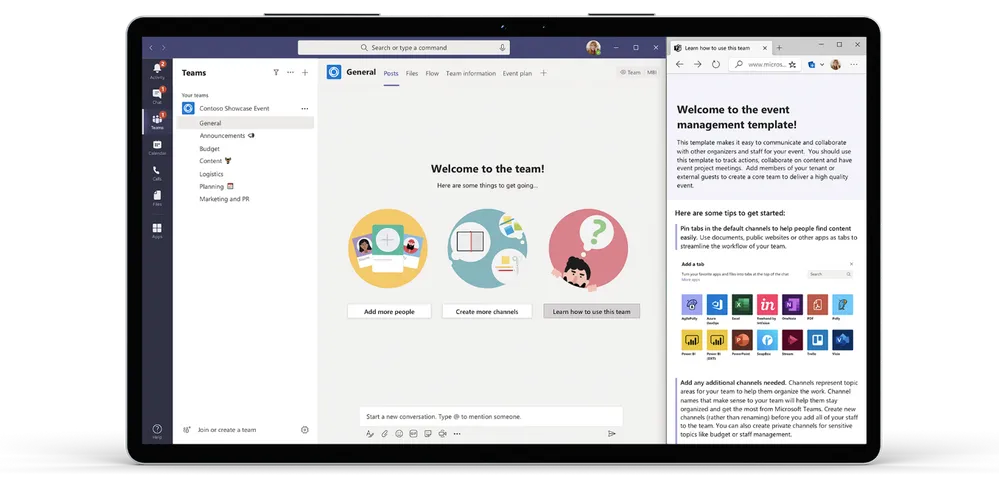
If you still think of Yammer as a standalone product, it helps to know the product has evolved into Viva Engage. This is Microsoft’s community and conversation layer for employee communities, leadership communication, storyline posts, and large-scale internal engagement. If you want more social interaction inside the Microsoft ecosystem, this is the tool to look at.
- Key Features: Employee communities, conversations, announcements, storyline posts, leadership engagement, moderation tools
- Pros: Good for company-wide communities, strong fit inside Microsoft, useful for culture-building and leadership visibility
- Cons: Best value comes when you already use Microsoft 365, less suited for companies that want a standalone social intranet
- Pricing: Community and conversation features are included in certain Microsoft 365 and Office 365 enterprise plans. Premium features require Microsoft Viva suite or Microsoft Viva Employee Communications and Communities
- Best for: You want community-style communication inside a Microsoft environment
6. Workvivo

Workvivo is built for employee communication, digital workplace access, and engagement in a more social, mobile-first format. It is a strong fit when you want internal communications to feel more like a living employee hub instead of a static intranet. It also offers chat, digital signage, analytics, and employee listening add-ons, which makes it useful for both desk-based and frontline teams.
- Key Features: Employee communication, digital workplace, engagement tools, insights and analytics, mobile access, chat add-on, employee insights add-on
- Pros: Strong employee experience focus, useful for frontline communication, social feel, flexible add-ons
- Cons: Pricing is custom, best fit is often mid-size and enterprise, may overlap with tools you already own
- Pricing: Custom package. Business plan is aimed at 250–2000 employees. Enterprise plan is aimed at 2000+ employees
- Best for: You want a dedicated employee experience platform with strong internal comms and social engagement
7. Bonusly
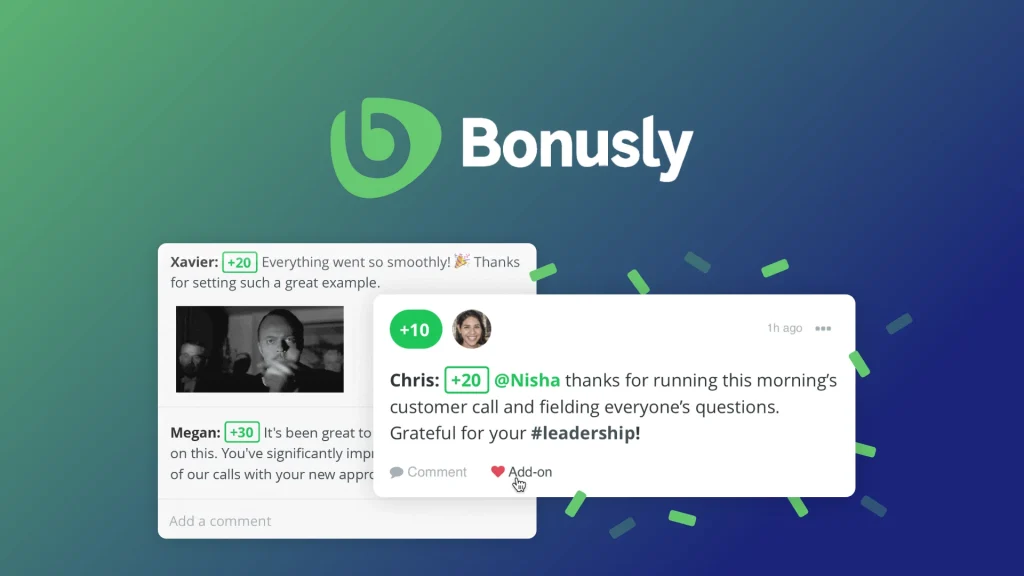
Bonusly is a smart choice when your main communication gap is not information flow but recognition and morale. If your people do good work and it goes unnoticed, your culture pays the price. Bonusly turns appreciation into a visible part of everyday work, with peer recognition, 1:1 support, check-ins, and more advanced insight layers for larger organizations.
- Key Features: Team recognition, structured 1:1s, check-ins, culture habits, organizational insights, advanced analytics on higher tiers
- Pros: Easy way to strengthen appreciation, supports culture-building, keeps recognition visible, simple to understand
- Cons: Not a full communication suite, analytics and scale features are stronger on paid tiers, best used with your main HR or collaboration stack
- Pricing: Free plan available. Team plan is $3/seat/month or $30/seat/year. Organization plan is custom priced
- Best for: You want to improve employee recognition and reinforce company values through everyday communication
8. 15Five
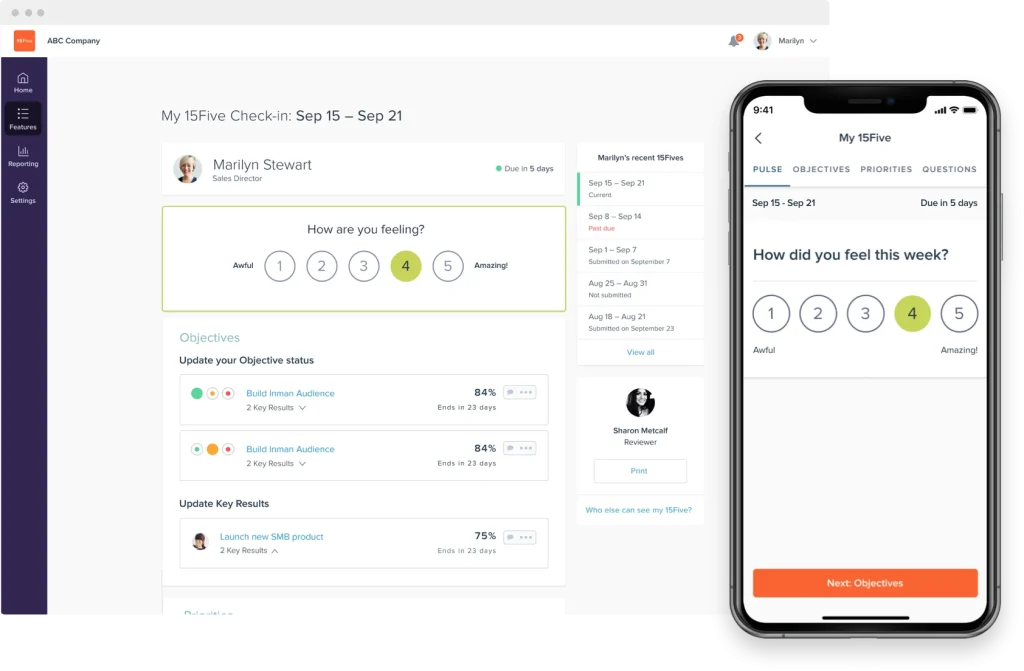
15Five is built for communication between managers and employees. If you want better one-on-ones, clearer goals, steadier feedback, and earlier signals when engagement drops, it gives you a practical structure to work with. This is less about company-wide broadcasting and more about performance communication that actually happens on a regular rhythm.
- Key Features: Weekly check-ins, 1-on-1 agendas, OKRs and goal tracking, performance reviews, engagement surveys, AI-powered insights, recognition
- Pros: Strong for manager effectiveness, useful for retention work, clear performance communication workflows, flexible tiering
- Cons: Not a full internal comms hub, broader company-wide publishing is not the core use case
- Pricing: Engage: $4/user/month. Perform: $11/user/month. Total Platform: $16/user/month
- Best for: You want stronger manager-employee communication and a better performance cadence
9. Culture Amp

Culture Amp stands out when your focus is employee listening, survey quality, and action planning. If you want to understand how people really feel — not just how often they click a button — this platform gives you a deeper feedback engine. It also supports shoutouts, one-on-one templates, HRIS integrations, and strong compliance standards, which helps you turn listening into a more complete employee experience process.
- Key Features: Engagement surveys, lifecycle surveys, shoutouts, 1-on-1 templates, HRIS integrations, Slack and Teams integrations, multilingual platform, analytics
- Pros: Strong employee feedback design, solid benchmarking mindset, enterprise-grade compliance, useful for action planning
- Cons: Pricing is custom, best value appears when you actively use survey insights, not ideal if you only want chat or announcements
- Pricing: Quote-based, with custom enterprise pricing available
- Best for: You want strong employee listening, survey analytics, and culture improvement data
10. Lattice

Lattice works well if you want performance, goals, habits, engagement, and development connected in one people management system. For HR communication, that matters because your best conversations usually happen around feedback, one-on-ones, progress updates, and employee growth — not just announcements. Lattice gives you that structure without forcing you into a purely survey-led tool.
- Key Features: Performance reviews, promotions, goals and OKRs, 1:1s, feedback and praise, weekly updates, pulse surveys, onboarding and exit surveys, development tools
- Pros: Strong manager tools, modular pricing, clear performance and growth workflows, good integrations
- Cons: Minimum annual spend applies, can become expensive as you add modules, not a social intranet product
- Pricing: Talent Management / Foundations: $11/seat/month. Add-ons: Engagement +$4, Grow +$4, Compensation +$6. Minimum annual agreement applies
- Best for: You want communication tied directly to performance, growth, and manager consistency
How you should choose the right HR communication software
The best platform for you depends on the problem you need to fix first.
If your main issue is company-wide communication and collaboration, start with Microsoft Teams or Slack. If you want HR data, self-service, onboarding, and communication in one system, BambooHR or Workday will usually make more sense. If your priority is culture, feedback, and employee sentiment, look harder at Culture Amp, 15Five, or Lattice. If recognition is where your culture feels thin, Bonusly can add real value quickly. If you want a more social employee experience layer, Viva Engage or Workvivo deserve a closer look.
Before you buy, ask yourself five plain questions:
- Do you need chat, or do you need structured HR communication?
- Do your frontline employees need strong mobile access?
- Will this tool replace systems, or add another layer?
- Can your managers realistically use it every week?
- Will you measure adoption, response rates, and engagement after launch?
That last question matters more than most buying teams expect. A platform is only useful if your people trust it, open it, and return to it.
Final takeaway
The best HR communication software is the one your people will actually use and your HR team can realistically manage.
If you want a broad collaboration layer, Microsoft Teams and Slack remain strong choices. If you want HR processes and communication connected, BambooHR and Workday are more practical. If your focus is engagement, feedback, and better manager conversations, 15Five, Culture Amp, and Lattice are all strong contenders. If you want to improve recognition, Bonusly is a smart addition. If you want more community and social interaction, Viva Engage and Workvivo are worth your attention.
When you make this decision, do not just compare feature lists. Look at employee adoption, mobile access, integration fit, reporting depth, and how well each platform matches the way your people already work. That is usually where the right answer becomes obvious.
You May Also Like
 Software
9 Best Free Laser Engraver Software Tools in 2026
 Software
When Fixing Bugs Is No Longer Enough: How to Rescue a Failing Software Project
 SaaS
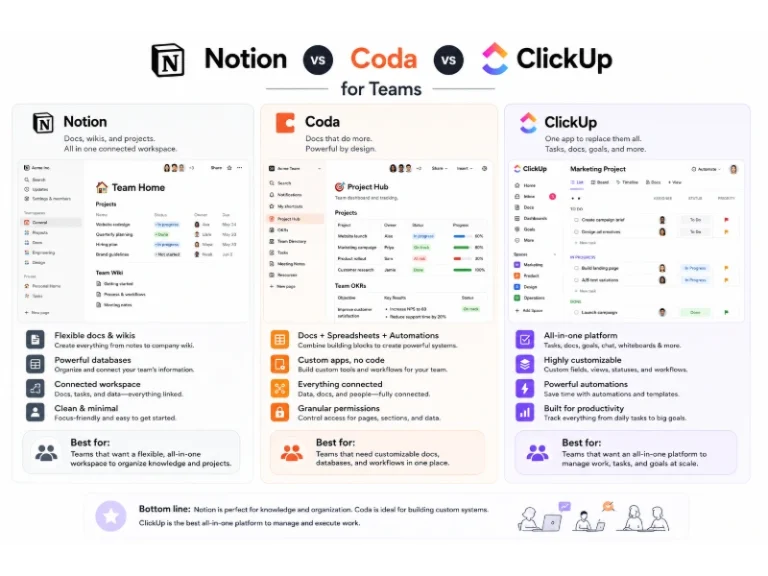
SaaSNotion vs Coda vs ClickUp for Teams: A Field Report From 18 Months
 SaaS
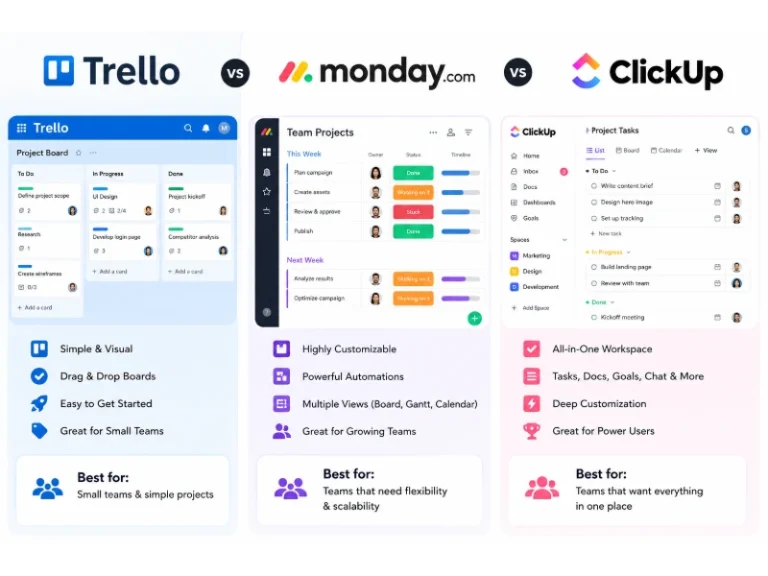
SaaSTrello vs monday.com vs ClickUp: Which Project Management Tool Fits Your Team in 2026?
 SaaS
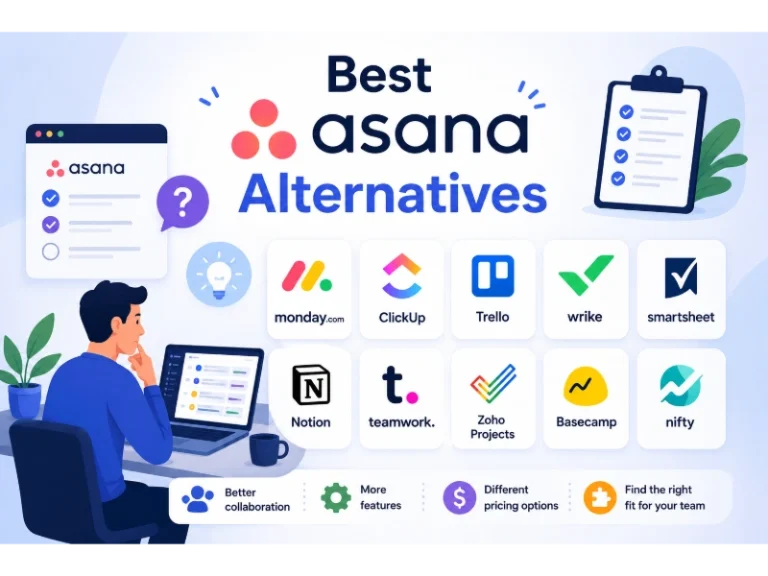
SaaS8 Best Asana Alternatives in 2026: Free Tools, Top Competitors, and How to Choose
 Software
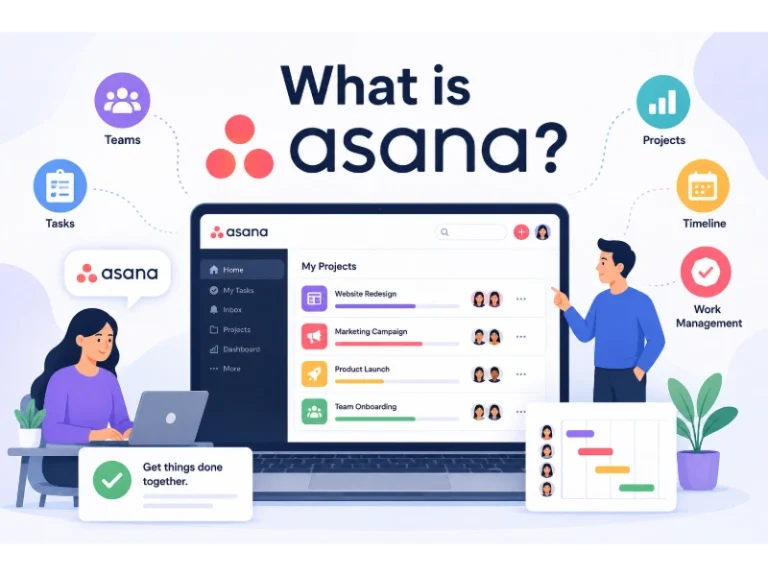
What is Asana Software? How Businesses Use It for Project Management and Team Collaboration
 Software
10 Best Audio Redaction Software in 2026 (Tested Picks by Use Case)
 SaaS
SaaS10 Best AI Audio Enhancers for Podcasts in 2026 (Reviewed & Compared)
 Software